You have viewed 0% of the page
Chilli Chooser
There are three ways to search the database; 1. Simply scrolling through it (it's organised alphabetically). 2. By using the tags. You can select more than one button to widen the results. 3. By entering keywords.
There are three ways to search the database; 1. Simply scrolling through it (it's organised alphabetically). 2. By using the tags. You can select more than one button to widen the results. 3. By entering keywords.
-

aji amarillo
A very popular Peruvian variety, Aji Amarillo literally translates as the 'Yellow Chilli'. These chillies are very hot with a distinctive fruity flavour, sometimes described as 'the taste of sunshine'.
Plants grow tall and vine-like and produce a good crop of pretty pods that start out a bright lime green and ripen to orange.0001 -

aji charapita
Aji Charapita plants are really pretty; rounded and bushy and completely covered in glowing little amber balls. It's plugged as being the most expensive chilli in the world.
It's actually a popular house plant in Peru, grown for it's lovely bushy appearance. Charapitas grow wild in the Peruvian rainforest and its' thought to be closely related to the first known chilli, Chiltepin.0020 -
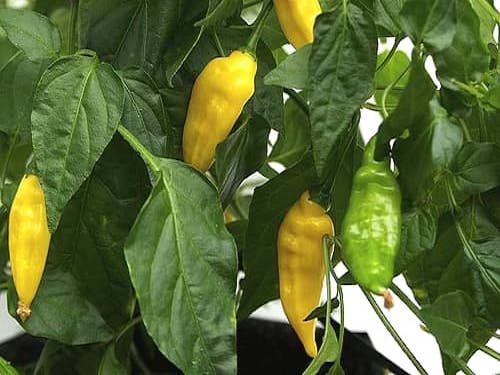
aji lemon
This beautiful Aji is a variety of chilli coming from the lowlands of Peru, where Aji literally means 'chilli'. It is a popular chilli for its distinctive lemony flavour and gorgeous colour that imparts itself into food.
Easy to grow and prolific, Ajis are of the baccatum species which grow large and vine-like.0030 -
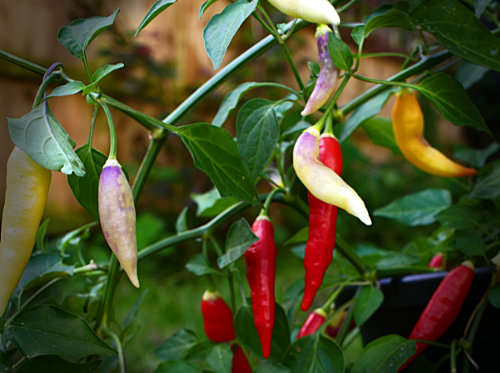
aji omnicolour
Aji Omnicolour are beautiful, branching plants with deep green foliage that literally drip with a rainbow of bullet-shaped fruits. Plants are fast to fruit and produce an abundance of hot pods that start out a milky white before ripening though purple, orange and red.
Chillies are of a medium heat and look great in a pickle jar. They are not big on flavor, with a mild peppery taste and a medium heat.0040 -
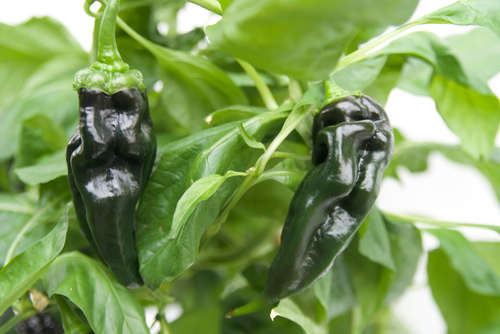
aji panca
Aji Panca is one of Peru's most popular chillies, its name literally meaning 'the brown chilli'. Large, elongated pods grow in abundance on rather sprawling plants that can grow up to 2 metres.
Chillies are dark burgundy to black with a very strong smoky, berry-like flavour and a medium heat. Perfect for summer barbecues! In Peru, Aji Panca are often crushed into a paste before use but they will dry equally well.
0050 -
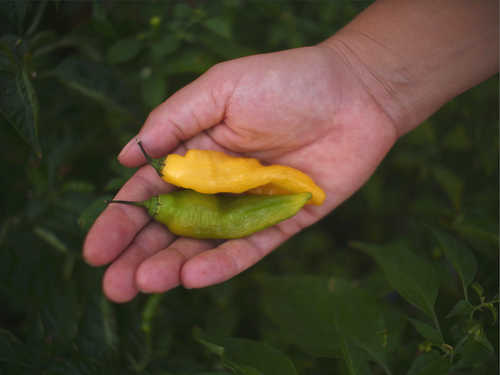
aji pineapple
This chilli is very similar to the more popular Aji Lemon, but recognised as a separate variety with a slight pineapple taste. The colour is less vibrant and pods more ridged.
Like most baccatum varieties, Aji Pineapple plants grow tall, sprawling and a bit untidily but reward the grower with a huge crop of juicy, fruity pods. Plants are quite easy to please but prefer the shelter of a greenhouse.0060 -

anaheim
Tall, high-yielding plants are named after their adopted home town, near Los Angeles. The chillies were actually brought from Mexico at the end of the 19th century to grow commercially.
Smooth, thick-skinned pods have two separate cells. Chillies are quite large, around 4-6 inches making them a good stuffing chilli that also freezes well. They are mild by chilli standards but still have a kick.
0070 -

ancho grande
A type of Mexican Poblano with large, glossy, heart-shaped pods that are mild and aromatic. Poblanos are one of the Holy Trinity of Mexican Mole chillies, used more for their flavour than their heat.
Whilst green, chillies are universally mild but they gain some heat as they ripen through to dark red. They are used green for stuffing and dried to dark brown for use in Mexican mole sauces.0080 -
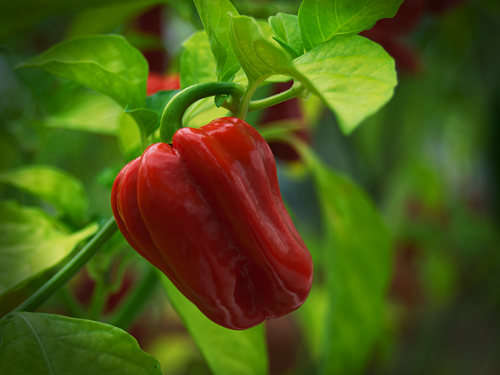
antillias caribbean
More resilient than a standard Scotch Bonnet, this chilli produces large globular shaped fruits.
Used for cooking and ideal for sauces. Extremely pungent and strong aroma. This is a pretty hot chilli, packing a punch at 300,000 Scoville units. Pods start out a brilliant lime green, maturing through orange to red.0090 -

apocalyse
This variant of Trinidad Scorpion has been bred in Italy to be superheated and is said to have a chance at taking the title of World’s Hottest Chilli.
It certainly looks the part with it’s warty, pimpled skin and scorpion kick to the tail. Very heavy producers pods that are full of heat and flavour.0110 -
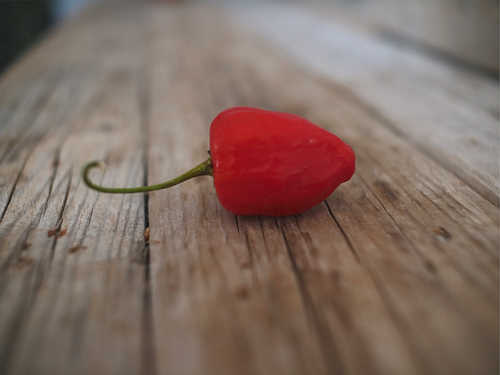
apple crisp
Apple Crisp is a very unusual chilli variety producing pods that are crunchy, mild, sweet and juicy enough to be eaten like an apple. Fruits are large and globular, and grow prolifically on big, spreading plants. They ripen to a lovely orangey red colour.
Think of Apple Crisp as an unusual fruit rather than a traditional chilli. Produced by Seaspring Seeds in Dorset.0120 -
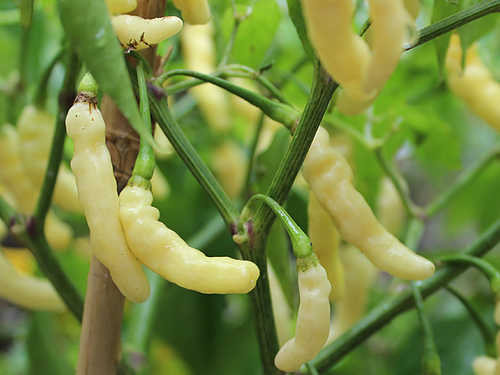
aribibi gusano
One of the weirdest looking little chillies you will find, with its wriggly little white pods. Literally meaning the ‘psycho worm’ or ‘crazy catterpillar’, the chilli obviously gets its name from its looks.
It’s a chinense variety with all the characteristic heat and fruity flavour. Difficult to germinate but grows well if you can get past that stage.0121 -

aurora
Aurora does not enjoy the popularity that it should as an ornamental chilli. Plants are easy to grow and quickly become covered in a fine spread of conical pods in rainbow shades from purple through to yellow, orange and finally red, with all colours visible on the plant.
Chillies are a medium heat but, like many ornamental varieties, without any special flavour.
0130 -
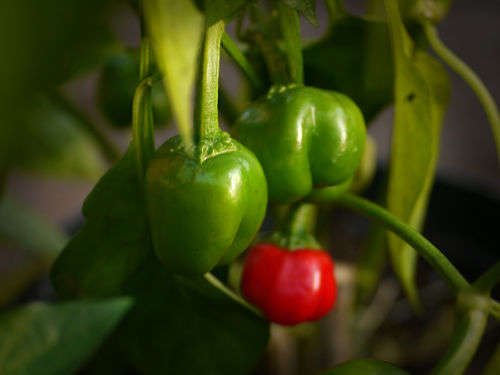
balloon pepper
There is some confusion with this chilli as it shares its name with another chilli which is similar to the Bishops’ Crown variety. This Balloon Pepper is relatively unknown. Pods are globular with a sharp, peppery flavour.
They are quite mild but what they lack in heat they make up for numbers. Good for pickling or slicing raw onto salads and other dishes.
0140 -
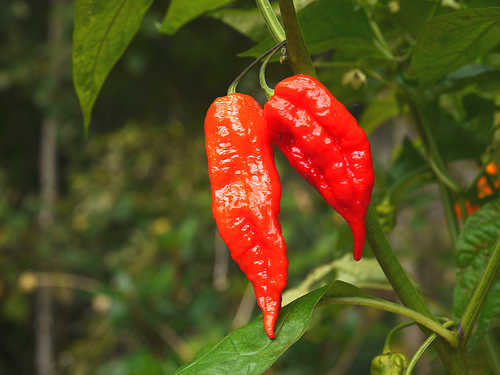
bengele naga
Bengle Naga are a variety offered by Seaspring Seeds, producers of the Dorset Naga. They say that the variety cropped up in a greenhouse of Dorset Nagas and Bhut Jolokias, so have a fine lineage.
Pods start out a white to very pale green colour and are elongated in shape. They are more prolific than the Bhuts and Nagas but just as hot.0150 -
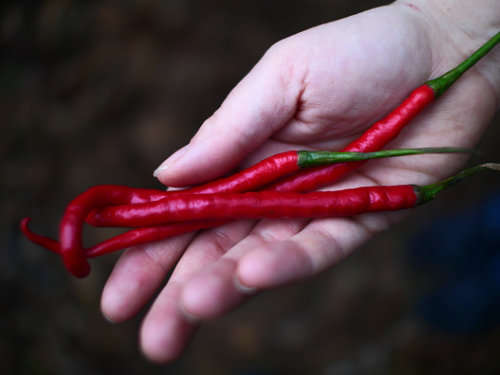
bangalore torpedo
A great name for a fabulous-looking plant that is a super variety of the Indian finger chilli type. In a large enough pot, plants grow up to a metre, tall and bushy.
When in full fruit, the Banglaore Torpedo plant looks formidable, dripping with long, bright red, slightly twisted chillies with the occasional corkscrew. Pods are a medium heat, great for adding long slices into stir fries.0160 -
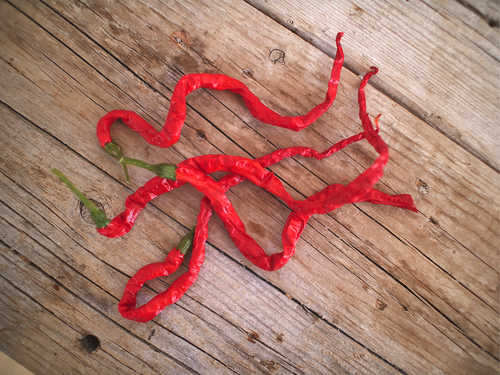
bangalore whippets tail
The beautiful love child of the Bangalore Torpedo and the Whippet’s Tail chillies has all the benefits of both its parents. Plants are amazing looking when in full fruit, dripping with an abundance of 30cm long, twisted red pods.
They dry very readily on the plants and are mostly used like this. It’s quite hard to pick them off when they look so great!
bangalore whippets tail
0170 -
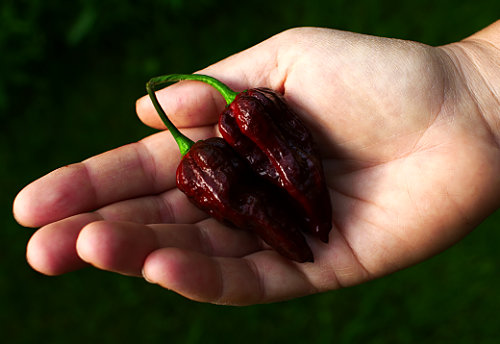
bhut jolokia, chocolate
This is a natural variant of the Bhut Jolokia, originating in Assam in northern India, that comes in a gorgeous deep chocolatey colour. Pods ripen from lime green to a gorgeous rich chocolate colour.
The plant seems to produce marginally less pods than its red counterpart but some exceptionally large pods. Flavour has a similar fruitiness to the red variant but with distinct smokey undertones.
0180 -

bhut jolokia, peach
The Peach Bhut Jolokia is another natural variant of the commoner red chilli. It is just as hot though with a smoother fruity flavour. Pods can grow impressively large at 10 to 12cm with a crumpled, rough texture and a gorgeous peachy colour, sometimes turning to orange.
Germination is tricky in my experience and they are quite picky plants even when they get going.0190 -
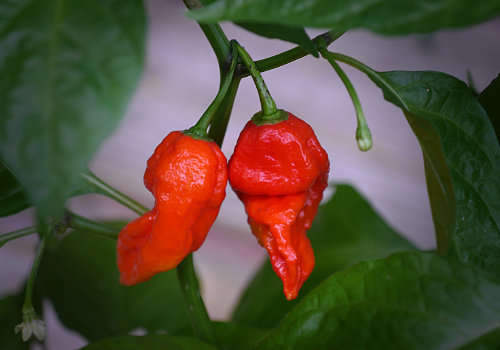
bhut jolokia, red
Originating in Assam in northeastern India, this superhot chilli topped the scales at over a million Scoville heat units, with an official rating of 1,001,304. The chillies are large, crumpled wedges that ripen from green to red, becoming unbelievably hot as they do so.
But the mighty Bhut is grown not just for its immense heat but its fresh citrusy flavour. A firm favourite for chilli heads.
0200 -
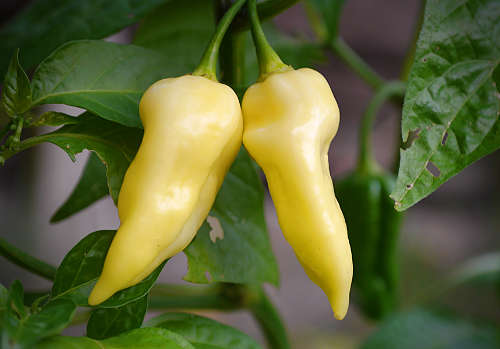
bhut jolokia, white
As pretty as it is unusual, this white strain of the Bhut Jolokia chilli is a real rarity. Pods share the best characteristics of the mighty Bhut - its extreme heat and delicious citrus tang, with the added bonus of beautiful smooth, ivory coloured pods.
If you are looking for something out of the ordinary, why not try this white heat!0210 -
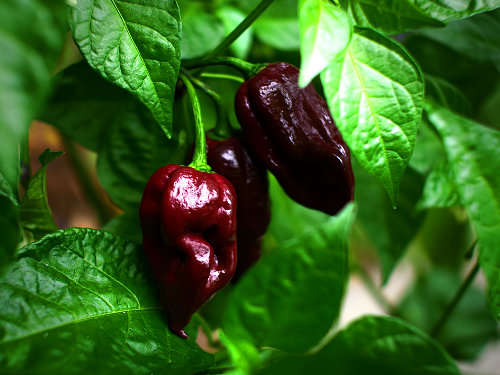
bhutlah
The Bhutlah is a hybrid chilli with two superhot parents; the Red Bhut Jolokia and the Trinidadian Chocolate Douglah. This Chocolate variant is a further cross strain, created by open pollination with the Bhutlah.
It is unknown what the other parent was but it must have been pretty hot as the Chocolate Bhutlah is off the richter scale! Pods are large and fat wedges with a distinctive floral flavour.
0220 -

big jim
Officially the world’s largest chilli pods, frequently reaching 20 to 30cm in length, borne on dwarf size plants around 60cm in height. Chillies look dramatic as they turn from deep green to dark red in colour.
The chillies are fairly mild by the standards of chillies today but their size makes them perfect for stuffing.big jim
0230 -
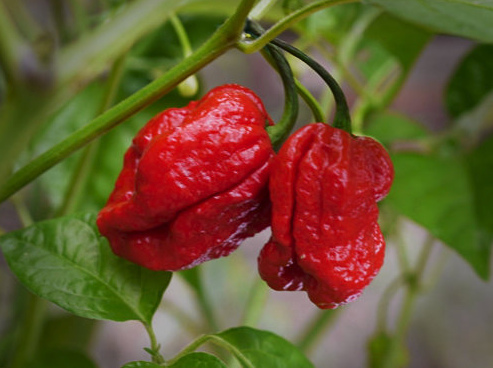
big red mama
Big Red Mama is a hybrid created by Tory Primo, who created the superhot 7 Pot Primo. It's said to be a Naga x Douglah and has the pimpled texture so characteristic of superhots.
It produces pods that are different in shape but they all have an incredible heat in common, said to be in the region of 1.3 million Scoville Heat Units.0240 -
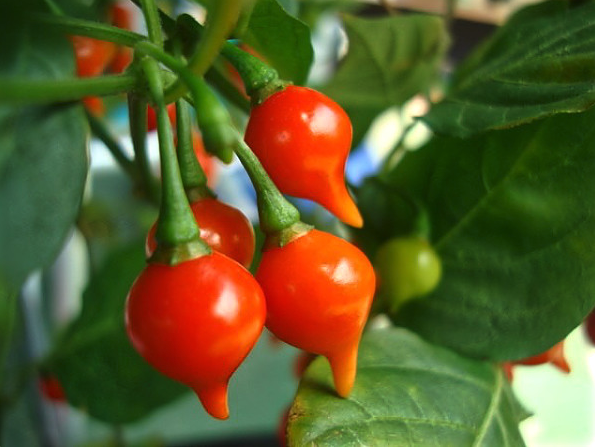
biqhuino
Originating in Brazil, Biqhuino literally means 'little beak', named for their shape. Biquino plants are really prolific producers of tiny, mild to medium heat teardrop pods, very juicy and full of flavour.
They are a really easy way to bring life to a salad or jazz up a pizza; sprinkle with impunity! They are often pickled or fermented for year round joy.0250 -
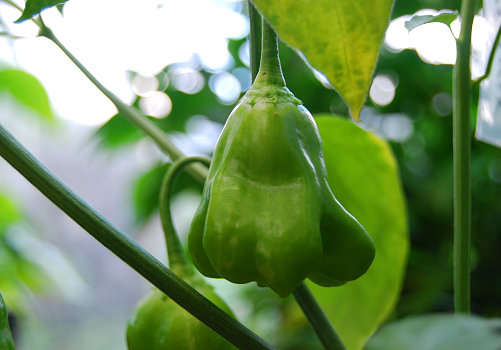
bishop's crown
One of the stranger shaped chillies, the Bishop’s Crown produces tri-lobed pods that resemble a bishop’s hat. Belonging to the species Capsicum baccatum, the pods grown on sprawling vine-like plants.
Chillies are exceptionally tangy and fruity, so are often used for hot pickles and salsas. The heat is akin to that of a Jalapeño, making a wonderful addition to any chilli lover’s kitchen.0260 -

black pearl
A gorgeous ornamental chilli with a loyal following among gardeners. Plants are grown as much for their deep purple-black foliage and their lovely little purple flowers as they are for their little spherical chillies.
Pods are pretty hot but their flavour is unremarkable; a stunning talking point for a sheltered, sunny patio or windowsill.0270 -
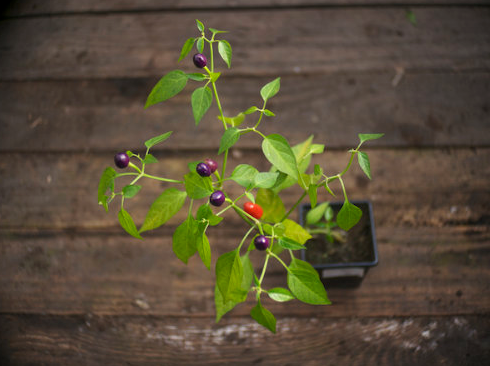
bolivian rainbow
The gorgeous Bolivian Rainbow Chilli produces berry-like pods in rainbow colours on delicate plants with yellow, red and purple fruits visible on the plant at the same time.
They are eager to grow and fruit and do well on a sunny, sheltered patio. The chillies have some considerable heat and are grown as much for cooking as for display in their native Bolivia.0280 -
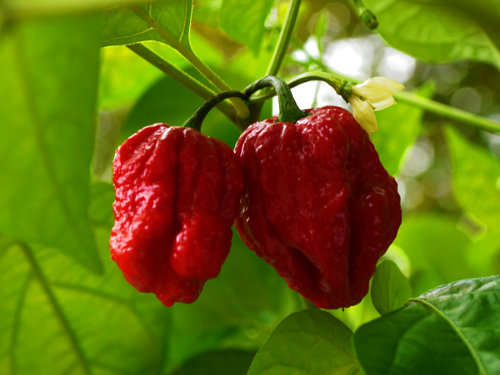
borg 9
A cross between a 7 Pot Bubblegum and a Naglah (Naga x Douglah), this is a chilli with some serious burn! The flavour is similar to the fruity, earthy Bhut Jolokia with a long burn. Pods are large and round like the 7 Pot but dimpled with a small tail to the pods.
Borg 9 was named after the actor Ernest Borgnine, although what the connection is remains unclear.
0290 -
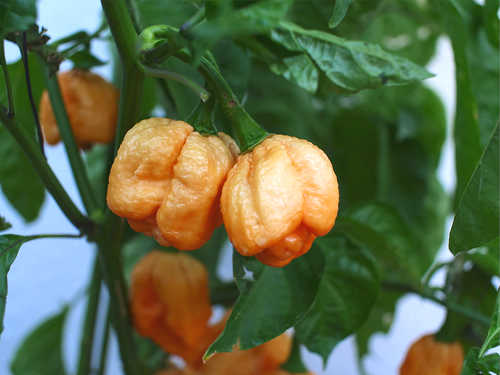
borg 9, orange
An orange variant of the Borg 9 chilli which seems to be a bit easier to grow and produces a prolific crop of superhot chillies quite late in the season. Pimpled, globular chilli that is a Naga x Seven Pot Bubblegum.
How could it be anything other than insanely hot? It takes the very fruity, citrusy flavour from the Bhut and the shape from the Bubblegum.0300 -
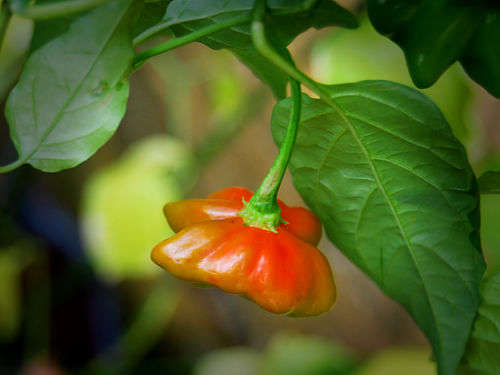
brazilian starfish
As weird looking as it is sounding! Little starfish shaped pods grow on baccatum plants, with their characteristic vine-like habit. Plants grow quite large and are slow to fruit but will reward you with a bountiful harvest at the end of the season.
A single plant will grow hundreds of quite hot little pods with a nice fresh fruity flavour. A rightly popular chilli!0310 -
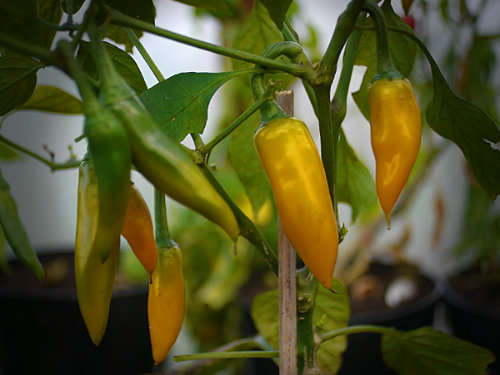
bulgarian carrot
The local name for these chillies is shipkas but its easy to see how they got their nickname. Produces a very high yield of bright orange peppers with a fresh, fruity flavour.
Pods are up to 10cm in length borne on a decorative looking plant. Compact plant ideally suited to containers.bulgarian carrot
0320 -
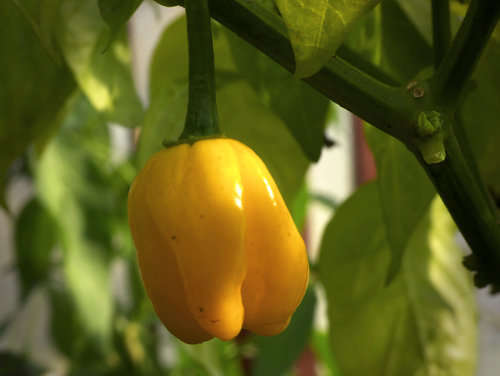
burkina yellow
These fruity golden globes are sometimes listed as a Habanero and sometimes as a Scotch Bonnet variety. Fruits grow elongated and slightly crumpled, sometimes with a slightly pointed end.
One of a number of hot African Habaneros, the chilli gets its name from its place of origin, Burkina Faso. At around 300,000SHU, they deliver quite a kick but are grown for their fabulous fruity flavour.0330 -
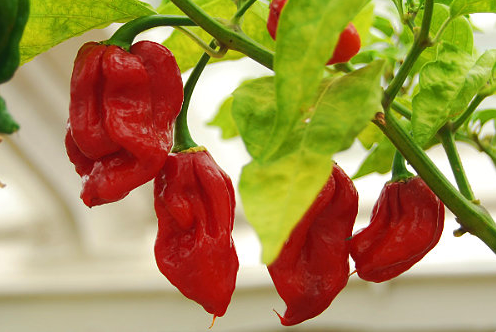
butch t, red
Butch Taylor, the owner of a Hot Sauce company bred Trinidad Scorpions to get a chilli with an unusually high pith content, which is where the capsaicin is held. In 2012, it made it into the Guinness Book of Records as the world's hottest chilli, with an insane 1,463,700 Scoville Heat Units.
It remained there for nearly two years until it was toppled by the Carolina Reaper.0340 -
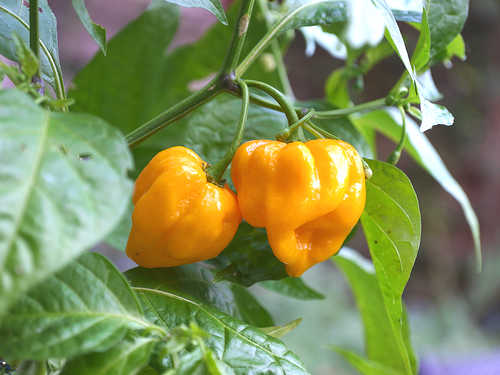
butch t, yellow
A yellow variant of the superhot bred by American hotsauce manufacturer Butch Taylor from the original Trinidad Scorpion. The yellow variant is almost as hot as its red cousin with a sweeter flavour than the red variants, which can be a bit bitter.
Plants seem a bit less picky and easier to fruit too. Somewhere between 1-1.5 million Scoville Heat Units, so quite hot.
0350 -

cappa conic
A purely ornamental chilli that is edible but devoid of any heat. Plants are of dwarfing habit and have nice, deep green and bushy foliage. Little teardrop chillies are held aloft in creamy shades of yellow, orange and red.
A lovely talking point for a sunny patio or kitchen windowsill. Sprays of the little pods make for a lovely cut flower arrangement.cappa conic
0360 -

carolina reaper
The World’s Hottest Chilli. As of December 2013, the Carolina Reaper has featured in the Guinness Book of Records as the hottest chilli in the world, with an average heat rating of 1.5 million Scoville Heat Units - reaching highs of over 2.2 million.
Bred by the Puckerbutt Pepper Company, rumour has it they're a cross between a Pakastani Naga and a red Habanero from St Vincent.0370 -
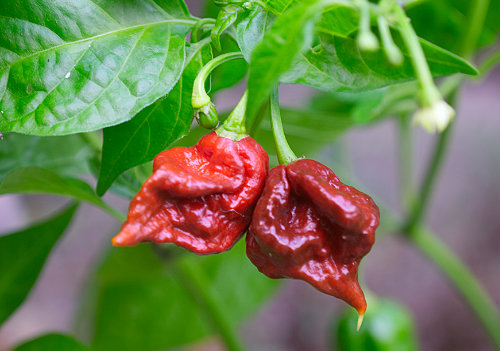
carolina reaper, chocolate
This is a lovely chocolate variant of the Carolina Reaper. As with most chocolate varieties of chinense chillies, they have a smokey flavour and are definitely smoking’ hot!
There are claims afoot that it’s even hotter than the original red Reaper.0380 -

cayenne
Cayenne chillies are the classic chilli - the colour and shape you’d probably go for if you were asked to draw a chilli. Cayenne is the capital of French Guiana in Southern America where these chillies originate.
Today, there are literally hundreds of Cayenne hybrids around the world. They are easy to grow, quite cold tolerant and have good heat and flavour.cayenne
0390 -
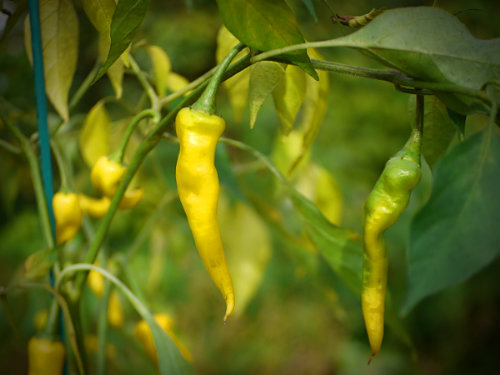
cayenne, golden
Cayenne are probably the commonest variety of chilli found across the globe, with hundreds of variants. They are the classic chilli shape, easy to grow and quite cold tolerant for peppers.
Golden Cayenne chillies are considerably hotter than the standard variety at 70,000-80,000ScU.cayenne, golden
0400 -
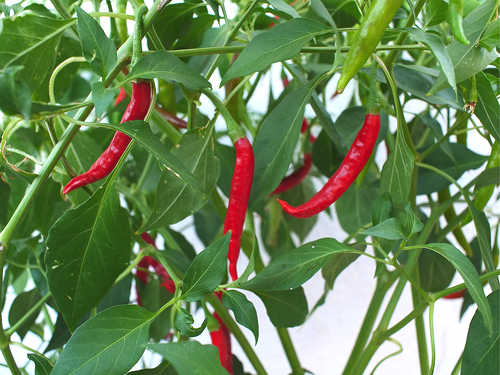
chang rai
Large plants that grow tall, producing hundreds of pods over the course of the season, hanging down from the top part of the plant. Pods are quite mild and make for a great, sharp flavoured ‘dressing chilli’ with a good crunch.
It’s great chopped raw onto the top of curries, fajitas and stir fries. A surprisingly good chilli.chang rai
0410 -

chilli de arbol
AKA the Mexican Tree Chilli, so called because of its woody stem and impressive size. The Tree Chilli produces some very distinctive pods with an earthy flavour and some serious heat. They are prized in their native Mexico for both these properties.
They also keep their rich red colour once dried and are often used decoratively as well as in the kitchen.chilli de arbol
0420 -
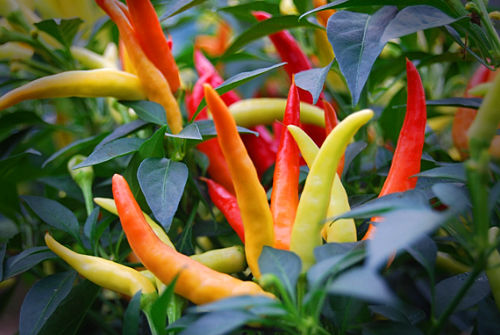
chilly chilli
A lovely little dwarfing ornamental pepper with long fingers of cream, yellow, orange and red reaching to the sky. It’s size makes for a perfect patio or windowsill chilli.
Pods are edible, but as its name suggests, they are almost entirely without heat. Plants are so lovely, it’d be hard to pluck off the pods anyway.chilly chilli
0430 -

chiltepin
The Tepin, or Chiltepin pepper grows wild in the deserts of Texas, New Mexico, Arizona and northern Mexico. The fruit are tiny, about the size of a large pea, but have been measured at 265,000 Scoville units.
They form a large, bushy plant with an unusual round chilli pod that ripens from green to bright red and makes for an attractive plant for the garden or greenhouse.0440 -

devil's tongue chocolate
This is a very hot chilli with high yields. Plants grow up to one metre in pots and produce long wrinkled wedge shaped pods 5-10cm long, similar to a Fatalii but with a deep, glossy chocolate sheen.
They are fiery with 125,000 - 350,000 SHU but in some cases have been found to be even hotter. It's exact origin seems to be a bit of a mystery but it is thought to be a member of the habanero family.0450 -

datil pepper
Datil Peppers are very popular in the USA, their production centering around St Augustine in Florida. There are numerous stories of how they arrived, some saying from Menorca, others from Cuba.
Pods are little crumpled, golden wedges similar in heat and flavour to Habaneros but much sweeter. They are sometimes known as the Yellow Lantern Chilli.0460 -
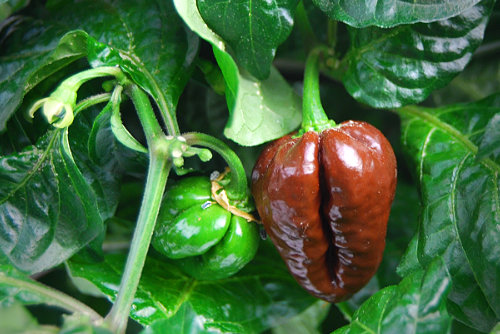
douglah, chocolate
The Chocolate Douglah has been tested by the Chilli Pepper Institute of New Mexico University to be the most consistently hot chilli in the world at over 1.8 million.
The Douglah is a chocolate variant of the Trinidad Seven Pot, super hot and, as with other chocolate coloured chillies, it has a distinctive smoky flavour.0470 -
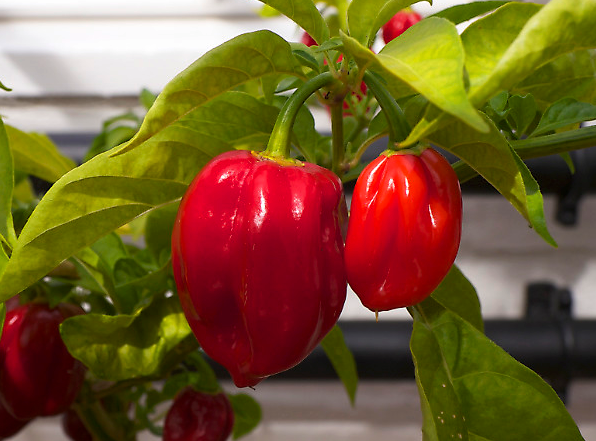
ecuadorian devil's breath
This fabulously named Central American heirloom variety is Ecuador’s finest and hottest chilli. It produces large pods with a thick flesh.
The Devil’s Breath is less pungent than a Habanero at around 200,000 Scoville Heat Units but this chilli is also grown for its thick fleshy-walled that deliver a big hit of fresh, fruity flavour.0480 -

etna
Etna is a spectacular-looking eruption of bright red chillies, held aloft the plant in distinct bunches on bushy, ornamental plants of a dwarfing habit. This plant is not just ornamental either, the chillies are seriously hot.
Plants are medium sized but produce a good number of chillies. Etna won a Royal Horticultural Society Award of Garden Merit in their 2006 Chilli Pepper Trials.0490 -
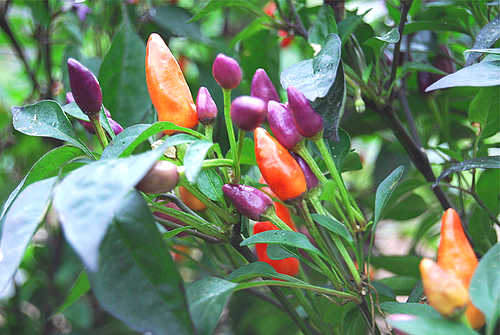
explosive ember
A fabulous-looking ornamental chilli named as much for its quick, explosive heat as its shades of volcanic purple and black. Plants are quite easy to grow and do well on a warm patio. They are dwarfing in habit so well-suited to a sunny windowsill.
When in fruit they are covered with a myriad of prostrate little pods but, like most ornamentals, the flavour is unremarkable.0500 -
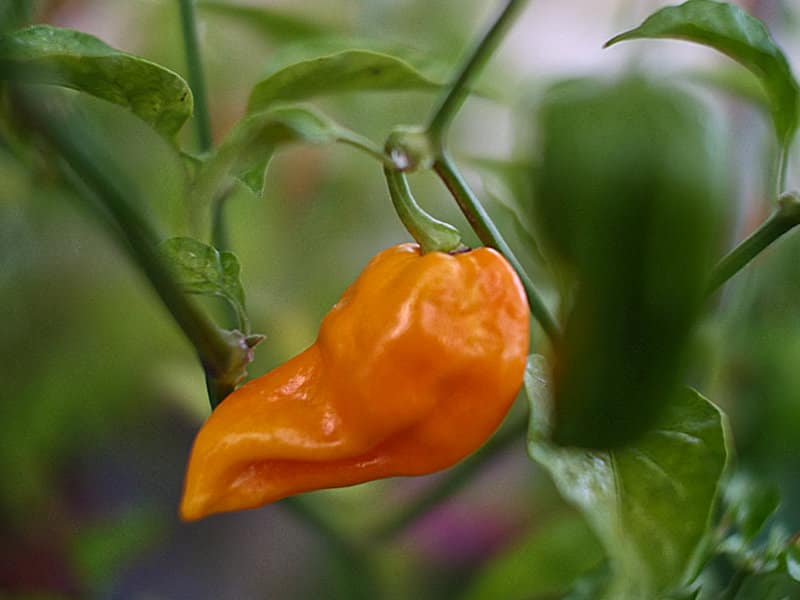
fatalii, yellow
A seriously hot Habanero type from the Central Republic of Africa that's so hot it's named Fatalii. Bushy plants grow an abundance of gorgeous crumpled wedges in the right conditions, although they can be a bit picky and need a bit of extra care.
Pods impart some of their amber colour into the food they are cooked with as well as their citrusy, fruity flavour. A favourite among chilli growers.0510 -
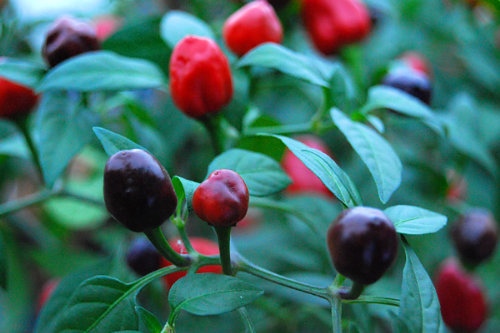
filius blue
Attractive, ornamental chilli with purple-tinged foliage. Plants grow to about 60cm tall, making them ideal for patio pots. Their short growing season makes them a good choice for the UK. Chillies start out a purple-blue colour before ripening to red.
Filius Blue chillies are unusual in that they lose their heat when they ripen. RHS Award of Garden Merit guarantees this is an ornamental winner.0520 -

firecracker
A very productive and vigorous compact variety that grows to around 30-40cm making it perfect for a sunny windowsill. Plants are bushy with a deep green foliage.
Fruits are held upright above the foliage, starting creamy white and ripening through purple and orange, finally to red with all colours visible on the plants. They have quite some heat at 100,000 Scoville Heat Units but not much flavour.0530 -
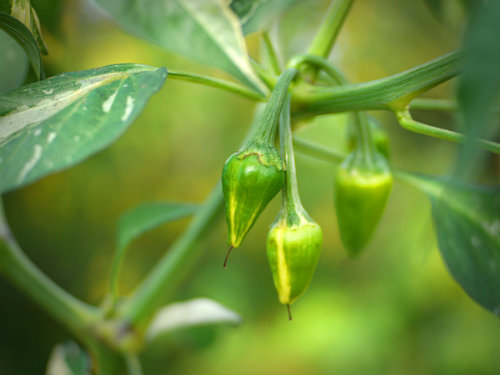
fish pepper
An edible ornamental variety with unusual foliage, pods and name. The Fish Pepper comes from America, but its origins are African. The chilli was taken across the Atlantic on slave ships as a condiment used to spice up fish dishes.
Pods are quite variable in heat and have a sweet flavour that is quite distinctive. Plants have a variegated foliage and pods are striped cream and green as they develop.0540 -

fresno
A very popular chilli in the USA, grown for its abundance of juicy, flavoursome conical pods. The super-bred Fresno Supreme is more commonly grown. They are often used raw in salsas. They are not especially hot, similar in heat to the Jalapeño.
They originate in the American town of the same name. Pretty, shiny fat pods are produced in great numbers and the plants are easy to grow.0550 -
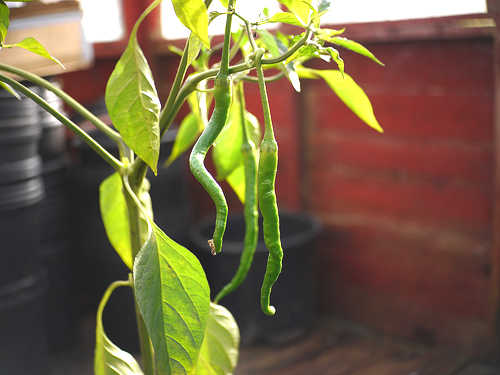
goat's horn
A very high yielding Cayenne-type variety originating in Taiwan. Pods are long and twisted, like a goat’s horn, hence the name. Pods start out a mid-green colour and ripen through to bright red.
They are very crunchy with a slightly sweet peppery flavour and in Taiwan they are often pickled with white vinegar, sugar and lime to enhance their flavour and crunch.
0560 -

grekisk
This rather peculiar-looking chilli is somewhat reminiscent of the Little Shop of Horrors, all it needs is some googly eyes to finish off! Grekisk, as its name suggests, is a Greek chilli although why it has the German name for Greek is unclear.
It’s mild and crunchy with a sharp peppery flavour. Good for chopping up on pizzas and pickling.
0570 -
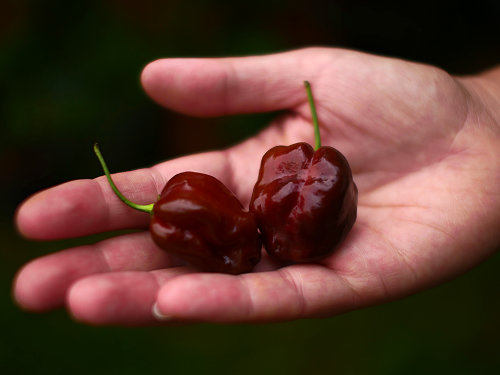
habanero chocolate
This pepper is prized for the rich colour of its skin. The chocolate Habanero pepper packs a punch far spicier than regular Habanero, at 425,000SHU.
Chocolate Habanero, also known as brown or black Habanero, takes a bit longer to cultivate, but the growers patience is rewarded with a searing hot pepper with a fruity flavour and distinctive smoky undertones.0580 -
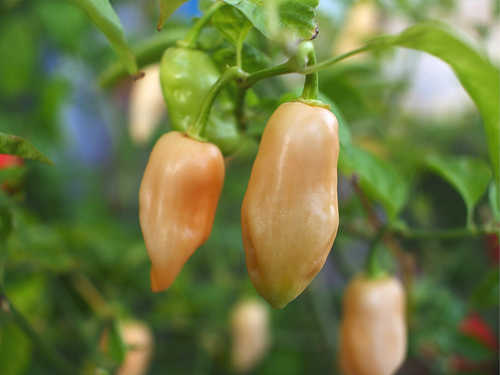
habanero, lemon
A lovely semi-ornamental Habanero with pretty, lantern-shaped pods.They start out a lime green colour and ripen through to a pretty cream that looks lovely in the sunlight.
Pods have the characteristic Habanero fruitiness with rich undertones of apricot and lemon. A lesser-known but increasingly popular chilli. Heatscale is around 300,000 Scoville Heat Units.0590 -
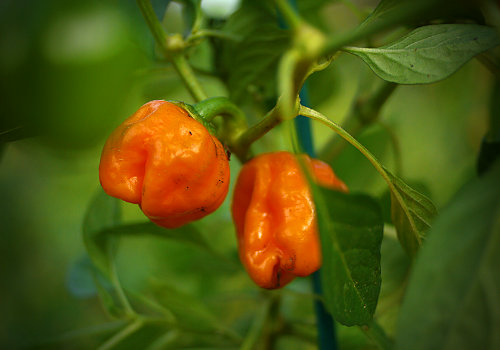
habanero, mustard
A quite stocky plant that produces amazing looking chilli pods that transform through a lovely spectrum of colours. They start our bright green and work their way through yellow and orange to finish off a mustardy brown.
Flavour is as you would expect from a Habanero, a robust fruitiness. It is not a big producer but an interesting one.0600 -
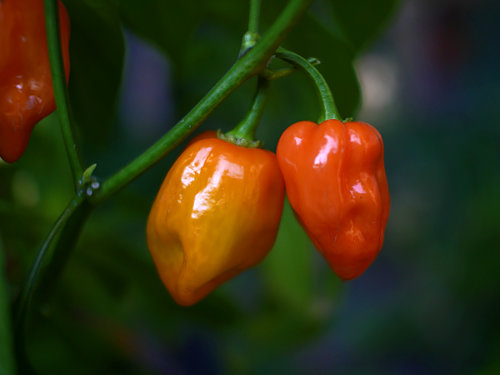
habanero, orange
The traditional Habanero chilli has a Scoville rating of up to 350,000 ScU. The name Habanero is Spanish for 'from Havana'. The pepper is used in cuisine throughout the Yucatan.
This popular hot pepper has fruits which are small and wrinkled, measuring 3.5-6cm long and 2.5- 4cm wide and ripen from green to light orange. A truly brilliant culinary chilli.0610 -

habanero, white
This rare, white chilli is a seriously hot Habanero from Peru, measuring 420,000ScU, that fruits within 90 days. The small, fiery, lantern shaped pods grow quite prolifically on quite large, bushy plants.
Pods are about 2cm long and are actually a creamy colour rather than pure white. A rare and unusual chilli for your collection.0620 -

hungarian hot wax
This is a popular ‘Yellow Wax’ type, proved to be prolific and easy to grow. Fruits start out a pale yellow as they grow long and tapered with a gorgeous waxy appearance.
They then turn orange and red at maturity. The Hot Wax originates in Hungary and is sometimes known as the Banana Chilli. Use fresh in salads or sauces or pickle to preserve.0630 -
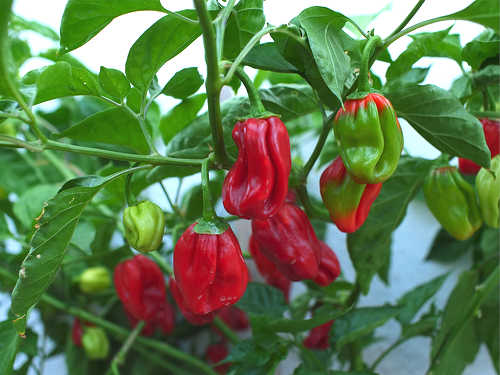
habanero, caribbean red
Ferociously hot Habanero measuring over 400,000 Scoville Heat Units. The slightly crumpled, tasty pods are similar in shape to a standard Habanero. Unripened pods start off as an attractive emerald green that then ripen to a gorgeous pillar box red.
The are extremely productive chilli plants, reaching over a metre in height if they reach their full potential.0640 -
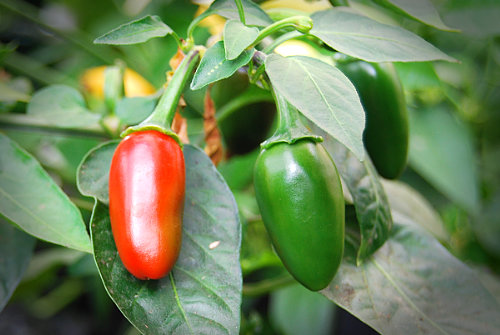
jalapeño
Even though it's a long time since the Jalapeno figured in the hottest 10 chillies in the world, it still packs a punch if you eat enough of them. The Jalapeno is the chilli of choice for chilli eating contests in the USA and its unique flavour is ubiquitous with Mexican cooking.
The Jalapeno is a very high yielding plant producing a profusion of short, blunt, conical fruits. The chillies are often picked and used green, but will ripen through to red.0650 -

jalapeño, purple
This is a purple form of the Jalapeno chilli from Mexico, very similar in shape, size, heat and growing habit to the classic form.
The purple variant forms a slightly smaller, sturdier and tidier plant with purplish stems and tinge to leaves that makes it quite ornamental. Pods start off a lovely purple colour but do eventually mature to red, getting hotter as they do so.
0660 -
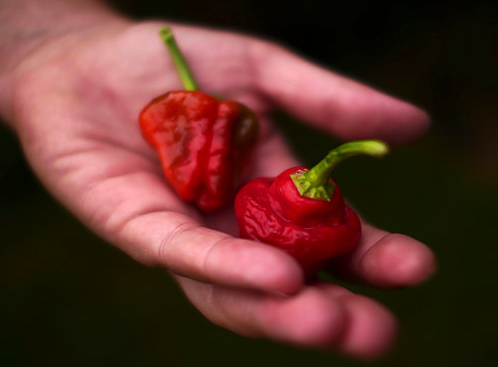
jamaican hot, red
This attractive crumple-podded chilli is actually an Annuum variety that packs a punch similar to Habanero or Scotch Bonnet. They have a less fruity flavour than the Habaneros they resemble, but similar in heat and much easier to grow.
Jamaican Hot Red is a compact plant with dense foliage. Pods ripen to a deep red with a fabulous, crumpled appearance to their globular shape. They are thin-walled and juicy.
0670 -
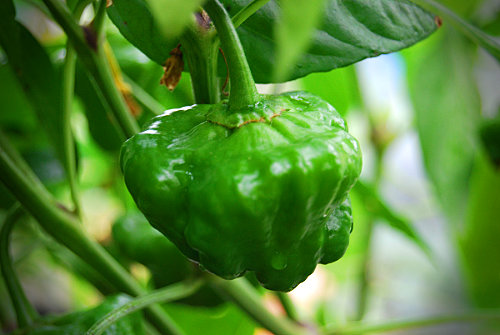
jamaican hot, yellow
Jamaican Hot, Yellow is very similar to its red cousin except it ripens through lovely shades of orange and yellow. Pods are shiny, crumpled and ridged and quite impressive looking.
Slightly less hot than the red variant but every bit as gorgeous. Around 200,000 Scoville Heat Units so approaching the chinense species it resembles.
0680 -

japones
A lesser known chilli that is actually quite popular in its native Japan. Pods are around 6cm in length and stand prostrate on plants, looking a bit like Chilli de Arbol, although at around 25,000 Scoville Heat Units, they don’t have the same heat levels.
Their size makes them a popular choice for pickling but they are also used in stir fries and soups.0690 -
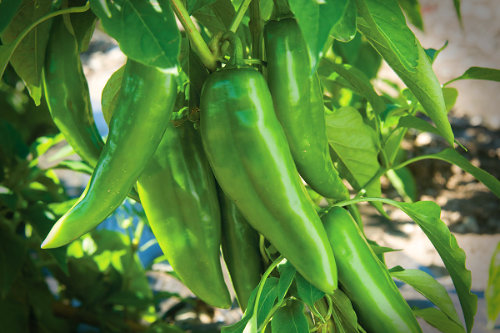
joe e parker
An improved variety of the New Mexico Chilli, these are very productive chilli plants. The Joe E Parker was named after a graduate of New Mexico University, where the chilli was developed.
The chilli produces large, flavoursome pods around 15-20cm long, perfect for roasting or stuffing. They are mild in pungency. In New Mexico, they are commonly dried to make chilli wreaths and ristras.0700 -
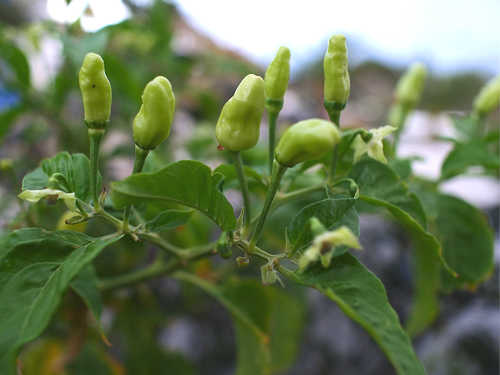
kanthari maluk
A Birdseye variety from the Kerala region of India with pretty, ivory coloured prostrate pods (also known as Indian White). The tall plants take a long time to produce flowers and pods but do end up with a fair sized crop. Pods are pretty hot, with quite a heat range between different chillies, 50k - 100k SHU.
The taste is peppery and a little bitter. It’s not a well known chilli outside of India, where it is mostly used to make pickles but also a few specific Keralan chicken and fish curries.0710 -
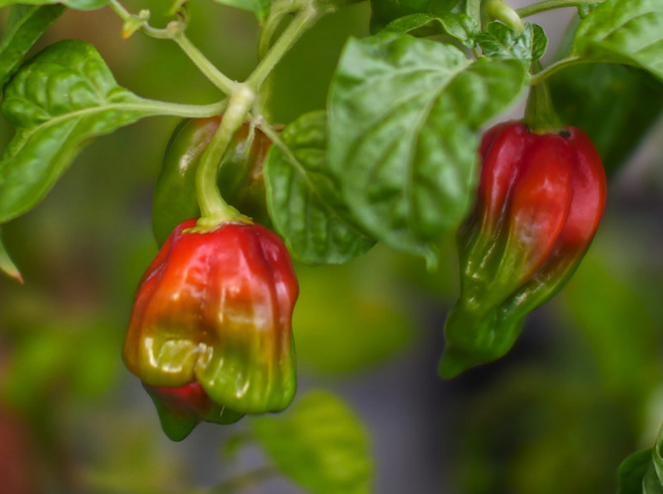
komodo dragon
The Komodo Dragon is the hottest British-bred chilli, developed in Bedfordshire by chilli grower Salvatore Genovese. They look similar to Bhut Jolokias, but with added folds and twists to their shape.
The superhot with the delayed reaction; first comes a sweet, fruity flavour and after about 10 seconds, it hits you with its' 1.4 million Scoville Heat Units.0720 -
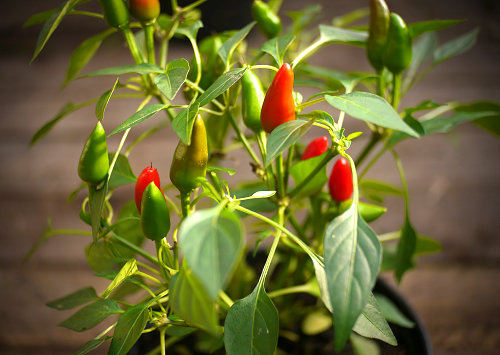
krakatoa
This F1 variety is a very compact and highly ornamental chilli with deep green, bushy foliage. In summer, the plant sends an eruption of skyward-pointing finger-shaped pods out through the foliage.
Its diminutive size makes Krakatoa perfect f or a windowsill or sheltered, sunny patio. For an ornamental, pods are surprisingly hot but without any remarkable flavour0730 -
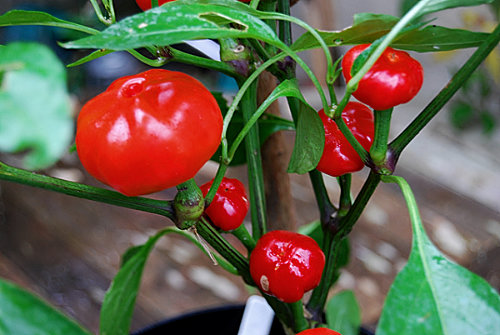
large cherry
Large Cherry Chillies are amongst the easiest of chillies to grow. Plants grow tall and are a bit untidy but they start to produce their large, irregular, round pods quite early on.
Plants are large and produce abundant fruit of a medium heat and peppery flavour. They are pretty hardy for chillies and will produce well in a sunny, sheltered spot on a patio or balcony.0740 -
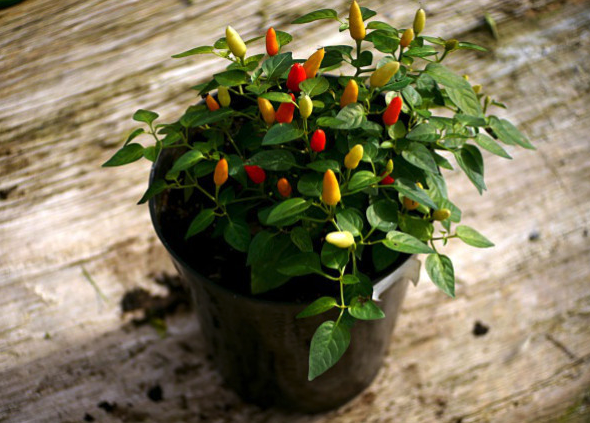
little elf
An extremely attractive dwarf variety of chilli plant that originally comes from Hungary. Plants grow to no more than 30cm but what they lack in height they make up for in vigour, being extremely productive little plants.
A great little chilli plant for your windowsill as they are very pretty, productive plants that offer a mass of hot little pods. They would look good in a hanging basket.0750 -

malaysian goronong
A very oddly shaped Habanero type from Malaysia, sometimes known as Caronong. Pods are irregular, elongated and ridged, ripening to a glorious bright golden colour. Plants are very productive and popular in their native Malaysia but not widely known outside of the country.
A bit milder than the average Habanero at around 250,000 Scoville Heat Units, with the classic fruity flavour to be expected from Habanero chillies.0760 -
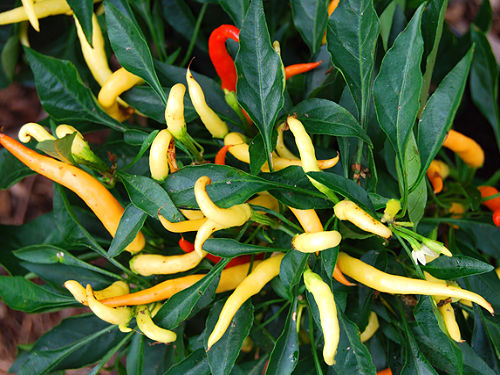
medusa
A stunning, modern chilli produced by breeders in Italy. When in full fruit, plants send up a profusion of chillies that are reminiscent of snakes on the head of the mythological Medusa.
Chillies ripen though a range of shades of yellow, orange and red, with all colours visible on the plant as they do so. A very beautiful plant with edible pods that have no heat.0770 -
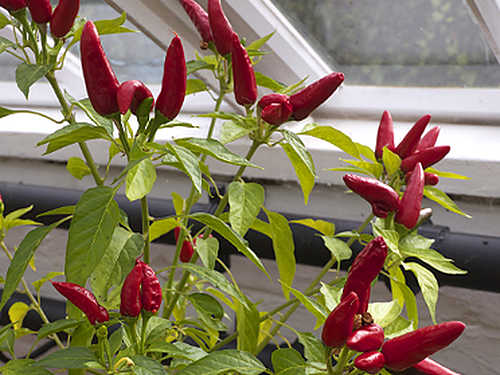
mirasol
Mirasol literally means 'looking at the sun' and the chilli gets its name from its upwards pointing chillies which it grows in abundance.
They are not without heat at 3,000-5,000 but grown more for their ornamental qualities, as they are a very attractive plant. They do dry well too and will do so if left on the plant after they have ripened.0780 -
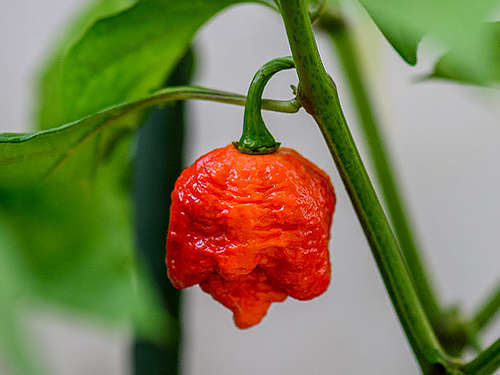
moruga, brainstrain
The Moruga Brain Strain is an unusual variety with very ridged pods that make it look a little like a little brain. How this strain of the chilli came about is not quite clear.
Some people believe it to be a natural strain of the plant, some think it’s a Moruga crossed with a seven pot. Others believe it’s actually a strain of Seven Pot.0790 -
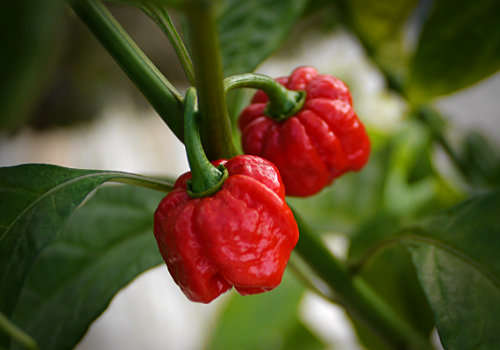
moruga scorpion
The Moruga Scorpion is thought to be a cross strain of the Trinidad Scorpion and Red Savina chilli, hailing from the Trinidadian town of Moruga. It can certainly hold its own against the heavy-weights of the chilli world, one pod testing at over 2 million SHU.
Pods are like large golf balls in shape and size, with a characteristic pimpled skin and a long, robust and fruity burn.0800 -
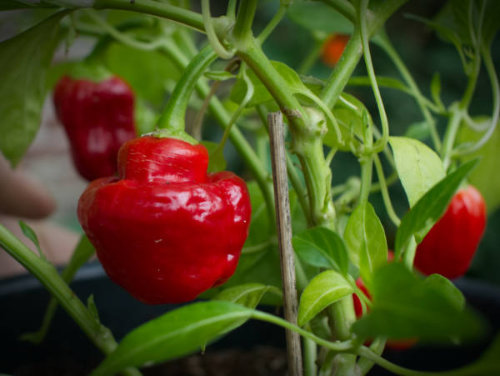
mushroom, red
A stunning oddity of a chilli plant, an heirloom variety that produces red hot chillies the size of a golf ball. They are crumpled pods that resemble an upside-down mushroom. With a Scoville rating of 30-50,000 units they are pretty fiery.
Plants grow quite compact but are prolific fruiters, producing several kilos of chillies over the season. A fast and easy to grow variety with quite ornamental properties.0810 -
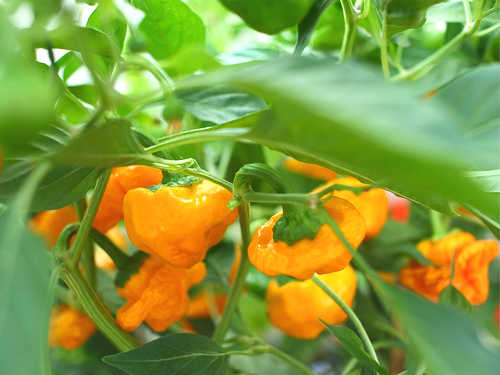
mushroom, yellow
The yellow variant seems to be more freely fruiting than its red cousin. A highly ornamental chilli that you will struggle to pull the pods off.
Whilst having some considerable heat to them, they are not that brilliant in terms of flavour but they do sit on the plant for a long time making it a great patio talking point. Plants are quite compact so would just about fit a windowsill.0820 -

naga viper
A superhot chilli bred by Gerald Fowler of the Chilli Seed Company in the Lake District that was for a short time recognised by the Guinness Book of Records in 2011 as the hottest in the world.
Pods have a characteristic swirl of folds and a shape similar to the Butch T Scorpion that overtook it. Still a worthy opponent at 1.4 million Scoville Heat Units.0830 -
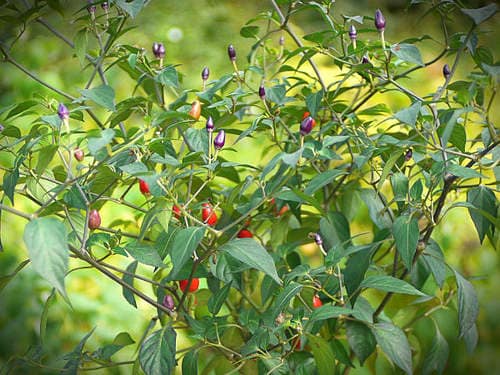
numex centenniel
Numex Centennial – this chilli was specifically bred for small pots, highly ornamental with purple-veined foliage and a profusion of upright, rounded fruits that ripen through purple, orange, yellow and red.
Originally bred in celebration of the Centennial celebrations of New Mexico University. A lovely ornamental chilli with some considerable heat but not much flavour to write home about.0840 -
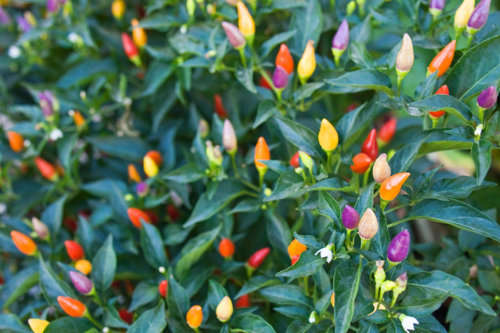
numex twilight
This stunning plant works well as both an ornamental and medium hot chilli variety. The dark foliage contrasts well with the profusion of purple flowers which give way to 2cm long tapered purple fruits, which mature through yellow and orange to red.
All colours can be seen on the plant at one time giving a stunning and prolific display. Pot size restricts growth.0850 -

orozco
Highly ornamental heirloom from Eastern Europe. Orozco has dark stems and foliage and hot little upright fruits that start out green then turn through a spectrum of colours from purple to orange and red.
A lovely patio chilli with edible chillies of mild to medium heat. Plants are really easy to grow and start flowering even at plug size.0860 -
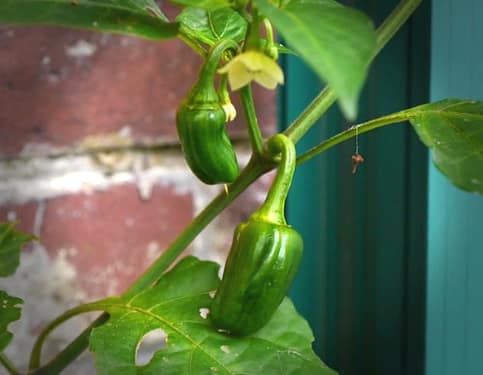
pimiento de padron
The Russian Roulette of chillies as the plant produces capsaicin, but not evenly through its chillies. That means that most chillies are mild, but one out of every five is another story! Pimiento de Padron are very easy to grow and quite prolific.
They grow well in a sheltered spot outdoors. A weird and wonderful chilli. Simply flash fry them in a hot frying pan.0870 -

paper lantern
Paper lantern chillies are beautifully ornamental plants with their bushy habit and myriad of clusters of emerald green, crumpled teardrop chilli pods. As chillies mature, their colour turns to a rich, blood red that appears to glow in the sunlight.
Don’t be fooled by their pretty appearance, these chillies are amongst the hottest Habaneros in the world at 450,000 SCU, with a lovely strong fruity flavour!
0880 -

pasilla
Pasilla are a very popular chilli in their native Mexico. They form part of the holy trinity of Mole chillies, a deep, rich and flavoursome paste used to flavour meat dishes. Pasilla literally means 'little raisin' and when dried, the skin of the pods does have a dark, wrinkled appearance.
There is nothing little about these pods though, they can reach up to a foot long; a marvel to watch grow!
0890 -
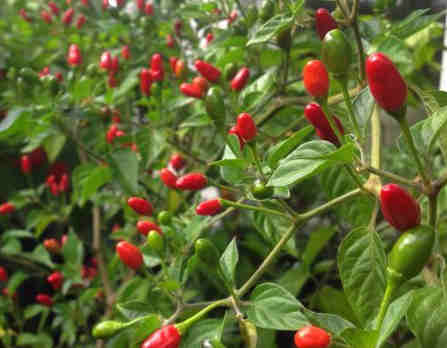
pequin
An extremely hot little bird type chilli that produces fiery little blunt pods. Pods can reach around 100,000SHU. Originating from North East Mexico where pods are often pickled or used in salsas and sauces.
Pequin chilli plants grow quite tall even in the first season but can become very large if overwintered, with hundreds of little fruits on them.0900 -
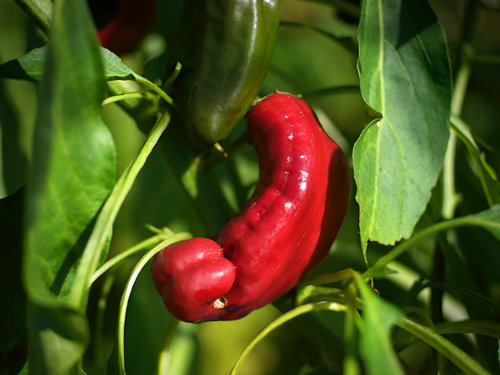
peter pepper
Also referred to as Chilli Willi or Peter Penis pepper because of its' phallic shape. The plants reach 60cm tall and produce a good yield of unusual shaped bright shiny red thick walled fruits of 6-9 cm long.
Winner of Organic Gardening Magazine's Most Pornographic Pepper award, although quite what it was pitched against is unclear. Medium heat at 30,000 SHU.0910 -
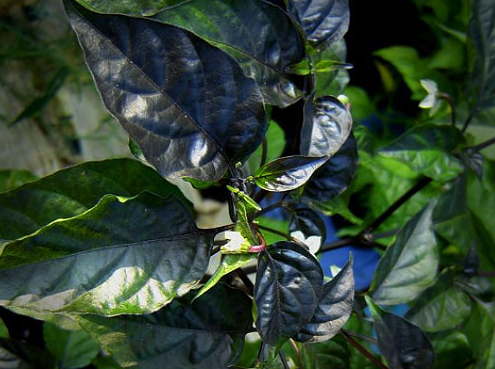
pimenta de neyde
Pimenta de Neyde originates in Brazil, named after the lady who discovered it. With its deep purple stems and veins and its deep green and purple leaves, it looks like an ornamental annuum. It's pods however, have considerable heat and a fruity flavour.
The chillies are unusual in that they start off a deep purple to black colour and they do not change as they ripen.0920 -
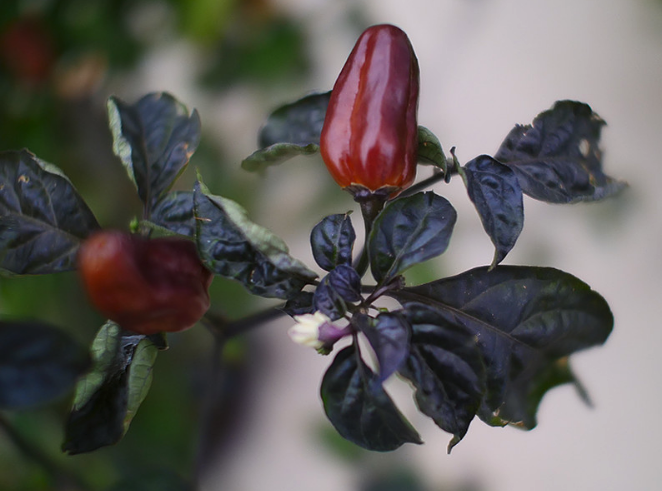
pimenta puma
This immensely lovely chilli takes its heat and flavour from one of its parents, a yellow habanero, and its good looks from the other, a Pimenta da Neyde.
Pods start out a solid black colour and later ripen to a gorgeous copper and amber, in stunning contrast to the purple black foliage of the plant. Plants are quite easy to grow.0930 -

pink tiger
The Pink Tiger produces purple pods which lighten as they ripen to reveal amazing patterns of pink, peach and purple. Some pods are quite uniform in colour, others develop deep purple tiger stripes.
The chilli is a cross between the Bhut Jolokia and the Brazilian purple, Pimienta de Neyde. The heat and flavour belong to the Bhut but the appearance lends itself more to the Neyde.pink tiger
Variety; A cross between Annum and Chinense. Annuums are by far the biggest group of chillies, ranging from incredibly mild to medium hot in a huge range of flavours and shapes.
Buy as: plants
Gallery: More photos
0940 -
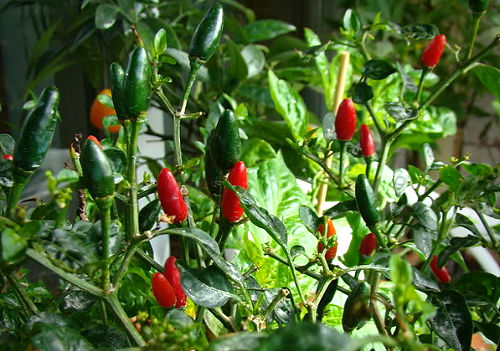
piri piri
One of the world’s classic chillies, in fact, one of the world’s favourite flavours! Piri Piri, or African Birdseye, plants have grown feral around their native South African and Mozambique. The sharp searing taste of makes a great accompaniment for chicken and fish dishes.
The name is actually of Portuguese origin, given by the conquering nation of the 16th Century who popularised the chilli in Europe.0950 -
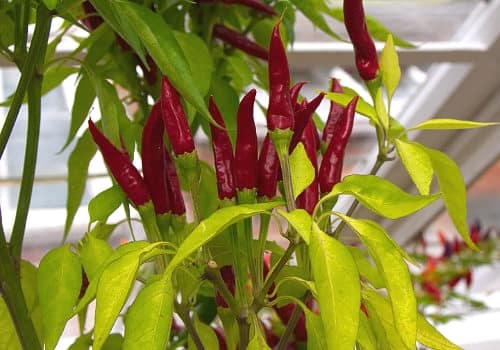
poinsettia
This is an extremely hot and ornamental chilli plant that originates in Japan. It obviously gets its name from the likeness of its bright red upright pods that grow in upright clusters to the popular Christmas flowering houseplant.
Plants are quite large, growing between 75cm to 1m in optimum conditions but also do quite well out on the patio too.0960 -
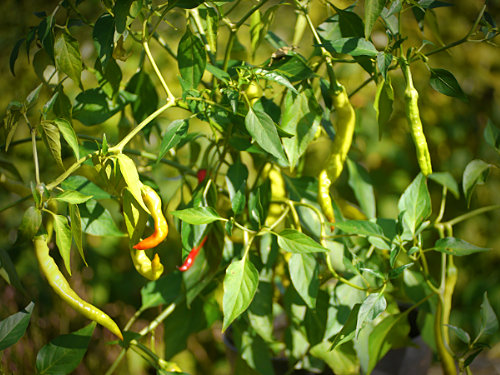
pusa jwala
Pusa Jwala are medium sized, attractive plants that produce long, thin, hot pods that hang pendant in abundance. They are one of the most popular varieties of Indian Hot Pepper and are pretty hot at 30,000-50,000ScU.
They are a good all rounder for Indian cooking as well as drying well.0980 -

ring of fire
Explosive variety of Cayenne pepper that produces abundant, seriously hot chillies. Long, tapered pods grow to around 8cm long and mature to a fiery red colour. Ring of Fire chillies dry well and are often ground into a chilli powder.
They are lovely, bushy plants but heavy extremely heavy croppers with a short growing season, often the first chilli to fruit in a UK greenhouse.0990 -
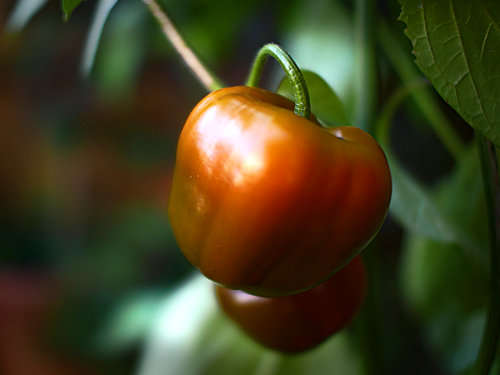
rocoto roja
Large, extremely pungent chillies with distinctive black seeds from the Peruvian Andes. They are sometimes known as Manzano, or 'apple' because of their shape. Rocotos can be a bit difficult to germinate, but are remarkably cold-tolerant once they get going.
Large plants with distinctive hairy foliage. There are numerous varieties of Rocotos, these are pretty hot at around 150,000 SCU.1000 -
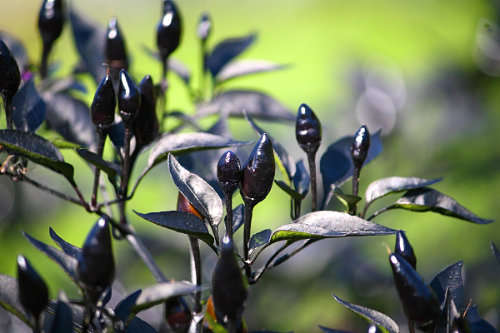
royal black
Royal Black is one of the most elegant chillies you can grow in your garden, adding a lovely oriental accent to a patio or flowerbed. The plant is tall and bushy, with dark purple foliage that has the occasional leaf tip of white and green.
The bullet-shaped pequin type pods are both flavoursome and hot, starting out a dark purple shade and ripening to bright red.
1010 -
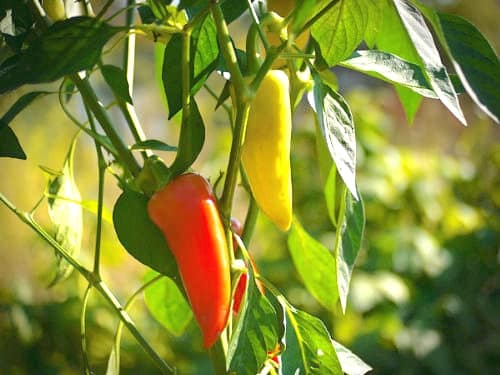
santa fe
Santa Fe Grande plants produce 30-50 blunt conical pods on 60cm plants. They start out a striking pale yellow and are usually harvested at this point but will ripen to red if left on the plant.
Santa Fe Grande is little milder than Jalapeños and extremely prolific. They have a sweet, fruity flavour sometimes likened to melons. They are sometimes sliced on top on pizzas and salsas.1020 -
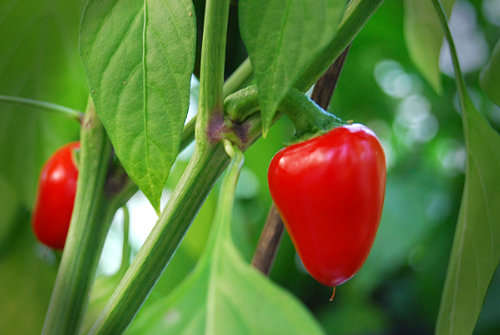
satan's kiss
This heirloom variety is known as the Baccio di Satana or Ciliegia Picante in its native Italy. It’s a small, cherry-type chilli with medium hot pods that unusually lose some of their heat when cooked. They are quite quick to fruit, maturing at around 90 days from planting.
The plant is attractive and sturdy with dense foliage. Chillies are traditionally served stuffed with mozzarella and anchovies.1030 -
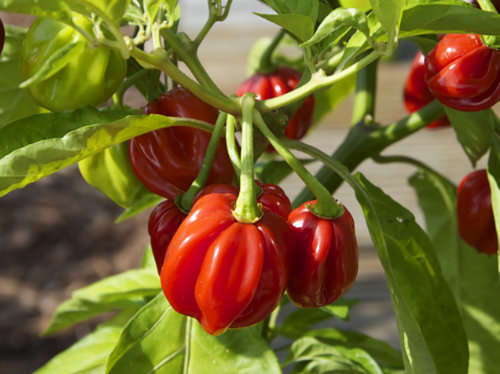
scotch bonnet
Scotch Bonnet peppers are very similar to Habanero peppers in both appearance and heat.
With Scoville ratings that top out at 325,000, Scotch bonnet peppers are originally from the Caribbean, taking their name from their resemblance to the hats Scottish men wear, rather than their place of origin.1040 -
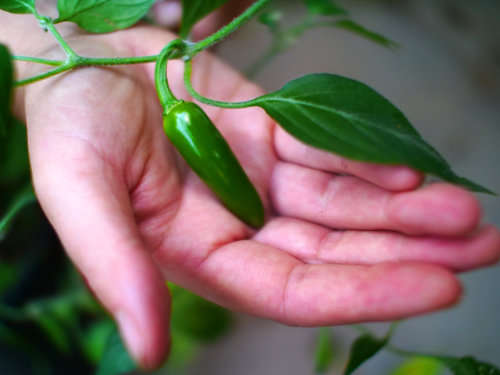
seranno
Serranos have peculiar hairy leaves and are prolific producers of the fleshy, meaty Serrano chilli so closely associated with Mexican cuisine.
Use in the same way as the versatile Jalapeno for salsas, sauces and toppings for dishes like nachos. Delicious and very distinctive at only 5,000ScU.1050 -

serrano, purple
Serrano Purple is a purple version of the original chilli, with larger pods than the original green version but still boasting the same lovely bullet shape.
Serranos have peculiar hairy leaves and stems and are prolific producers of the fleshy, meaty Serrano chillies so closely associated with Mexican cuisine. Serranos are best used raw for salsas where their juicy, sharp flavour can be most appreciated.1060 -

seven pot, bubblegum
The variety is a cross between a Moruga Trinidad Scorpion and a Yellow Seven Pot, with a Scoville rating of around 850,000. The plants fruit heavily for a chinense variety, producing crumpled pods with characteristic dimpled surface.
The chilli has a slight bubblegum tang to its flavour and the unusual bleeding calyx gives it the appearance of a fruity sweet.1070 -
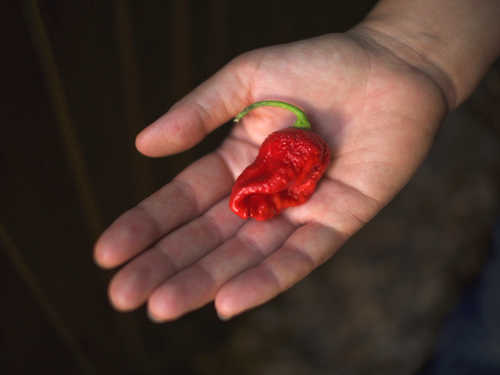
seven pot jonah
This variety of Seven Pot is known for its supersized pods, presumably its name being a nod to the story of Jonah and the giant whale.
Like other variants of Seven Pot, chillies are of extreme heat and, although these are a slightly milder, you won’t be munching on them raw as they are still over a million Scoville Heat Units. Plants look very impressive in fruit, adorned with their gaudy baubles like a Christmas tree.1080 -
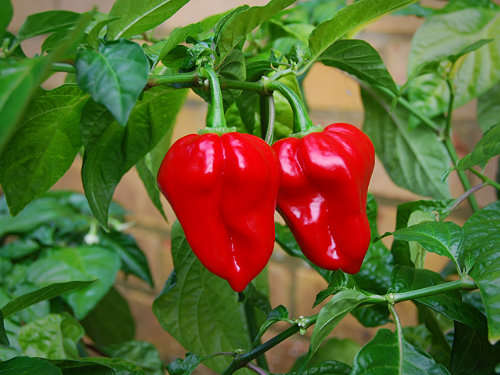
seven pot, red
The Red 7 Pot is one of the hottest chillies in the world. Hailing from Trinidad, at around 1.5 million Scoville Units it certainly does pack a punch.
The chilli apparently gets its name from being so hot that it can heat up seven pots of stew; one pod, one family one week! It has a crumpled, rounded appearance to pods and a burn that lasts and lasts.1090 -
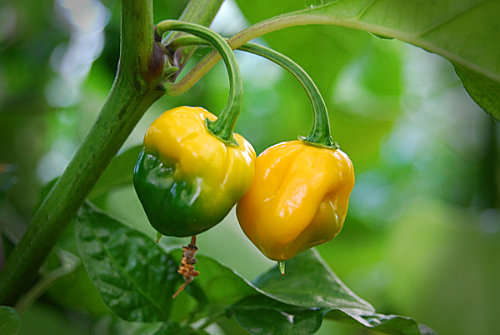
seven pot, yellow
The 7 Pot is one of a small collection of seriously hot pods to come out of Trinidad in recent years. The chilli apparently gets its name from being so hot that it can heat up seven pots of stew; one pod, one family one week!
The yellow variant is a bit milder than the red, but its distinct pineapple twang gives it the edge.1100 -

sugar rush, peach
A gorgeous baccatum variety bred by Chris Fowler in Wales. Plants grow tall and prolifically produce these quite large, pretty pods over a long season.
When you bite into one of these chillies, you will understand the name which perfectly describes the hit of hot, sweet, juicy pepper that hits your tongue. Easy to grow and extremely rewarding.1110 -
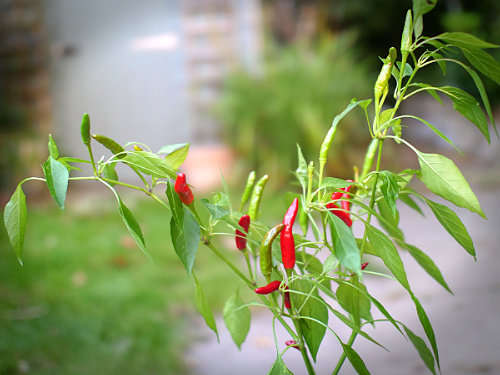
super chilli
This fast to fruit Thai F1 hybrid certainly had the approval of whoever named it and also of the Royal Horticultural society who awarded it an AGM (Award of Garden Merit).
They are fast to fruit, prolific and at the hotter end of Thai chillies, around 50,000 SHU. Chillies are slender, cayenne type fingers. Really attractive bushy plants into the bargain.1120 -
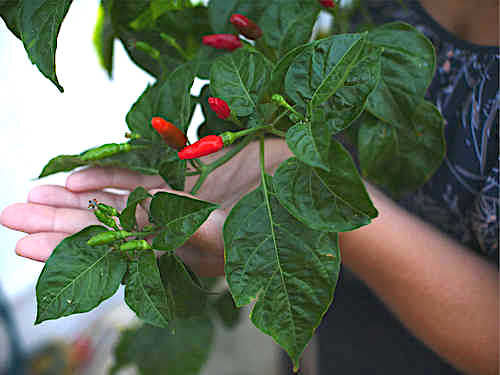
super hot birdseye
Bushy and very green little plants that are similar in appearance and heat to Piri Piri. Pods are much hotter than you’d think to look at them, with a delicious apricot flavour to them.
They work very well cut in half and thrown into simple pasta dishes and stir fries. Sprigs make for a lovely cut flower, lasting a month in a vase.1130 -
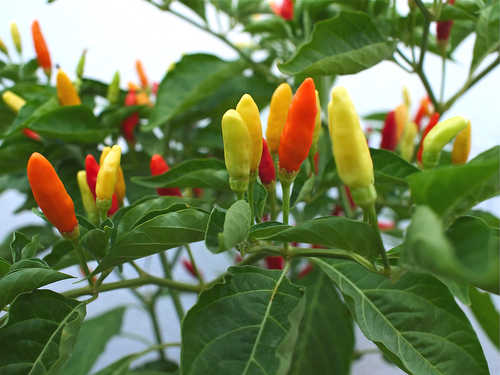
tabasco
Extremely tall plants are prolific producers of little upright pods with a distinctive flavour. This classic chilli originates in Mexico but has been made famous by the Louisiana hot sauce.
Branching plants bear and abundance of erect, blunt little chillies that rang in colour from yellow to orange and red when ripe. They have a strong and distinctive fiery, smoky flavour.1140 -
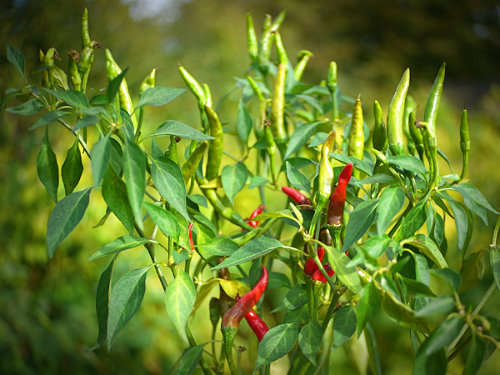
takanotsume
Beautiful Japanese variety that grows attractive bunches of green chillies that ripen to red, held aloft of the plants like fingers reaching to the sky. This is a lovely but often overlooked plant that is easy to grow and produces a good number of medium heat chillies.
Plants work as well ornamentally as their pods do in the kitchen. Medium heat around 30,000 Scoville Heat Units
1150 -
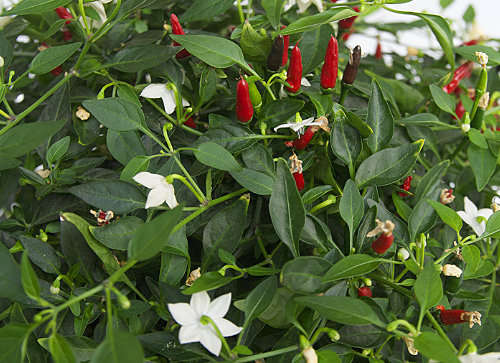
thai demon
A new hybrid Thai chilli producing small extremely pungent fruits 7-8cm long at around 150,000ScU. Fruit set is predominately on the outside of the plant aiding harvest.
This new hybrid is extremely high yielding and an excellent new variety which has greatly improved the Thai chilli type, bearing prolific flowers and fruit from just 70 days after planting.1160 -
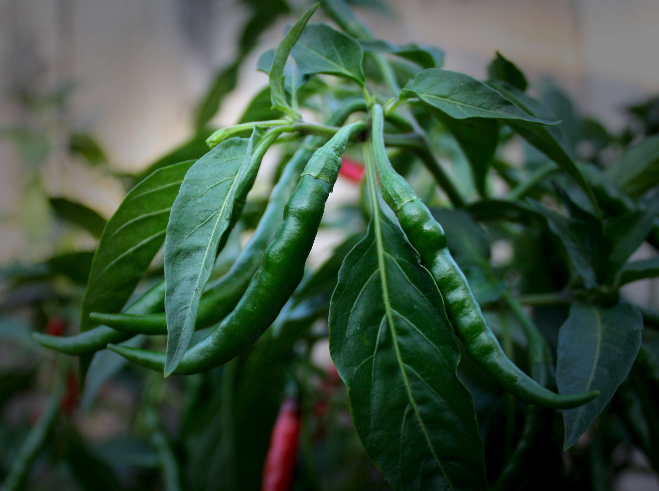
thai dragon
An F1 hybrid Thai chilli producing a large number of explosive pods. Extremely high yielding and an excellent new variety which has greatly improved the Thai chilli type, bearing prolific flowers and fruit from just 70 days after planting.
Plants are large and covered in fruits which keep on coming throughout the season. Our favourite Thai chilli by a long shot!1170 -
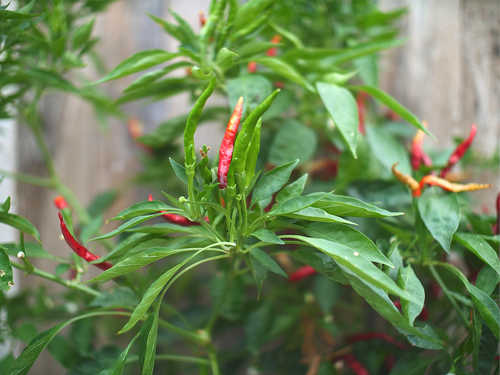
thai hot
This is an easy to grow, free-flowering and fruiting variety that will give you a couple of hundred pods over the summer. Ironically, they are not actually that hot but they are great as a ‘dressing chilli’, chopped up and sprinkled over salads, salsas, fajitas for a hot, fresh, juicy crunch.
Heat is around 20,000 SHU and flavour is sharp, fresh and peppery. Sometimes called Thai Culinary.1190 -
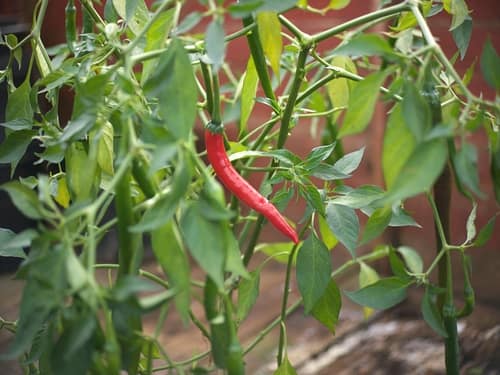
tokyo hot
A high yielding Cayenne-type chilli. Stocky, compact plants reach about 60cm tall and produce a steady stream of pencil thin, very shiny pods of a medium heat over the summer. Great for cutting up raw, stir fries, noodles and soups.
Flavour is fresh, sharp and juicy when green, sweeter and hotter when red ripe. Heatscale is around 20,000 to 30,000 Scoville Heat Units.1200 -
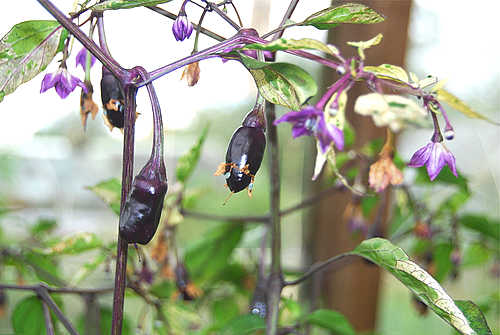
tricolour variegata
With its gorgeous tri-colour foliage in green, dappled white and purple this chilli is a real head-turner even before it starts to flower and fruit. Plants have a spreading habit but can be pruned into the shape required.
It won a Royal Horticultural Society Award Garden Merit in their 2006 Chilli Pepper Trials. Pods are medium hot at around 50,000 SHU.1210 -
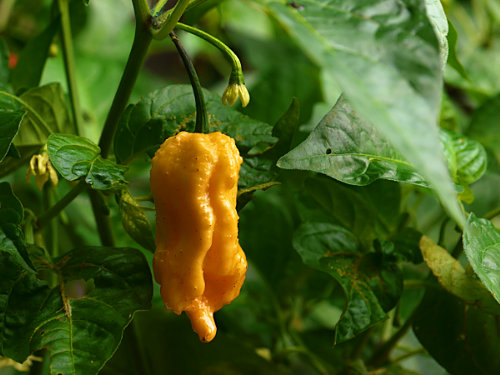
trinidad scorpion, peach
This is a lovely variant of the Trinidad Scorpion. Right from the point of germination, they make for a beautiful plant, quite easy to distinguish from all other chinense; leaves are quite smooth, pointed and very deep green and contrast beautifully with the peachy pods.
Usually the lighter coloured super hots are milder, but this chilli can still hold its own with the hottest of the hots. The flavour is quite refined with definite floral notes and a delicious sweetness.1220 -

trinidad scorpion, red
Just one look at the scorpion tells you that this is one hot chilli. From its Habanero-shaped top to the kick of its scorpion tail, this chilli means business. Originating in Trinidad, the chilli has a fruity flavour, coupled with a tremendous heat.
A strain of this chilli has been recorded in excess of 1.4 million Scoville Heat Units. Not one for the faint-hearted!1230 -
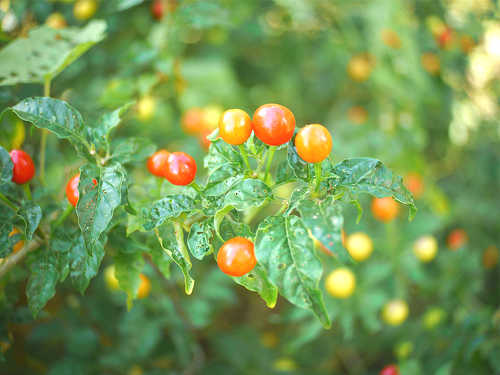
wiri wiri
You might be forgiven for thinking this chilli is an ornamental variety, but you’d have quite a shock when you bit into it. Wiri Wiri, sometime known as the Bird Cherry, has a heat to rival a Habanero.
Heatscale varies quite a bit, from 100,000 to 250,000 SHU but flavour is consistently fruity with a a tomatoey twang. They are often made into a hot, sweet table sauce with mango.1240 -

zimbabwe black
Highly ornamental plants with their dark green foliage, veined and tipped with deep purple. Hot, little bird-type chillies in dark purple to black are born all over the plant.
Plants will happily grow in small pot making this a great choice for a windowsill chilli. A plant in a one litre pot will produce a hundred or so tiny, explosive pods.1250
There are three ways to search the database; 1. Simply scrolling through it (it's organised alphabetically). 2. By using the tags. You can select more than one button to widen the results. 3. By entering keywords.
Clicking multiple buttons will add all those chillies with one or more of the tags to your search results.