Well… That Went Bonkers!My most successful chilli growing season ever.
I’m back after the summer break — and it’s been quite a year. I’ve grown more than 50 chilli varieties in my garden alone, the plants are loaded with fruit and, frankly, it’s the best chilli season I’ve ever had. So, for the first video back, I’m catching up on what I’ve grown, what’s done ridiculously well, some new favourites — and a few surprises. Join me for a catch-up. (7 mins).
I’ve had a fantastic crop from many of the classics, but I’ve also had some real successes with varieties I’ve never grown before. If anything, the biggest battle this year has been trying to keep the temperature down. The greenhouse has been shaded all summer and, during the five heatwaves, keeping everything watered has sometimes meant doing the rounds twice a day. But all that hard work has definitely paid off.
Over the coming weeks I’ll be introducing some of the stars of the season, looking at what has worked particularly well and also being honest about some of the varieties I’ve struggled with.
Among the new and less familiar chillies I’ve been growing this year are:
Buena Mulata – A beautiful purple chilli that ripens through a succession of colours before eventually turning red.
Shakira – Long, handsome green chillies with plenty of flesh and a useful, manageable heat.
Zebringe – One of the more unusual plants in the garden, producing distinctive striped fruit that almost look too good to pick.
Halloween – Small, dark and dramatic, with purple-black pods that ripen to a fiery red.
Thai White – A striking Thai variety producing masses of small, pale chillies held upright on the plant.
Tiger Jalapeño – A jalapeño with a difference, developing extraordinary striped and corked fruit as it matures.
Korean Gochu – The chilli at the heart of Korean cooking, with a relatively gentle heat that makes it enormously versatile.
Coyote’s Teeth – A prolific little chilli with clusters of pale, pointed pods that really do look like teeth.
Hinkelhatz – An old Pennsylvania Dutch variety with small, colourful pods and considerably more bite than its size suggests.
Deng Long Jiao – An unusual Chinese lantern-shaped chilli with wonderfully chunky, deeply folded fruit.
Clavo Red – A compact red chilli with fruity flavour and a decent kick.
Papa Joe Scotch Bonnet – A superb bonnet with the characteristic fruity, tropical flavour that makes this whole group so special.
Serpent Noir – Long, dark, twisting pods give this one a rather spectacular appearance before you’ve even tasted it.
Carborouga – A serious superhot combining enormous heat with the gnarly, slightly alarming fruit you’d expect from it.
Nazgul’s Breakfast – Possibly the best name in the garden, with dark, wicked-looking fruit to match.
And that’s only part of what I’ve been growing. Over the autumn I’ll be taking a closer look at many of these varieties, alongside some of the things I’ve learnt from this year’s growing season. I’ll be looking at feeding regimes, how to spot deficiencies early and correct them, watering strategies, and whether growing in a small pot really makes much difference compared with giving your plants lots of root space.
I’ll also be covering how to care for plants as they mature, exploring more new varieties, looking at landrace chillies versus modern hybrids, and picking a Chilli of the Week. And, with all these chillies to deal with, there’ll be plenty on what to do with the harvest too – recipes, preserving and processing your chillies, and some ideas for turning them into homemade chilli gifts.
There’s a lot to get through. It’s a good job I’ve grown plenty of chillies.
The Final FurlongA few things to do in September to keep your chilli plants going strong.
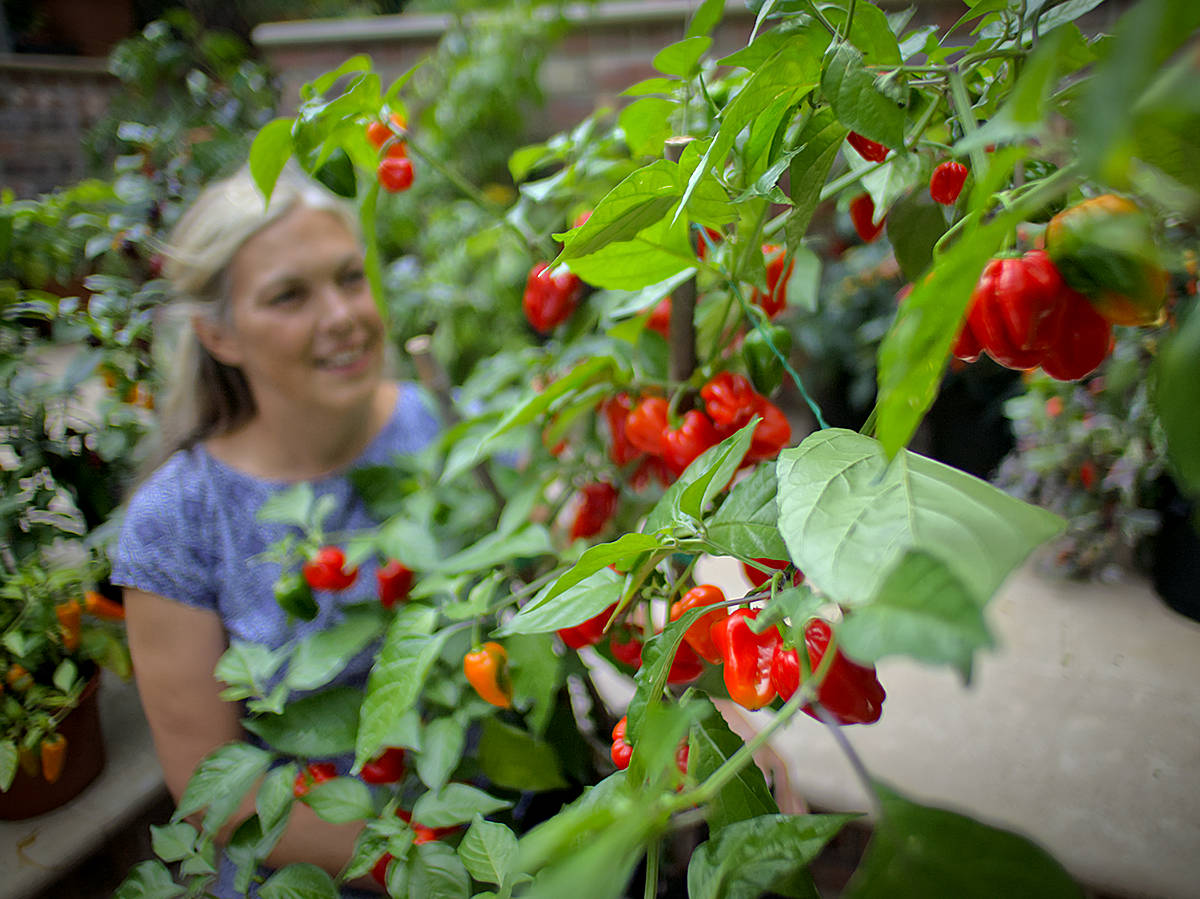
1. Keep feeding. By now, pots can be pretty exhausted, especially if you have a big plant in a relatively small pot. Keep feeding regularly with a potassium-rich tomato feed.
2. Top up the compost. If there’s room, add a few handfuls of fresh compost to the top of your pots. It’ll give tired plants a little boost.
3. Keep watering. Cooler weather means plants won’t need as much water, but a big plant covered in fruit can still get surprisingly thirsty. Check the compost rather than assuming it’s wet enough.
4. Stake heavily laden plants. A plant carrying lots of fruit can easily topple over or snap a branch, particularly once the autumn winds arrive.
5. Handle with care. Mature chilli plants can be surprisingly brittle. If you’re moving pots around or bringing plants under cover, take it gently. Heavily laden branches can snap very easily.
6. Keep picking ripe chillies. Pick and use ripe annuum chillies rather than leaving them on the plant. There’s still time for some varieties to produce another flush.(This won't be the case with chinense super-hot chillies).
7. Watch for slugs and snails. Wetter September nights can bring them out in force. They seem particularly fond of the milder chillies, so it’s worth having a quick nighttime patrol.
8. Have a quick tidy. Remove yellowing or damaged leaves and any fallen material around the pots. As the weather gets damper, good airflow becomes increasingly important.
9. Make some freezer space. You don’t have to turn every harvest into jams and sauces immediately. Chillies freeze brilliantly and can be dealt with when you have more time.
10. And eat them! Use fresh chillies in everyday cooking and give some away to friends and family. Curries, chilli con carne, salsa, eggs – even a few freshly sliced chillies can transform a meal.
Over the coming weeks I’ll be adding some of the best new varieties from this year to the shop, ready for next season. I know it’s only September, so there’s certainly no rush, but pre-orders for 2027 are now open if something catches your eye. And there’ll be plenty more to come. 15% off for early birds.

World of Chillies was set up by Sarah Hunt in 2011 to promote chilli growing and the enjoyment of everything hot and spicy.
UK Company No. 07860204.
VAT reg. 223126942
Shine a Light on Your Seedlings
• Short Days: Natural daylight is too limited in the very early spring for the 12-16 hours of light chilli seedlings need to grow strong and healthy.
• Prevent Stretching: Without enough light, seedlings become tall and spindly (leggy), weakening their stems and overall structure.
• Boost Growth: Grow lights provide consistent, bright light that helps plants develop more leaves and stronger roots.
• Temperature Support: Lights add a little extra warmth, which is especially valuable during chilly spring nights, aiding steady growth.
• Prepare for Summer: Healthy, well-lit seedlings are more resilient and ready to flourish when transplanted later in the season.
▶ Schedule of Dispatches . We’re pleased to let you know that we’re dispatching our first plug plants!.
Please follow the link for a rough schedule, but please note that we’ll send your order once everything in it is ready.
▶ MORE INFORMATION