What a chilli reveals about its heat and flavour before you ever taste it.
Superhots are strange things. Not just because of the heat, but because of what’s been done to them. Years of crossing show up in the pods themselves — folded, stretched, thickened, twisted, as if the plant has been asked to carry more than it quite wants to.
You can see it if you look long enough. I wouldn’t claim certainty — no one sensible would — but the clues are there. The plant has already described itself. You just have to be willing to look properly.These three make that easier than most.
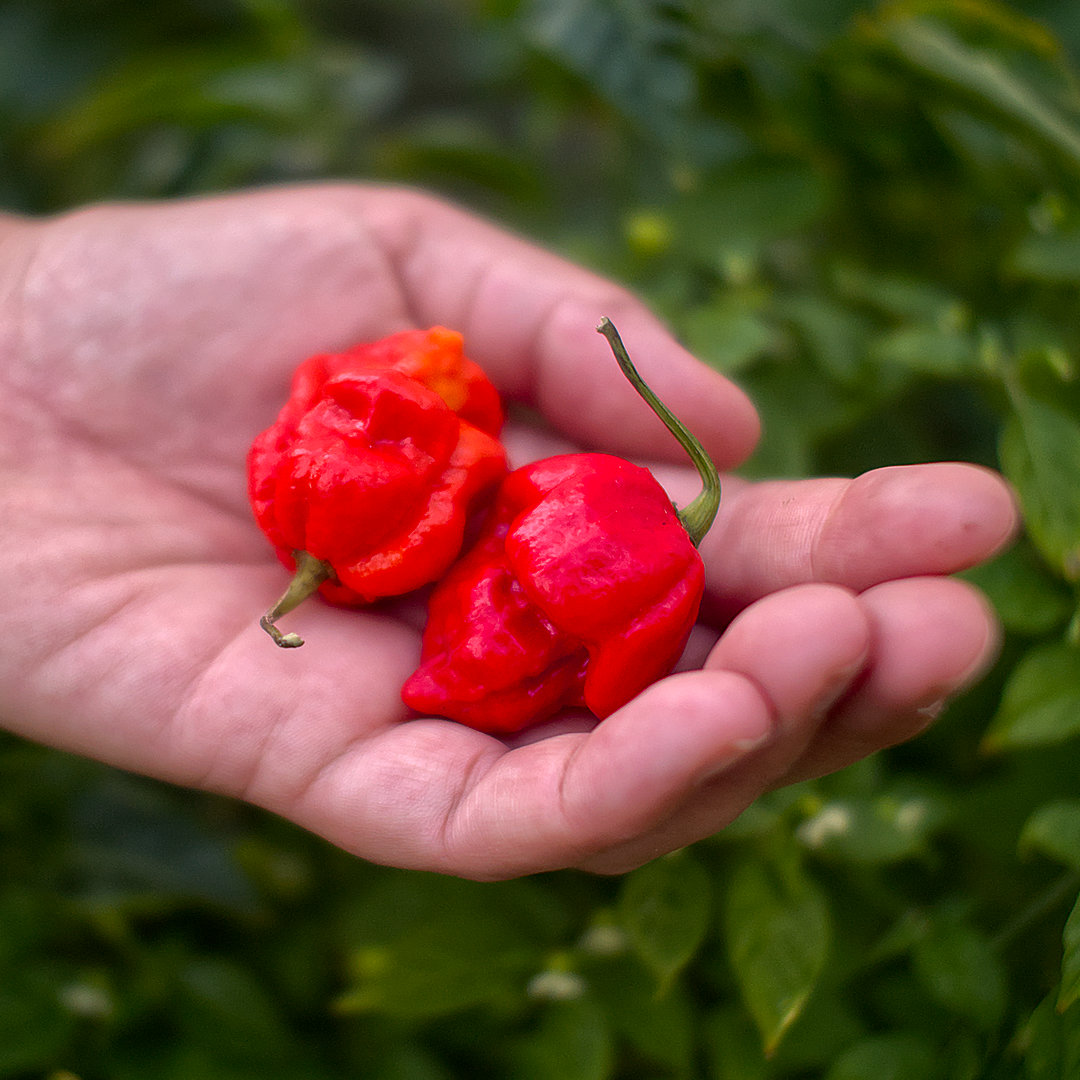
▶ Apocalypse.
All compression and tension. The surface folds inward, the tail thick and pulled rather than neat. It feels like a fruit building density rather than shape — and that usually means the heat isn’t sitting neatly in one place; it’s distributed through the folds.

▶ Caramel Reaper.
A familiar hand, just read in a different light. The Reaper form holds, but the colour deepens into that brown-red, the pigments settling differently as it ripens. Same architecture, but with a weight to it — thicker, darker, a slightly slower kind of fruit.
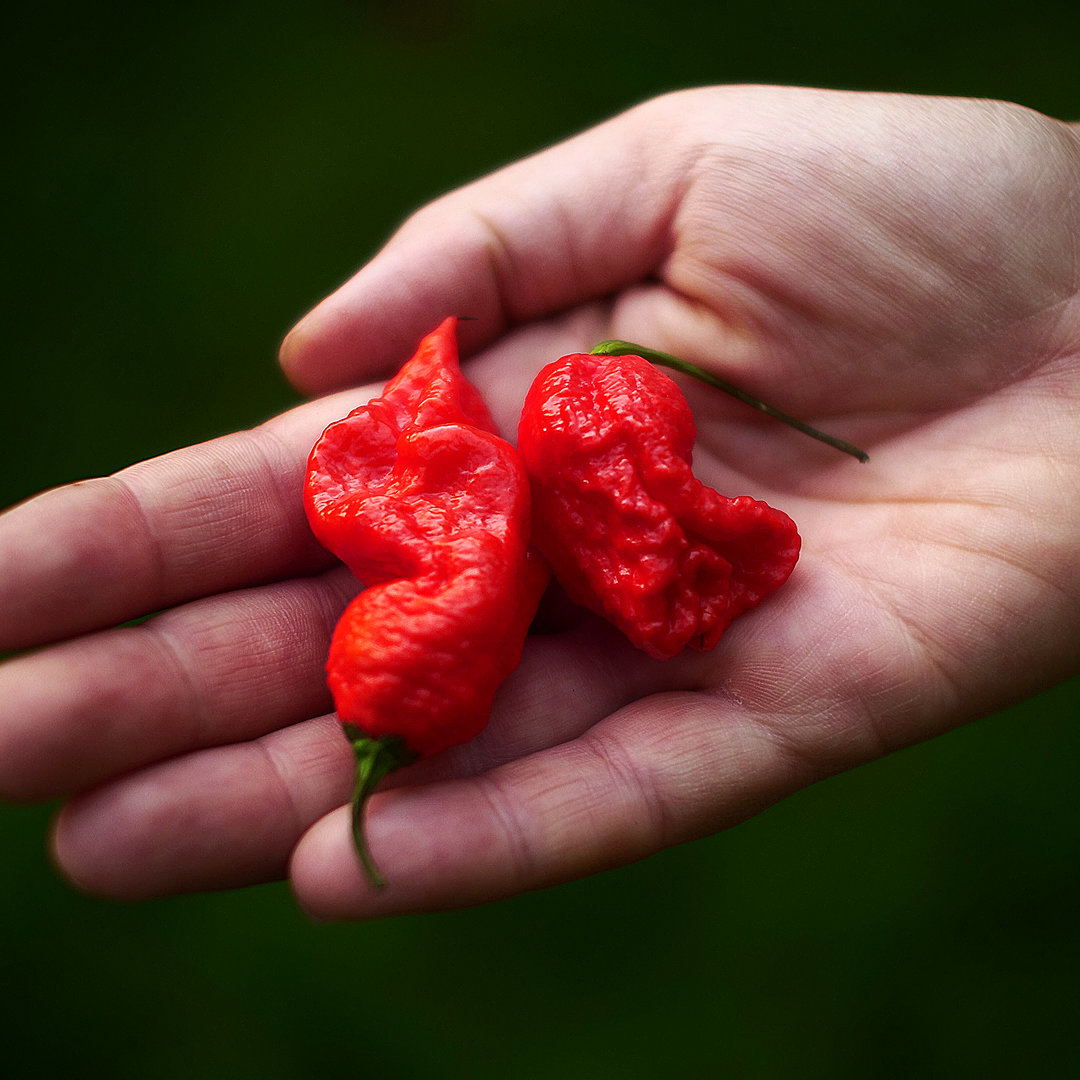
▶ Fatalii Jigsaw.
Harder to pin down. Longer, looser, the surface broken by striping that disrupts the usual signals of ripeness. The structure stretches the chilli rather than compresses. It reads as something quicker, less dense — not gentler, just arranged differently.
In the more folded pods (Apocalypse and Caramel Reaper), heat-bearing tissue is packed more tightly, giving greater intensity and a longer finish. The looser structure of Fatalii Jigsaw spreads that out, so the fruit is more apparent.
Apocalypse
What I find interesting is that, even without the name, the pod more or less tells you the same story. The tight folds, the compressed shape, the thick, twisted tail — it’s a fruit that’s been selected for density and intensity. The plant has done the work already. You’re just reading the result.
Caramel Reaper
That deeper brown-red colour is down to carotenoid variation during ripening, something seen across a number of chinense lines. It doesn’t rewrite the chilli, but it does seem to nudge the overall expression — visually and, often, aromatically — in a darker, more settled direction.
And again, the pod gives you most of that before you go anywhere near it. The familiar Reaper form is still there — the wrinkling, the tail — but it feels less like it’s reaching outward and more like it’s drawing things in and holding them there.
Fatalii Jigsaw
The striping is the giveaway. It disrupts the usual ripening signals — instead of a clean shift from green to red or yellow, you get this broken, almost unfinished surface. That comes from uneven pigment expression during ripening, and while it’s mostly visual, it speaks to the same broader point: this is a chilli that hasn’t been selected for uniformity so much as variation and interest.
So where the Apocalypse compresses and the Reaper consolidates, the Fatalii Jigsaw does something else entirely. It stretches out, breaks pattern, and reads as something quicker, looser, and a bit less predictable — which, in its own way, is just as telling.
Taken together, they show the same idea from different angles — structure first, flavour following. Once you start to see it, it’s hard to unsee.
World of Chillies was set up by Sarah Hunt in 2011 to promote chilli growing and the enjoyment of everything hot and spicy.
UK Company No. 07860204.
VAT reg. 223126942