I’ve always thought tomatoes get a slightly unfair reputation. People treat them as background extras — useful, agreeable, rarely granted a second glance. But when you grow your own, they stop being something you mindlessly toss into a salad.
They’re not like chillies, where a few fruits can last you half the year; tomatoes come and go in a rush, and you end up eating them more thoughtfully simply because you know exactly where each one came from.
Every now and then you grow one that carries itself with a certain… attitude. Not dramatic, not showy, just a quiet sense of having come from somewhere definite, with its own small biography tucked under the skin. And when they finally ripen, you don’t scoff them without thinking — you eat them as they are, still warm, maybe with a pinch of salt, the way you enjoy anything you’ve watched unfold week by week.
These four lingered with me this summer. A plum that seems to remember its volcanic birthplace rather keenly, a French sweet thing far too pleased with its own flavour, a yellow tumbler that tried to feed the entire household without waiting to be asked, and a striped little performer that posed obligingly every time the camera came out.
Nothing life-changing — just the sort of tomatoes that make you pause, smile, and feel you’ve wandered briefly into someone else’s small, sunlit world.
1. San Marzano
-

Italian growers use rosso pieno or rosso maturato to denote full colour but pre-softness — the ideal picking stage for sauce tomatoes.
-

Plum tomatoes lose 30–55% water volume in the first roasting stage (depending on temperature). This has been measured widely; San Marzano, being low-moisture, concentrate more efficiently.
-

Tomato skins contain a thin cuticular wax layer. As the fruit ripens, this layer develops a matte or velvety sheen.
-

Indeterminate tomatoes pruned to two leaders produce fewer but larger fruits.
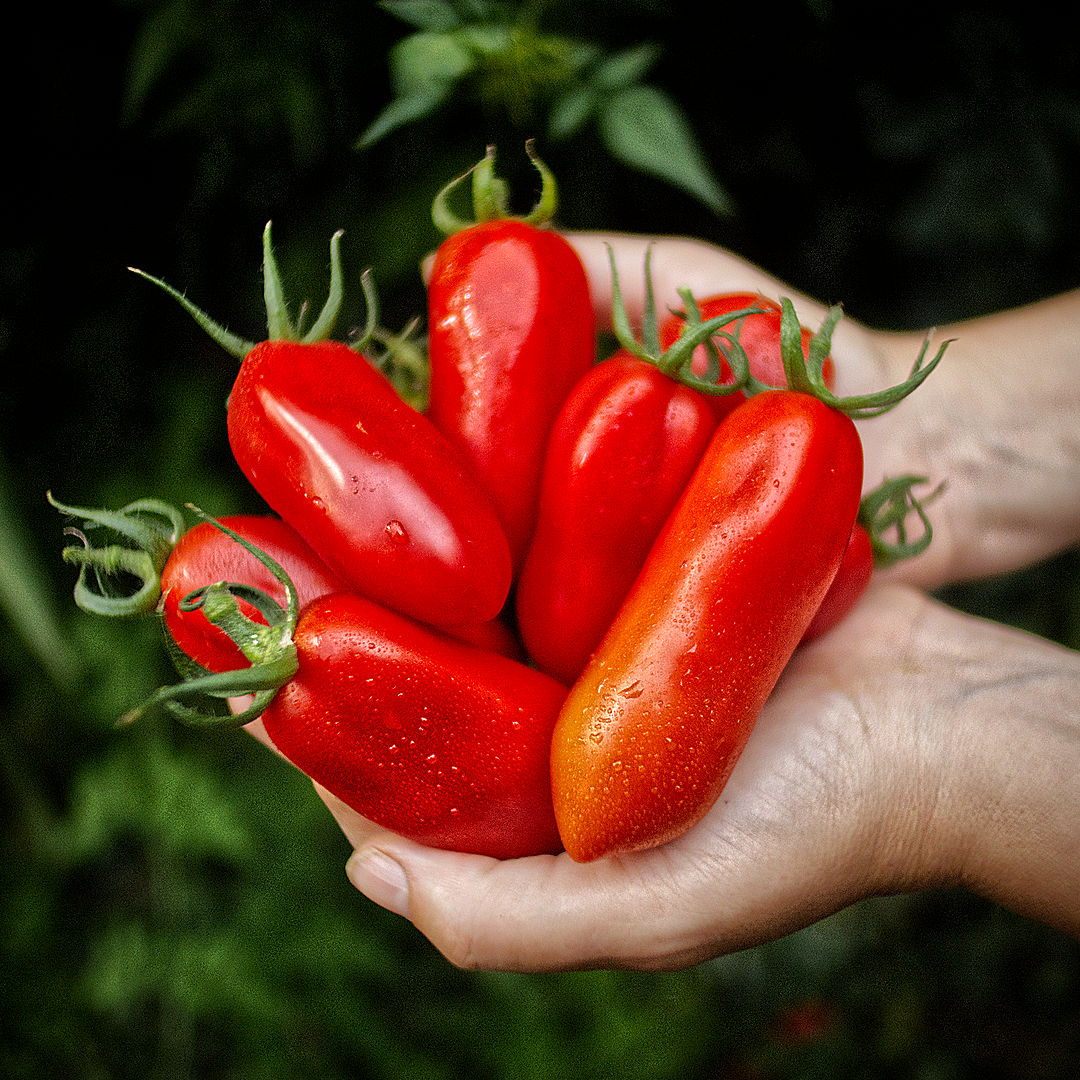

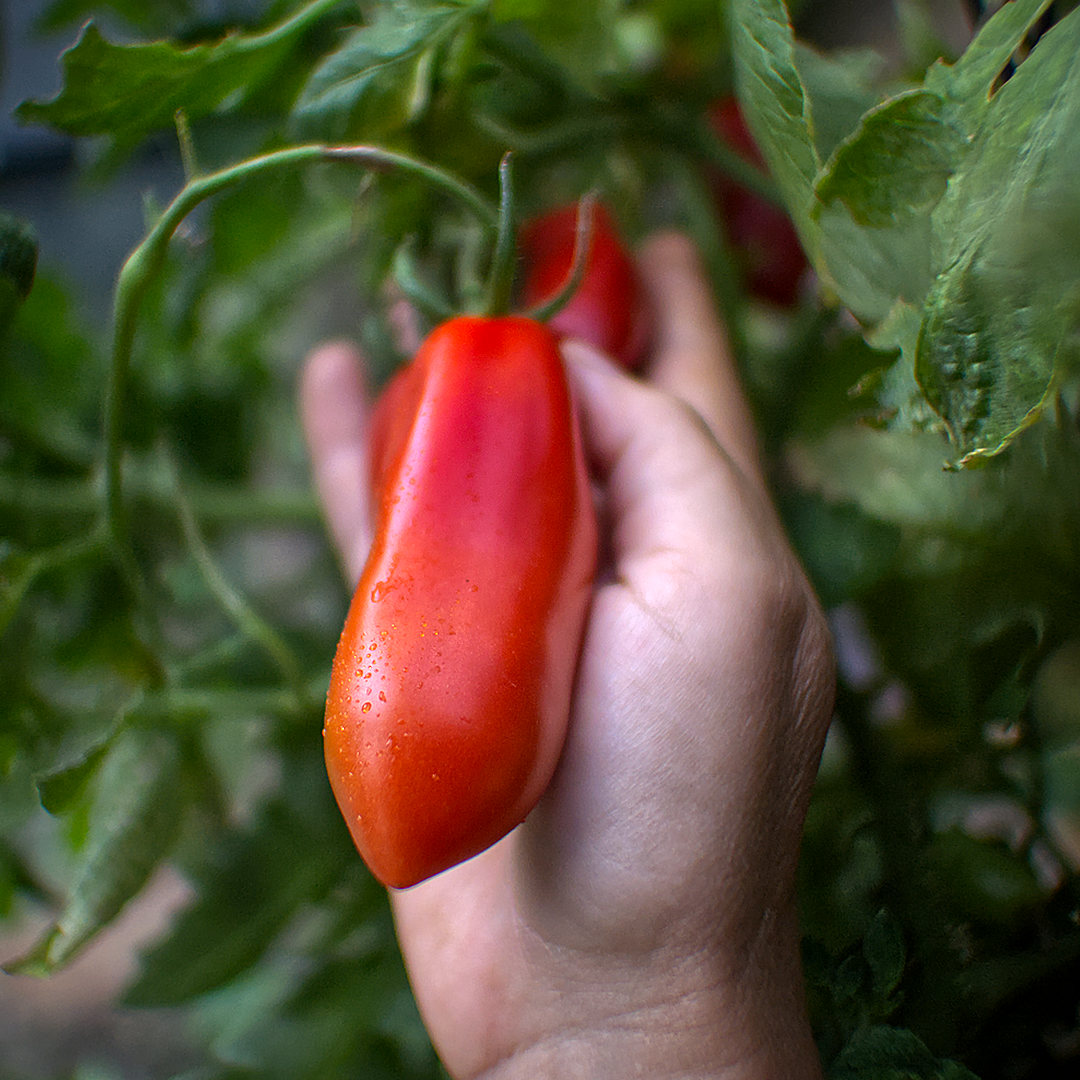
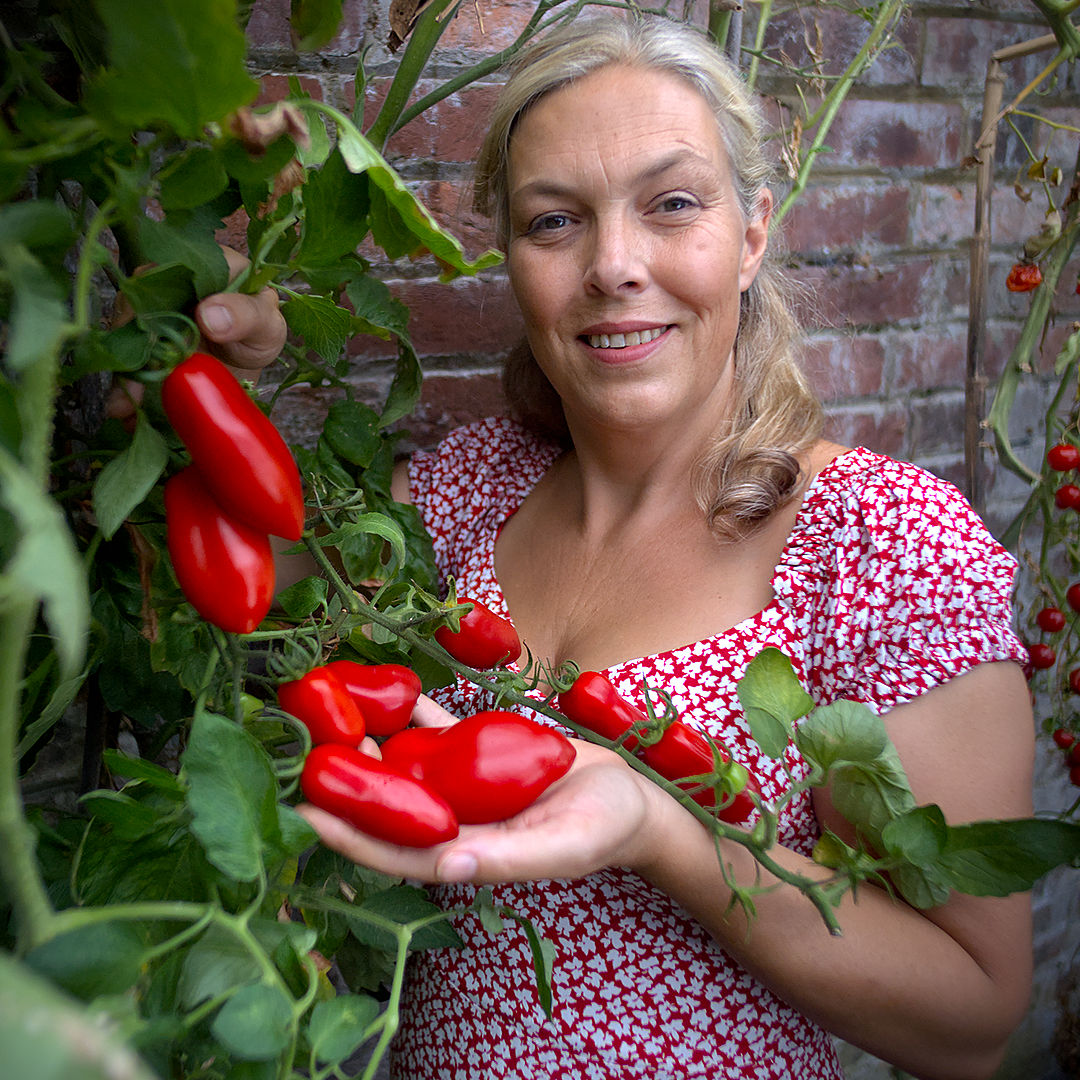
San Marzano’s story starts in Campania, where they were selected for one purpose: slow cooking. In the south they’re not sliced into salads or eaten out of hand — they go straight into the pan.
San Marzano’s story starts in Campania, where they were selected for one purpose: slow cooking. In the south they’re not sliced into salads or eaten out of hand — they go straight into the pan.
Fresh ones are roasted or simmered down with olive oil and a clove of garlic; the bottled passata is treated almost as a pantry essential rather than an ingredient. Everything about the variety — the thick walls, the low seed count, the steady way they soften — comes from that original intention.
I’d had two years of failure with them, mostly blossom-end rot, so I wasn’t expecting much. But this year, with no special treatment, both the greenhouse plant and the outdoor one settled into themselves and produced tidy trusses of firm, bright-red plums. They were deliberate but reliable, later than the cherries but not in a way that caused worry.
Eaten raw, they were fine but unspectacular — dense, polite, and clearly waiting for heat. Roasted, they behaved exactly as their reputation suggests: the flesh held, the sugars tightened, the flavour deepened into something properly savoury. It’s the only tomato I’ve grown that seems built around a single method.
The Italians have always used them as a starting point for sauces, pizzas and slow braises, and after this season I see why. Next year I’ll grow them again, but with the oven in mind from the beginning.
2. Bumblebee
-

You can see the Bumblebee trait here: thick outer walls, but still enough jelly around the seeds to keep that sharp-sweet balance intact.
-

Picked at slightly different stages — the paler ones still firm, the deeper oranges carrying the full sweetness. Bumblebee ripens unevenly on purpose; it extends the picking window.
-
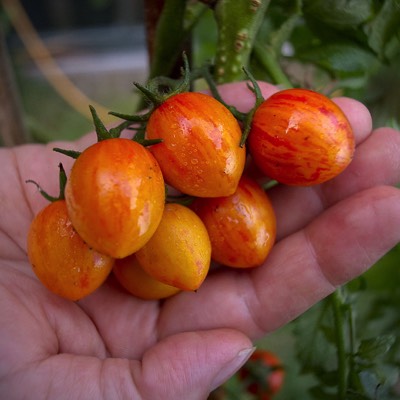
They colour from the base upward, not the shoulders downward. That’s why the top fruits look half-painted — they’re only halfway there.
-

This vine went into a growth spurt late in the season — classic Bumblebee behaviour when nights stay warm. The fruits get larger, the stripes stay faint.
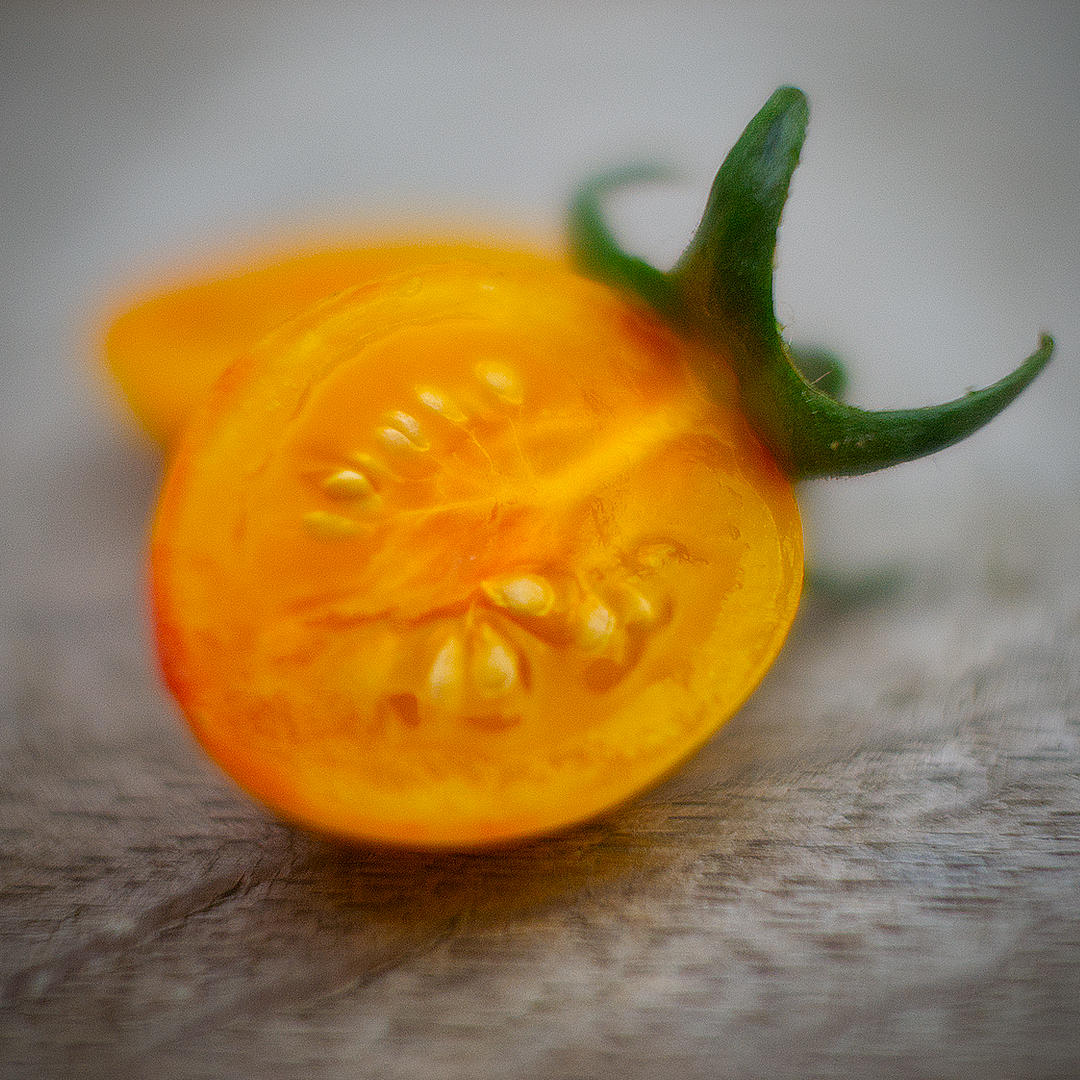
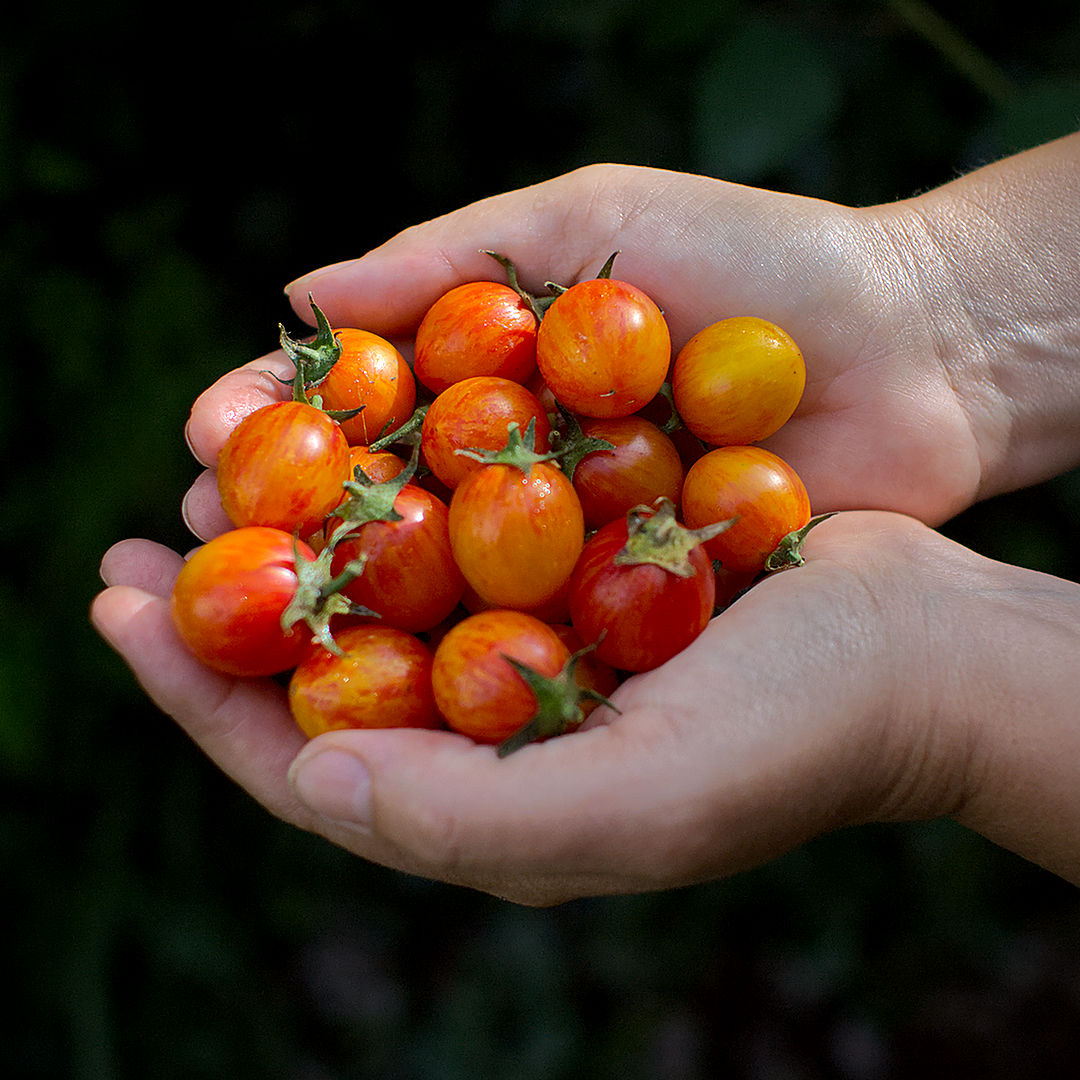


Bumblebee tomatoes come from the modern striped-cherry breeding lines that set out to create something genuinely different from the usual red or yellow rounds — fruit with internal marbling, streaked skins and a fuller, almost tropical flavour profile.
Bumblebee tomatoes come from the modern striped-cherry breeding lines that set out to create something genuinely different from the usual red or yellow rounds — fruit with internal marbling, streaked skins and a fuller, almost tropical flavour profile.
They were developed for appearance as much as taste, intended to stand out immediately in a salad bowl or on a market stall. The signature gold and amber striping isn’t just cosmetic either; the pigment runs through the flesh, which is why the colour stays vivid even when sliced.
This season they were one of the most distinctive plants I grew. Even at the plug stage the leaves looked a little more substantial, and outdoors they shot up into tall, confident vines carrying short cordons of around ten fruits apiece.
The size varied from about 1.5 to 2.5 cm, but the crop was steady and generous right through September. They ripen in waves — never quite uniform — and I actually prefer them just before they’re fully ripe, when there’s still a thread of acidity running through the fruit. They’re gorgeous on the plant and even better in the bowl: streaked, luminous, and almost too pretty to eat.
Fully ripe, the flavour is unexpectedly layered. You get a brief hit of sweetness first, then a bright, juicy rush that tastes almost aromatic — a little passionfruit, a little apricot, but still recognisably tomato. They’re extremely moist, so they burst cleanly when you bite into them, and they bring a kind of lift to salads that most cherry tomatoes don’t manage.
Of all the varieties I tried this year, this is the one I’d grow again simply for the pleasure of looking at it — and then eating it before it ever reaches the kitchen.
3. Tutti Frutti
-

You can see the classic “bunch-setting” habit here: all the flowers pollinated cleanly, no gaps, no misshapes. A sign the plant had stable temperatures while flowering.
-

These ripen from the top down — the darker shoulders always finish first, the paler tips a day or two behind.
-

Rain doesn’t split these easily — the skins tighten but hold. That’s one reason growers like this line for unpredictable summers.
-

Very little jelly compared with a supermarket cherry — that’s where the high Brix comes from. More flesh, less dilution.

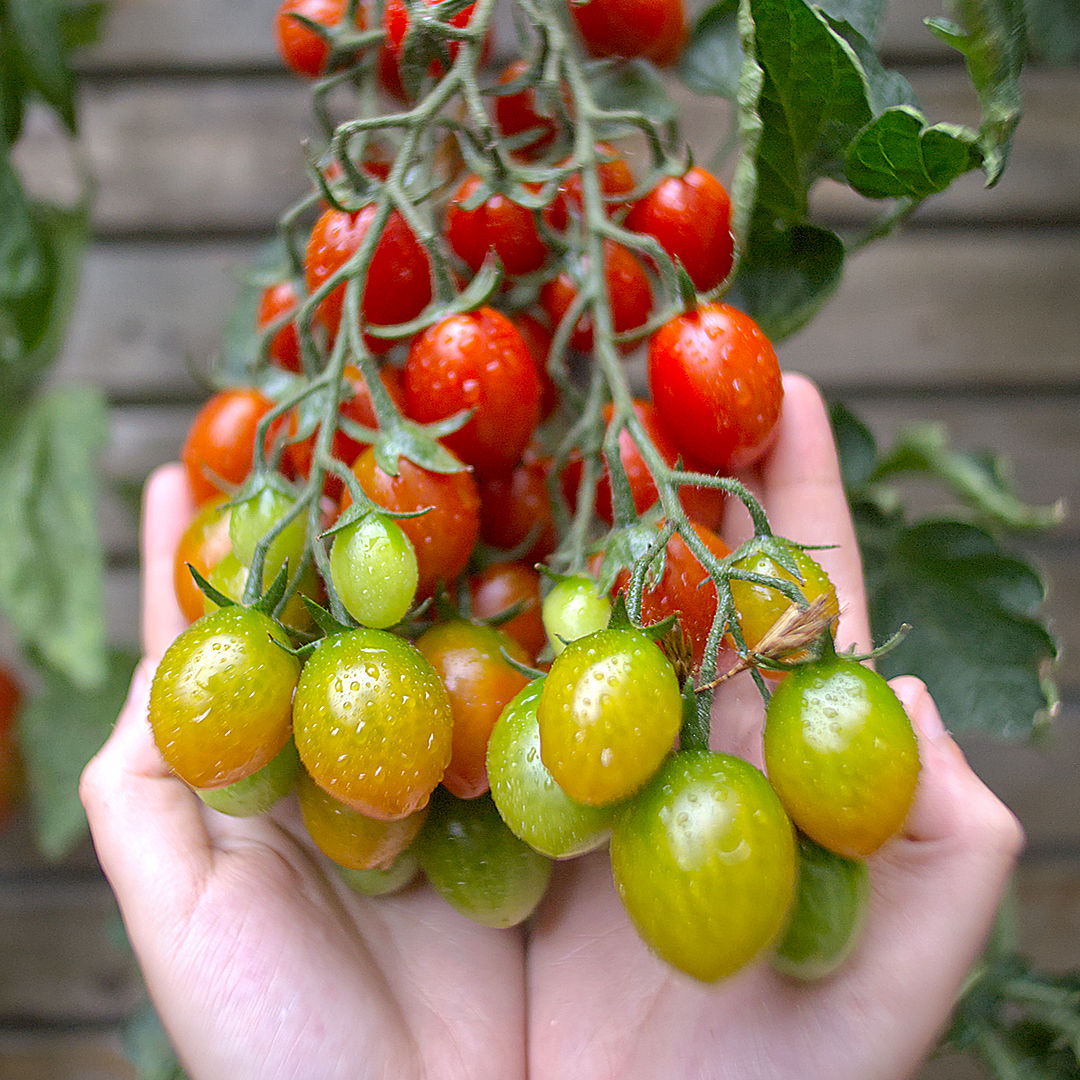
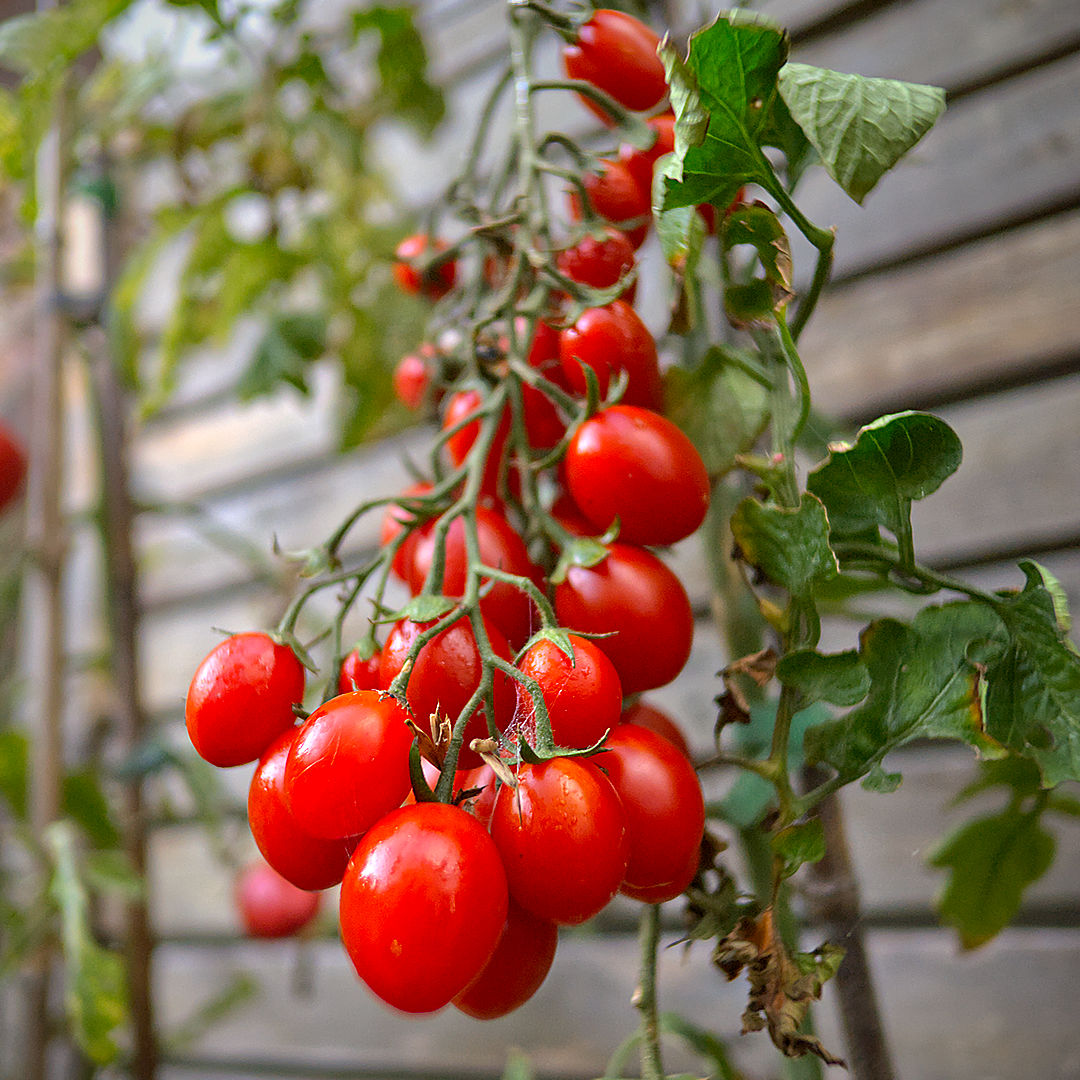
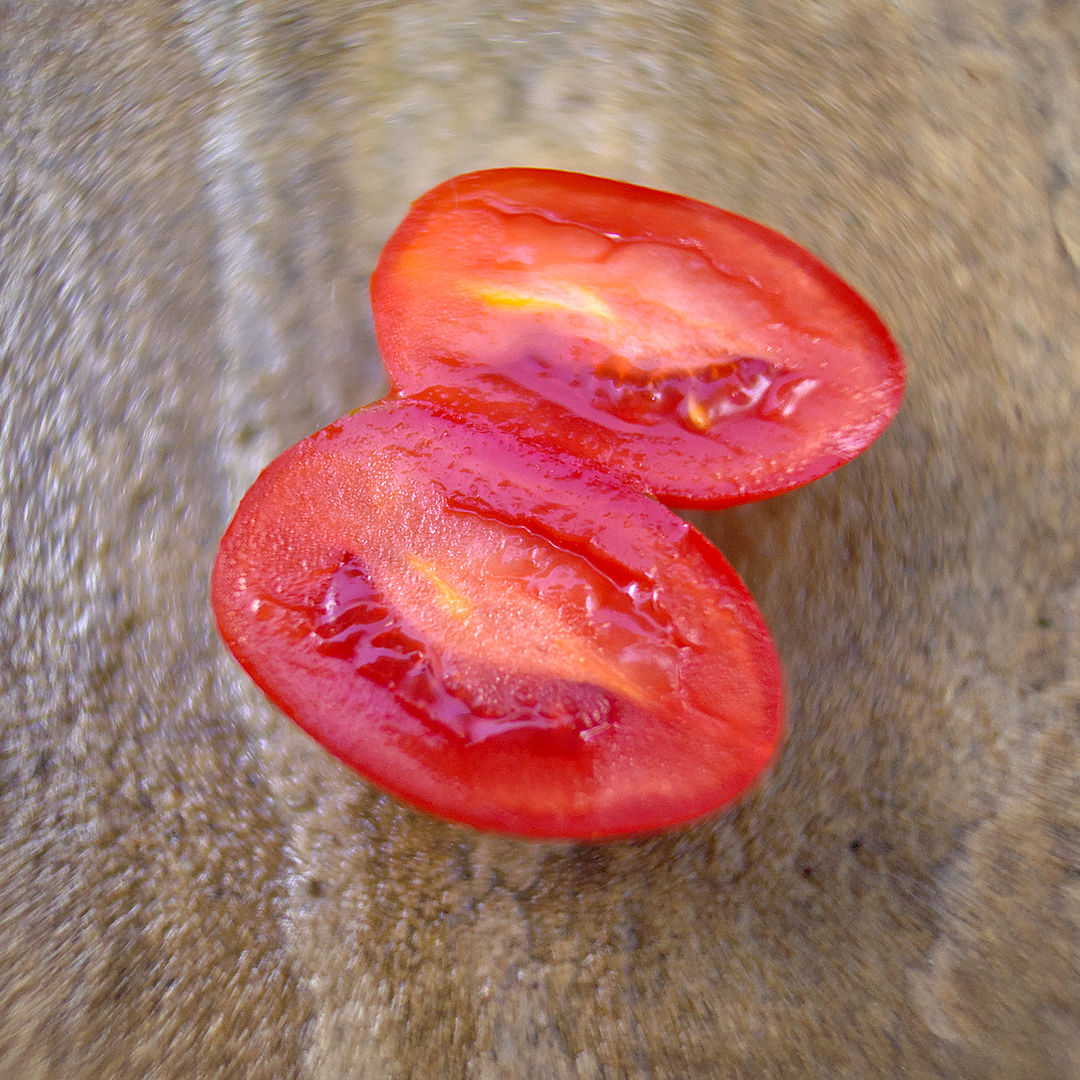
Tutti Frutti comes out of the modern European breeding programmes that specialise in high-Brix snacking tomatoes — lines designed to be eaten straight from the plant rather than cooked.
Tutti Frutti comes out of the modern European breeding programmes that specialise in high-Brix snacking tomatoes — lines designed to be eaten straight from the plant rather than cooked.
Much of this style was refined by HM Clause, the French vegetable-seed company based in Portes-lès-Valence, who focused on long, even trusses and a sweetness kept in check by good acidity.
Mine started fruiting early and didn’t stop. It grew outdoors in a sheltered spot during the heatwave, and the sheer volume of fruit was absurd: long cordons of neat, oval tomatoes, each around three centimetres, all identical in size and shape.
The flavour was exactly what these were bred for — fresh, fruity, and clean, without that dense, syrupy quality you get in the ultra-sweet varieties. But they need to be properly deep red before they show their full character; the difference between “red” and “deep red” is almost a different tomato.
Eaten at their best, they snap lightly between your teeth and release a rush of bright, almost berry-like juice, the sort that clears the palate rather than coats it.
They’re the tomatoes you grab on the way past the plant, or pile into a bowl with nothing more than salt and a cold glass of something crisp. For all their uniformity, there’s a real pleasure in how uncomplicated they are — a tomato that tastes exactly like summer without trying to be clever about it.
4. YellowTumbling Tom
-

The foliage drops away late in the season, but the fruit just keeps coming. It’s a built-in survival habit of these compact cherry types.
-

Ripeness shows as a shift from matte to glossy. The front fruits are at the “full gloss” stage — the sweetest point you’ll get.
-

You can tell they’re at peak flavour when the green pedicels start to dry slightly — they detach with almost no resistance.
-

Yellow cherries have lower acidity, so the locule gel stays pale — the almost translucent centre here is exactly what you want to see.
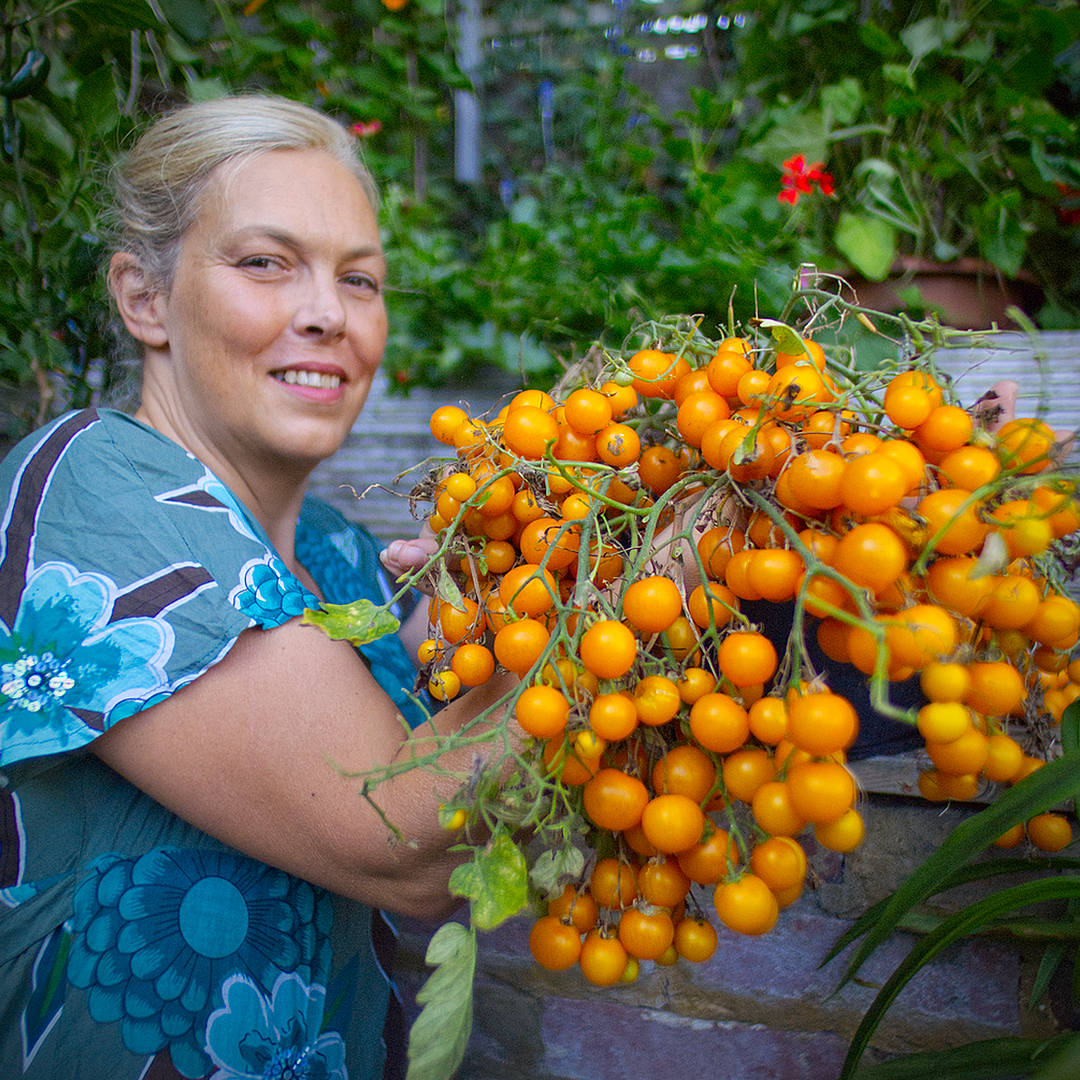
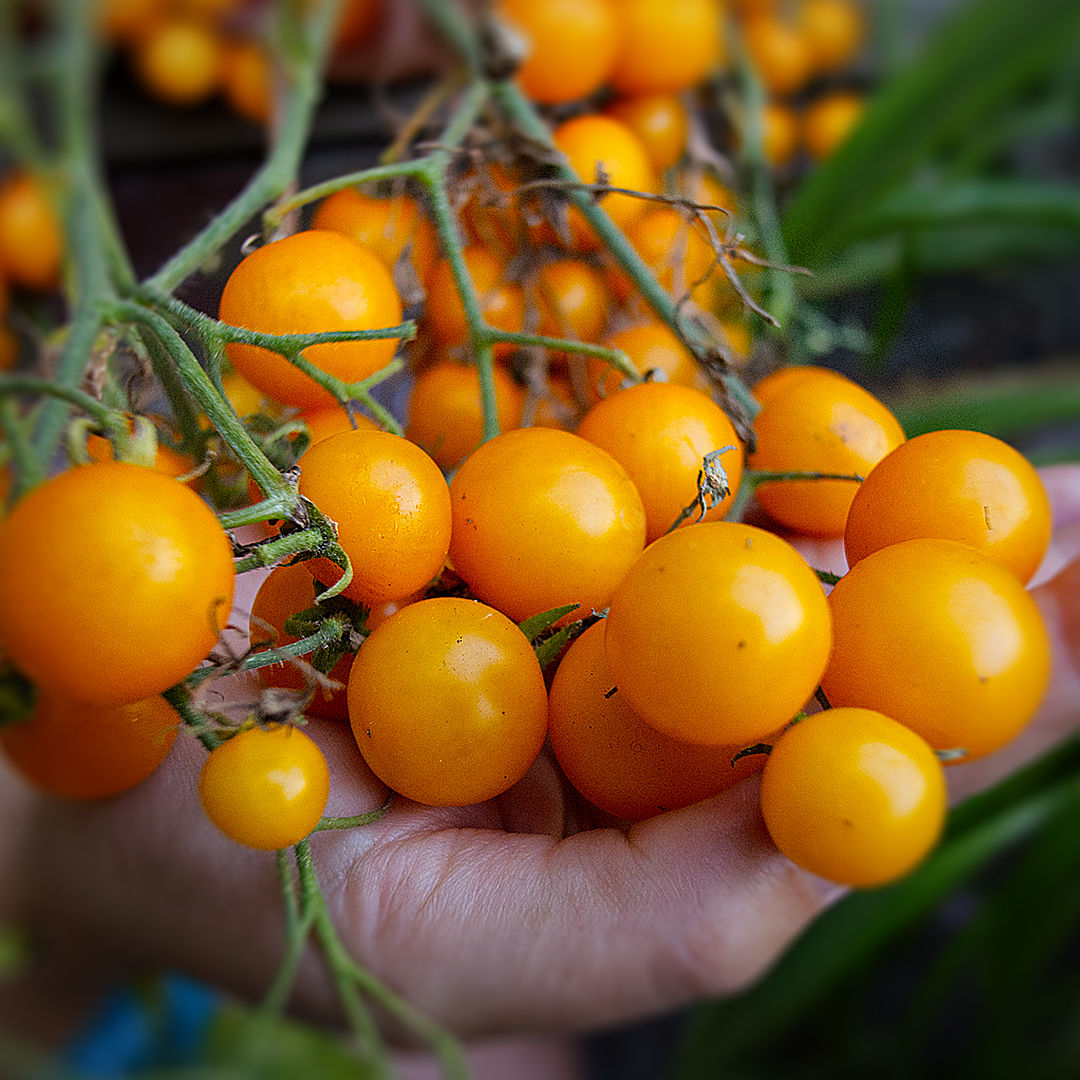
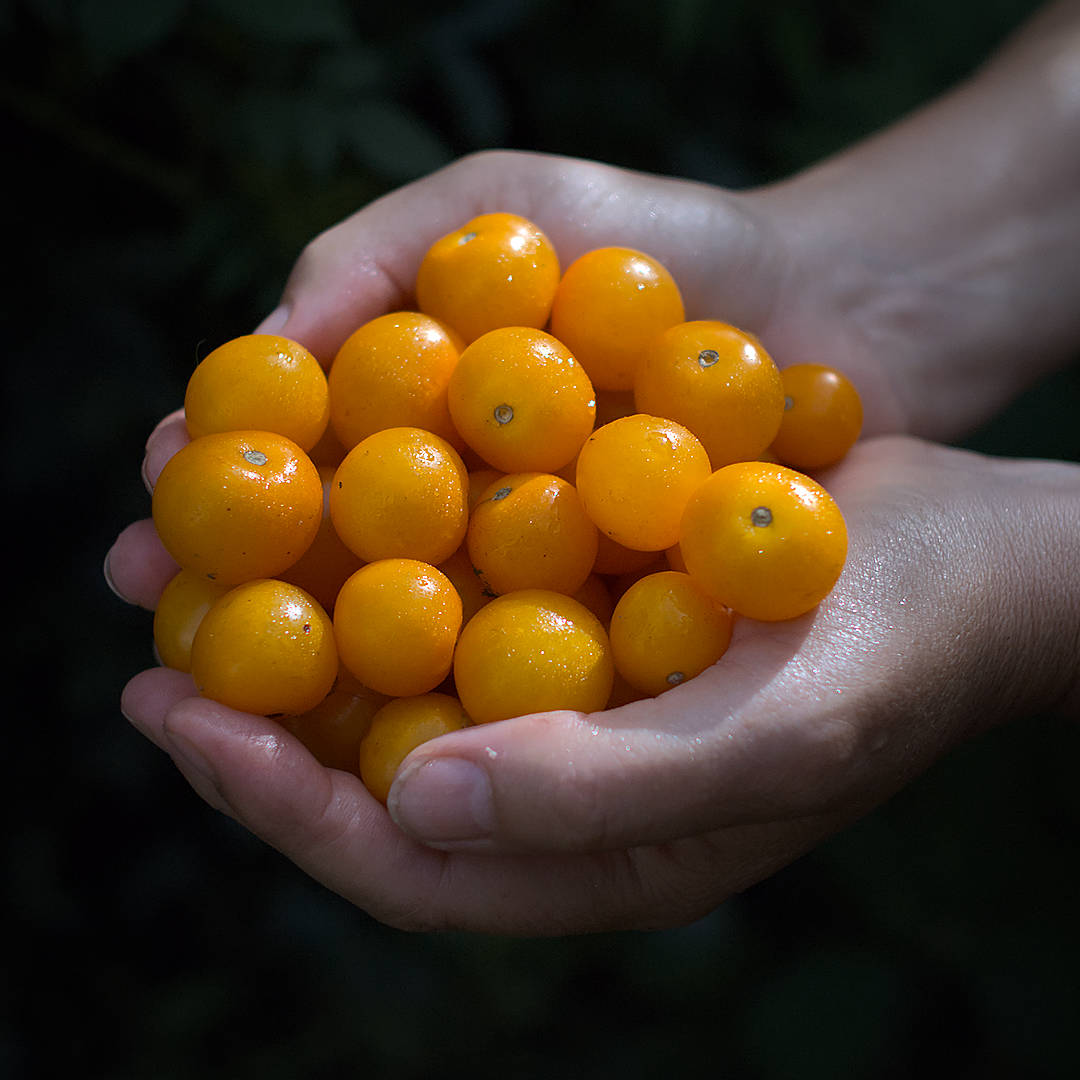

Yellow tumbling tomatoes are the offspring of the early British dwarf and patio-breeding programmes — varieties designed to live in pots, trail gently, and keep producing regardless of what the weather or gardener decides to do.
Yellow tumbling tomatoes are the offspring of the early British dwarf and patio-breeding programmes — varieties designed to live in pots, trail gently, and keep producing regardless of what the weather or gardener decides to do.
They aren’t bred for intensity or showmanship, but for reliability: compact growth, forgiving habits, and a steady stream of small, bright fruit that looks good in any corner of the patio.
I’ve grown plenty of the red tumblers over the years and always found them dependable, but this was my first time with the yellow strain. They were just as productive, and in some cases more so. A single 20-litre pot produced a sprawling, generous plant that looked cheerful even when slightly neglected.
One was abandoned long enough to drop most of its leaves, yet it carried on fruiting steadily as if determined to prove a point. They’re not the sweetest tomatoes I grow and certainly not the most complex in flavour, but in terms of sheer output and hardiness, they earn their place.
Eaten fully ripe, the yellow fruits have a clean, gentle sweetness — nothing syrupy — and a faint citrus lift that works well in salads. They’re the tomatoes you keep reaching for without thinking: a handful tossed through couscous, a scatter on a tart, or eaten straight from the truss while you’re watering something else.
They’re easy company, and when mixed with reds they brighten both the plate and the mood in a way that feels entirely effortless.
Coming Next Spring
All four will be available next spring. If you fancy growing along with me, keep a spot free — and watch for the early spring offers. There’ll be some completely new tomatoes arriving too.
Remember: Start Small. Harvest Big
This whole harvest began with a tray of super plugs back in spring. If you’d like the same head start, here are five reasons why plugs make all the difference.
1, More for your money – plugs cost less than larger plants, yet given a head start they’ll often overtake them.
2. Early advantage – raised indoors and hardened off, they hit the ground running as soon as the weather warms.
3. Greater choice – starting with plugs means you can grow varieties you’ll never find in a garden centre.
4. Bigger harvests – early plugs can grow into full-sized plants that fruit sooner, longer, and heavier.
5. Simple joy – there’s nothing more rewarding than watching a small plug transform into a plant dripping with chillies.
Order your super plugs now and give yourself the best possible start.
World of Chillies was set up by Sarah Hunt in 2011 to promote chilli growing and the enjoyment of everything hot and spicy.
UK Company No. 07860204.
VAT reg. 223126942