What’s Wrong With My Chilli Plant?How to diagnose common aliments
What’s Wrong With My Chilli Plant?
Real symptoms, real fixes, and no shame in getting it slightly wrong.
Yellow leaves? Splodgy patches? Curling tips, wilting stems, or a sudden flush of purple where there shouldn’t be any? Welcome to chilli growing.
Every year, my plants throw up something odd — and after 20 years of growing chillies, I’ve learned not to panic.
These photos are all from my own plants this season, and they show the kind of everyday issues that pop up even in a really good year. And this year has been brilliant so far — bright days, strong growth — but with cold nights that can still catch young roots off guard.
That’s when you start seeing all these little dramas: yellowing, blotching, sulking, and the occasional full-blown collapse.

With a little care, most chillies recover — and new growth is the proof
A lot of it is just down to timing, temperature, and a bit of stress around potting on. Luckily, most problems can be sorted with a little warmth, some steady watering, and the occasional foliar feed — which is a quick way to get nutrients straight to the leaves when the roots are sulking.
So if you spot something worrying on your plants, don’t chuck them out just yet. Have a look through these examples — all real, all recent — and see if anything looks familiar. With a bit of care, these odd-looking seedlings can go on to become strong, productive plants. Here’s to a cracking chilli season — and hopefully one that ends with fat pods, big plants, and a lot less slug carnage than last year.
Tap the photos for more information
Common Chilli Deficiencies & Problems
If your chilli plant’s looking poorly but none of these photos match exactly, don’t worry. You can use the tags below to narrow things down — they’re all based on visible symptoms like yellow leaves, curling tips, or holes. The more tags you select, the more specific your search becomes (but you’ll see fewer results). Or just use the search bar if you’ve got something particular in mind. In addition to this article, why not visit Nutrient Guide for more insights.
-

Yellow Between the Veins? Classic signs of magnesium deficiency
-

Leaves Turning Purple and Patchy? Classic signs of phosphorus deficiency
-
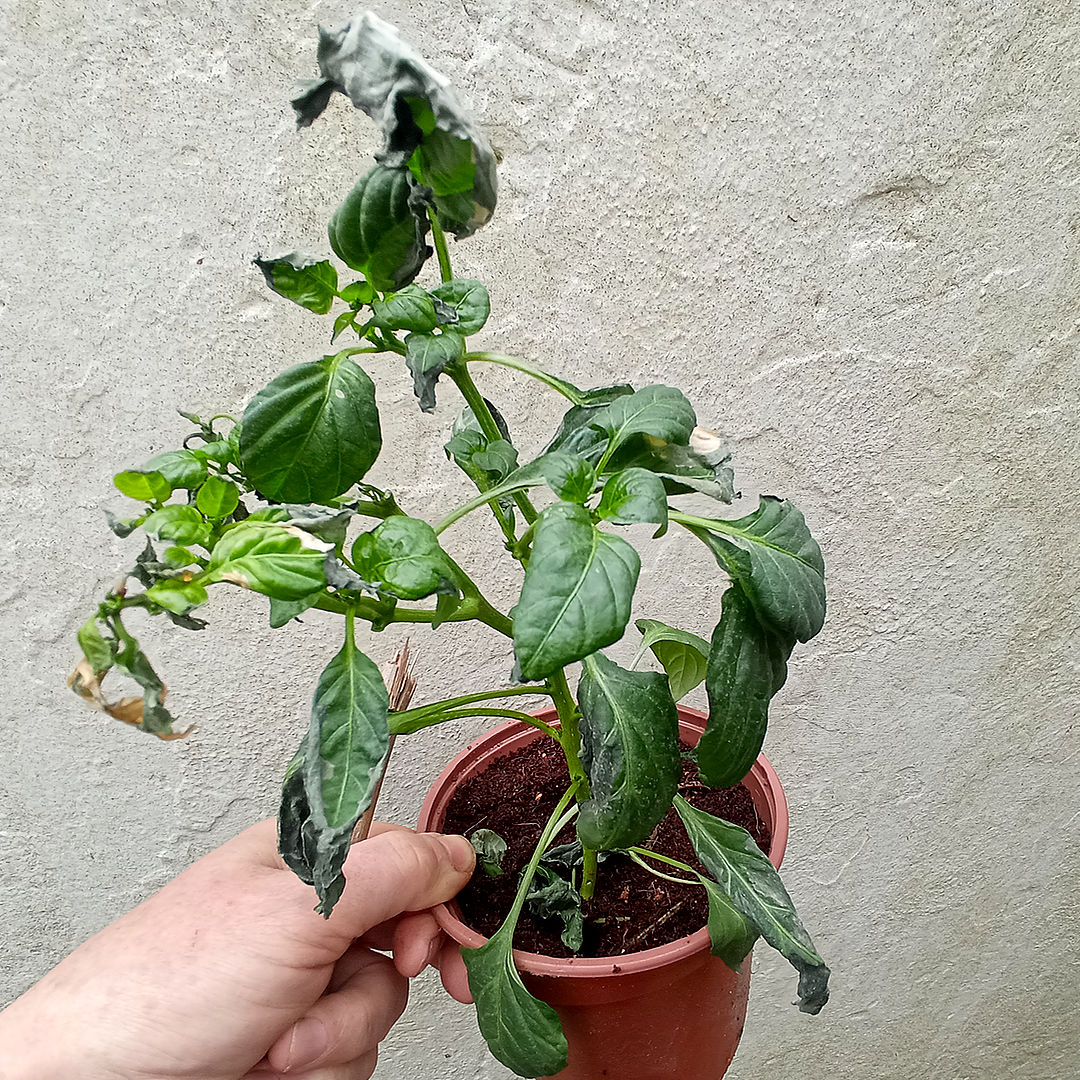
Wilting, Twisting, and Collapsing Leaves? Severe stress
-

Super Green but Suspiciously Shiny? Could be excess nitrogen
-
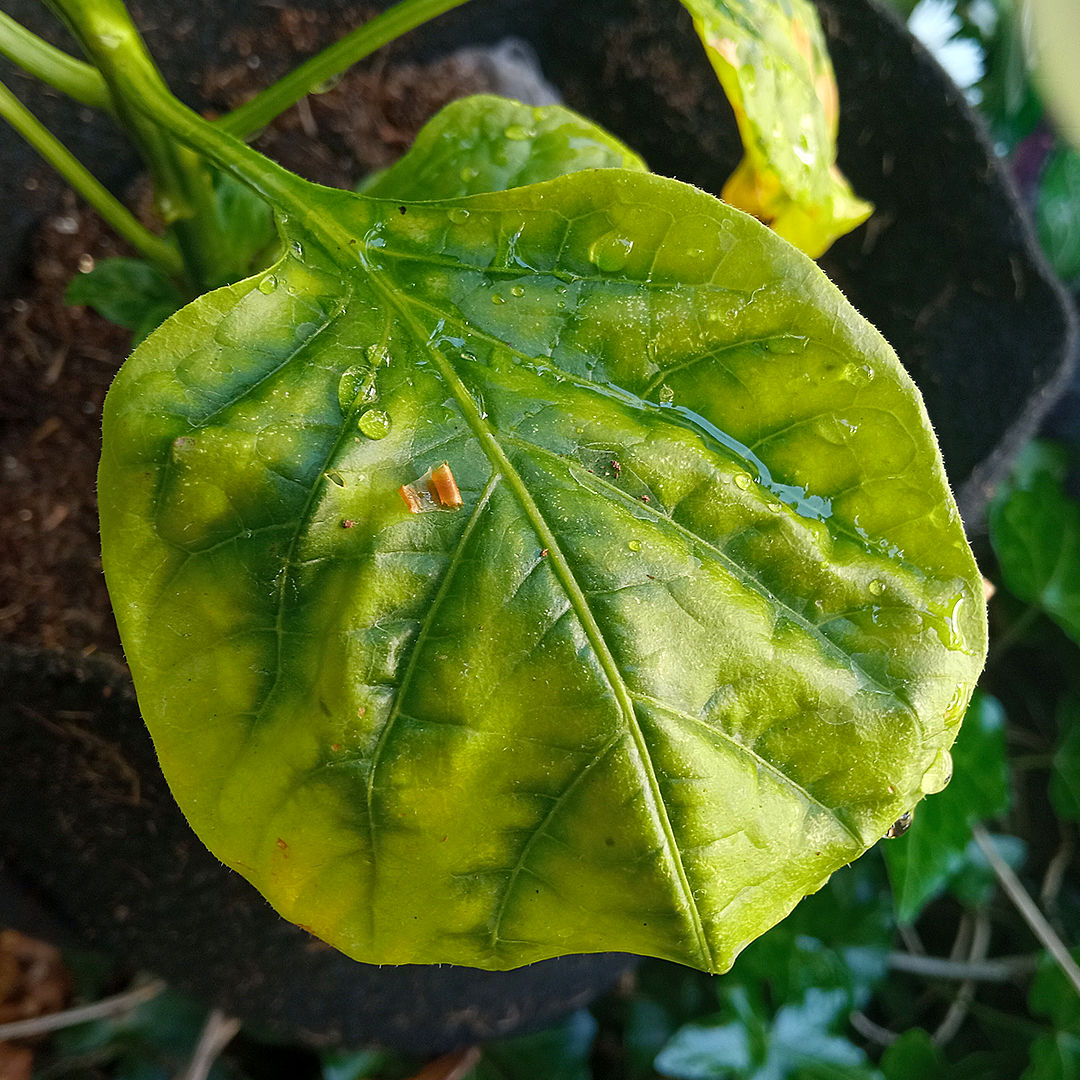
Yellow, Blotchy, Puffy? Potassium & magnesium deficiency?
-

Yellow, Droopy Leaves? Potassium & magnesium deficiency?
-
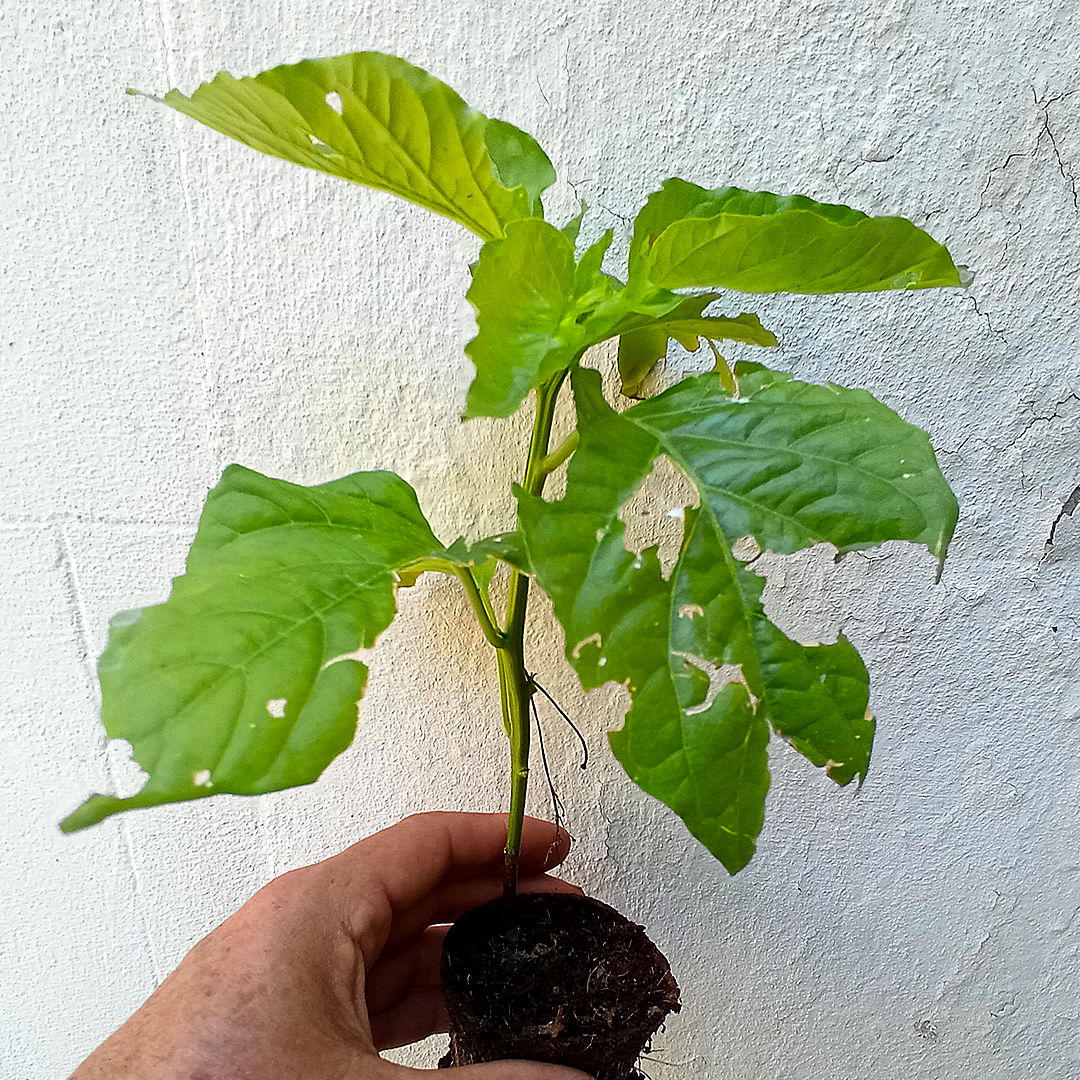
Pale, Leggy, and Full of Holes? A combination of multiple stresses
-
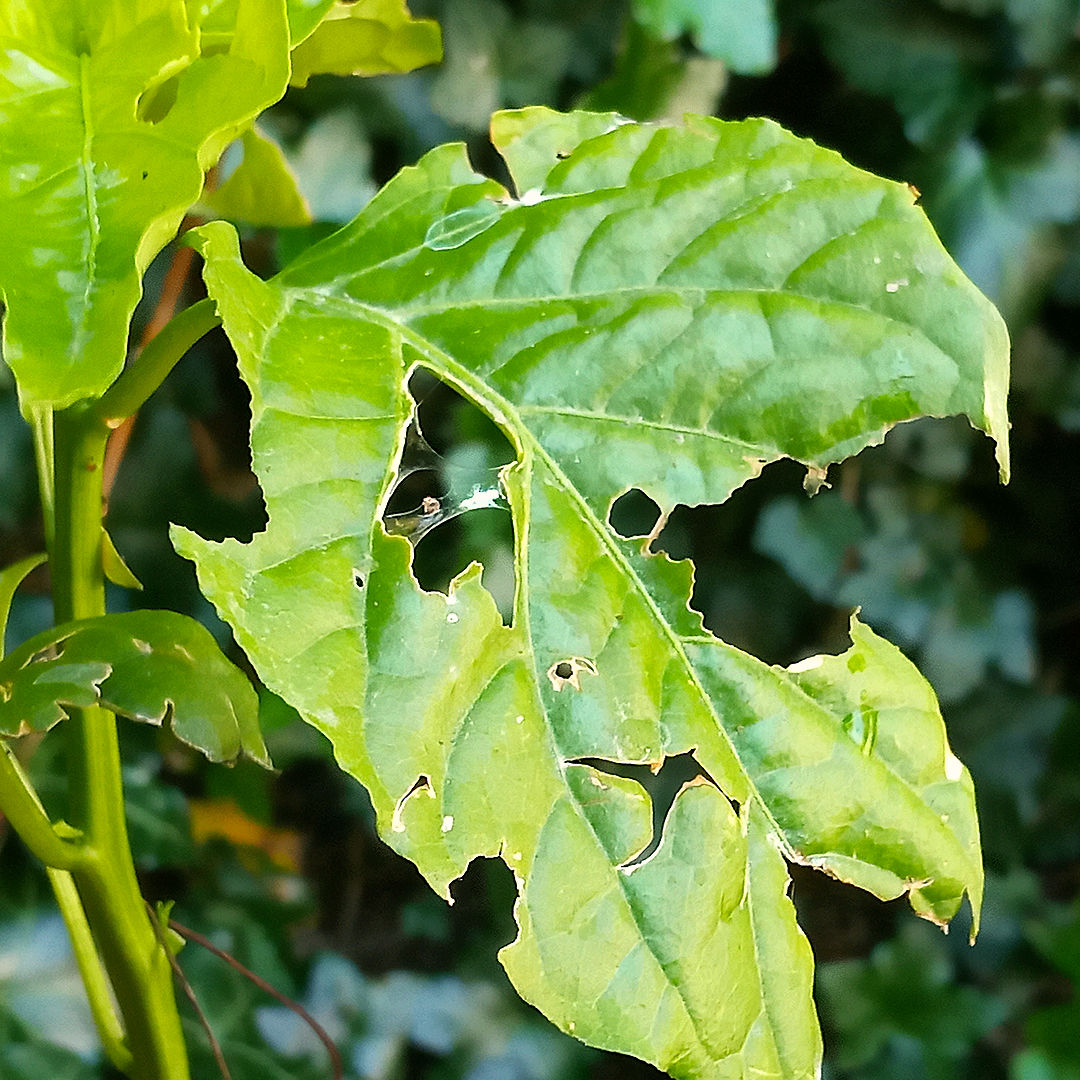
Slugged, Shredded and Set Back? Signs of slug or snail damage
-

Burnt by the Bright Sun? Textbook case of sun scorch or leaf burn
-

A classic case of edema or nutrient uptake stress
-

Bright Yellow Leaves at the Bottom? Classic early nitrogen deficiency

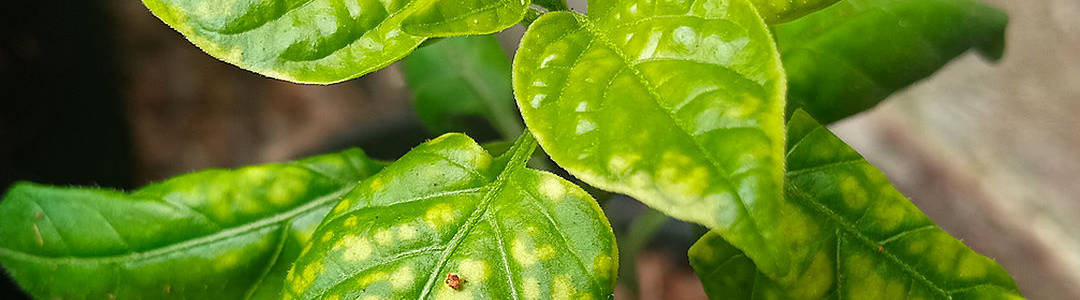
▶ What’s going on
Your plant is showing classic signs of magnesium deficiency – yellowing between the veins on the upper leaves, like a green road map.
▶ Why does it look like this?
Magnesium sits at the heart of every chlorophyll molecule – it’s literally what makes leaves green. When the plant runs low, it can’t make enough chlorophyll, so the areas between the veins start to yellow. The veins stay green because they still have flow – the result is that strange, marbled “green road map” look.
▶ Why it’s happening
Likely triggered by cold nights and the switch from coir to compost. Cold roots can’t take up magnesium well, even if it’s in the soil. Coir itself is naturally low in magnesium.
▶ What to do
Spray with Epsom salts (1 tsp per litre of water, avoid full sun)
Keep warm at night – use fleece, a cold frame, or even just place bubble wrap, cardboard, or old carpet under the pot to stop cold seeping in from below. Don’t overwater – soggy roots struggle to take up nutrients
▶ What to expect
Old leaves won’t green up, but new growth should come through clean and healthy.
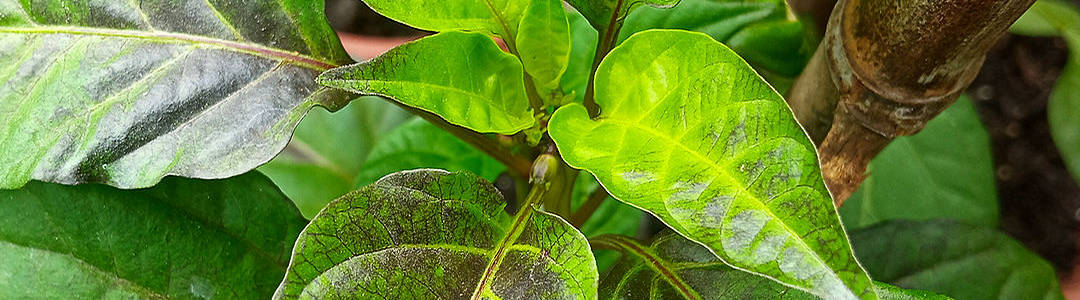
▶ What’s going on
The older leaves are developing a dark, purplish-bronze tinge, especially between the veins. Newer leaves are pale and slightly chlorotic. The plant looks healthy but unsettled.
▶ Why does it look like this?
This is a classic sign of phosphorus deficiency. When a plant can’t get enough phosphorus, it starts to show dark blotches and purpling on older leaves — often with a metallic sheen. Young leaves may go yellowish or pale as the plant tries to redistribute what little phosphorus it has. The colours can be dramatic, but it’s really a sign of cold roots or stalled uptake.
▶ Why it’s happening
This usually happens when roots are cold, shocked, or not fully established — common after potting on or moving outdoors too soon. Even if phosphorus is present in the soil, the plant can’t absorb it properly when temperatures drop below around 12°C. Recent cold nights are the likely trigger.
▶ What to do
Keep warm at night – use fleece, a cloche, or bubble wrap under pots to protect roots from cold Feed gently with a balanced fertiliser (including phosphorus) once the plant is settled Don’t overwater – phosphorus uptake is sluggish in soggy, cold compost Check for strong, green new leaves – that’s the sign it’s recovering
▶ What to expect
Purpling on old leaves won’t go away, but new growth should come through greener and stronger. Once the roots warm up, the plant should find its stride again.
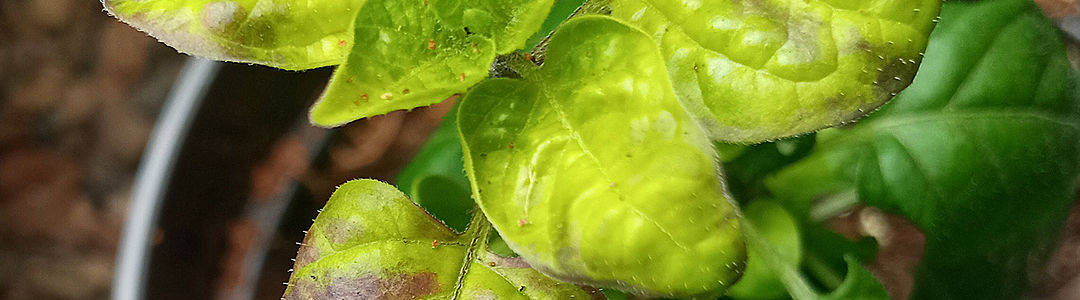
▶ What’s going on
This one’s showing a bit of everything: purpling and bronzing on the lower leaf, yellowing and patchiness across the top, and some early signs of leaf tip damage. It’s not in full collapse, but it’s clearly stressed.
▶ Why does it look like this?
That purpling is likely due to phosphorus deficiency, while the yellowing between the veins hints at magnesium deficiency. It’s probably not a lack of nutrients in the compost — it’s that the plant can’t absorb them well. The root system may be struggling from cold shock, transplant stress, or soggy conditions. The result is patchy, blotchy, unsettled growth. It’s a bit of a cry for help.
▶ Why it’s happening
The plant was recently moved from coir to compost and is now outdoors in cool spring temperatures. Nights below 10°C can easily stall young chilli roots. When roots shut down, nutrients like magnesium and phosphorus don’t move around properly – so deficiencies appear even if the soil isn’t technically lacking. A combination of cold stress and immature roots is the likely culprit.
▶ What to do
Spray with Epsom salts (1 tsp per litre of water, avoid full sun) – a gentle foliar feed that helps with magnesium. Keep warm at night – fleece, cold frame, or bubble wrap under the pot will help reduce root shock. Avoid overwatering – let the compost dry slightly between watering to encourage stronger root growth. Once it starts to recover, use a balanced liquid feed (with trace minerals) to support new growth
▶ What to expect
The damaged leaves won’t recover, but what you want to see is fresh, clean, green growth at the tips. If the new leaves are healthy, it’s back on track. If not, the roots may still be struggling.
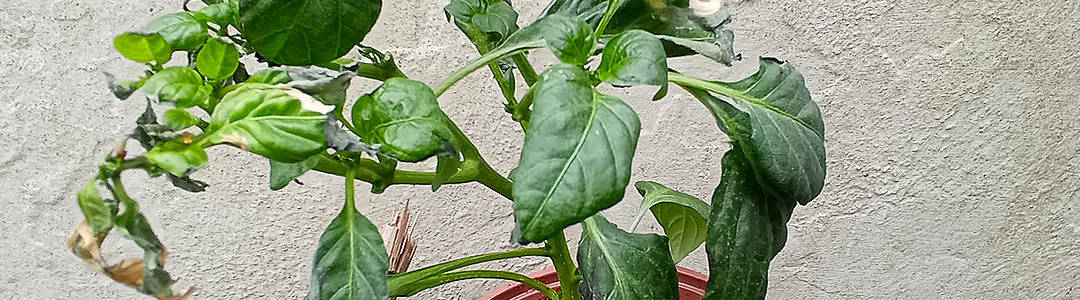
▶ What’s going on
This chilli is showing widespread wilting, drooping leaves, leaf edge burn, and some curling or collapse of top growth. It’s not dead, but it’s clearly in shock and struggling.
▶ Why does it look like this?
The symptoms point to severe stress, probably from a combination of cold exposure, transplant shock, and possibly root damage or early-stage root rot. Leaves wilt when the roots can't supply water fast enough — even when the soil looks moist. This can happen if roots are damaged, oxygen-starved, or simply too cold to function properly. The leaf scorch suggests the plant then faced sun or wind exposure it couldn’t cope with.
▶ Why it’s happening
Most likely this plant was recently potted on, moved outdoors, and hit by a combination of cold nights and sudden sun or wind. Young roots in coir or dense compost can rot or shut down under these conditions. Once that happens, the top wilts because water isn’t flowing properly, even if you keep watering.
▶ What to do
Move it out of direct sun and wind to reduce stress
Check the roots – if they’re brown, smelly or mushy, root rot is already setting in. If roots are mostly white and firm, repot into fresh, airy compost and let it dry slightly. Trim off dead or scorched leaves to reduce the load on the roots. Try a gentle foliar feed to get nutrients in while the roots recover
▶ What to expect
If roots are healthy, the plant may bounce back with time and warmth. If the roots are rotting, it may not recover – but you can try taking a cutting from the top if there's any green, firm stem left. Some plants really don’t survive the move outdoors when the nights are this cold.
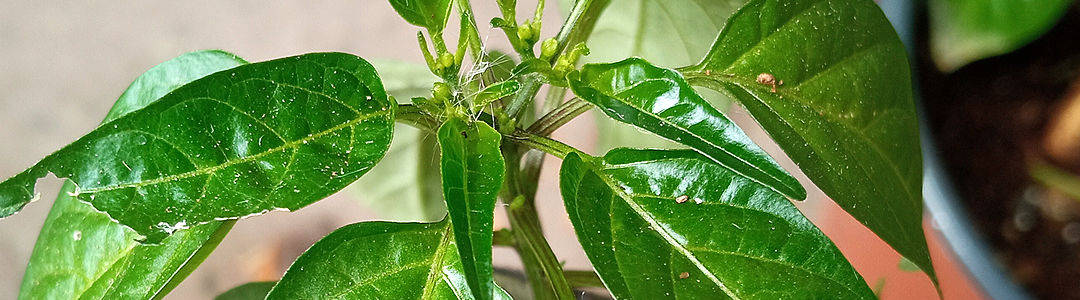
▶ What’s going on
At first glance, this chilli looks immaculate — deep green leaves, glossy surface, strong shape. But those very dark, overly lush leaves can be a warning sign of excess nitrogen. The growth is fast and vertical, but tight and top-heavy, with smallish new leaves bunched near the tip. That’s a plant growing fast on the outside, but not always balanced inside.
▶ Why does it look like this?
Nitrogen drives leafy growth — too much, and you get big, dark leaves but soft stems, delayed flowering, and sometimes pest problems. The small, tight new leaves may also be a sign the plant’s outgrowing its pot, or the roots are a bit sluggish and the top is outpacing them.
▶ Why it’s happening
This plant may have been fed heavily in early stages or planted into very rich compost. Combine that with recent warm days, and it’s gone into overdrive. The roots may also be constrained or recovering from earlier cold, so uptake is skewed — lots of nitrogen, not enough potassium or phosphorus to balance it out.
▶ What to do
Hold off on any high-nitrogen feeds for now – no grow formulas. Switch to a more balanced or tomato-style feed to encourage fruiting. Check if the plant is rootbound – pot up if needed. Give it bright light and stable warmth – avoid stress that could make it bolt or collapse. Don’t panic – just nudge it gently toward balance
▶ What to expect
If you ease off the nitrogen and give it the right cues, this plant will settle and begin to form buds. You don’t want it lush and leafy forever — you want it to flower and fruit. Watch for new growth spacing out slightly and stems firming up.

▶ What’s going on
This leaf is showing a washed-out yellow colour with irregular blotching and a slightly puffy or puckered texture. The green is clinging to the veins, but the rest looks tired and patchy. It’s not a crisp interveinal yellowing like magnesium, and not purpling like phosphorus. This one’s a bit more diffuse — and a little more subtle.
▶ Why does it look like this?
This is likely an early sign of potassium deficiency, with possible magnesium overlap. Potassium helps regulate how water and nutrients move through the plant, and when it’s lacking, you start to see yellowing, blotchiness, and soft leaf texture — especially on older leaves. The wrinkled or puckered look suggests the cells aren't holding their shape properly, often from poor nutrient movement.
▶ Why it’s happening
Chillies in fabric pots can dry out fast and fluctuate between wet and dry, especially in changing spring weather. That irregular water uptake disrupts how potassium and magnesium are absorbed. It can also happen if the compost is low in potassium or if there’s a high-nitrogen feed without enough potassium to balance it. Add in a few cold nights, and uptake slows even further.
▶ What to do
Start using a balanced liquid feed (tomato food is ideal – high in potassium) Try a foliar feed to get nutrients in quickly while the roots stabilise Keep the compost evenly moist but not soggy – avoid big wet/dry swings Add a layer of mulch (even coir or bark) to help regulate water and temperature.
▶ What to expect
Affected leaves won’t recover, but the colour and strength of new growth will show if the plant is bouncing back. Look for firmer, deeper green leaves that hold their shape and don’t go blotchy.

▶ What’s going on
This leaf shows a mix of overall yellowing, slight blotchiness, and a soft, tired texture. There’s a bit of browning at the edge and signs of curling. It’s an older leaf, and it’s not happy — but it’s not outright dying either.
▶ Why does it look like this?
This is likely a potassium deficiency, possibly mixed with magnesium again. The yellowing is more diffuse than classic magnesium chlorosis, and the leaf edge damage hints at potassium. The leaf’s soft, weak structure tells us water and nutrient flow isn’t working properly — classic signs of uneven feeding or irregular watering.
▶ Why it’s happening
This could be caused by swings between wet and dry, or simply a compost mix that’s low in potassium. If the plant has been in the pot for a while or started in coir, the potassium may have been used up. Add in cool roots and a few temperature dips, and you’ve got slow, patchy nutrient uptake — and tired, saggy leaves to show for it.
▶ What to do
Switch to a high-potassium liquid feed (like tomato food) once or twice a week. Try a light foliar feed to speed things up. Keep watering consistent – not bone dry, not soggy. If the plant has been in the same pot for ages, consider a top-up or gentle repot. Keep warm at night – cold roots struggle to move potassium properly
▶ What to expect
New growth should come through firmer and more evenly green. Damaged leaves won’t recover, but they’ll tell you if things are improving: no new yellowing = good news.
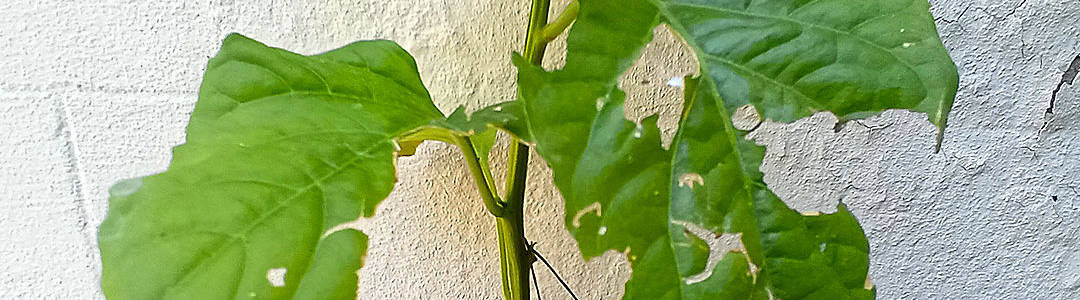
▶ What’s going on
This seedling is tall, stretched, pale, and has leaves that are torn, chewed, or deformed. The lower leaves are especially battered. It’s not dead — but it’s been through a lot, and it's not looking confident.
▶ Why does it look like this?
This is a combination of multiple stresses: likely low light, nutrient deficiency, cold exposure, and some physical or pest damage. The stretched stem suggests it grew under low light (indoors or in a crowded tray), reaching upward to find the sun. The pale colour points to a general nutrient shortage, likely nitrogen — but possibly compounded by coir-only growing and no recent feeding. The holes? Could be physical damage from transport, handling, or the odd slug.
▶ Why it’s happening
This plant may have been kept in sub-optimal conditions for a while — low light, fluctuating temperatures, and no recent feeding. If it’s still in a plug or hasn’t been potted on, the roots will be circling and starved for space and nutrition. Cold nights won’t have helped. And the damaged leaves just make everything look worse.
▶ What to do
Pot it on into a good, moist compost mix with added nutrients. Keep warm and sheltered while it recovers – especially at night. Start a light feeding regime (something balanced with trace elements). Give it proper light – full sun or under grow lights. Remove any truly tattered leaves to help it redirect energy
▶ What to expect
With care, this plant can recover — but it’s got some catching up to do. If the stem firms up and new growth is green and compact, it’s on the mend. If it stays lanky and pale, it might be worth replacing.

▶ What’s going on
This leaf is torn and pale, with visible slime trails and bite marks — classic signs of slug or snail damage. There are also signs of nutrient stress, but the primary issue here is pest impact: physical damage that weakens the plant, opens it up to further problems, and slows everything down.
▶ Why does it look like this?
Slugs and snails are night-time feeders and love tender chilli seedlings. They chew irregular holes, often from the leaf edges inward or straight through the middle. The slime trail is unmistakable. What follows is secondary stress — leaves lose their structure, growth stalls, and nutrient flow gets disrupted. Young plants especially can’t recover easily from this without support.
▶ Why it’s happening
This plant was likely outdoors without protection, or near ivy, grass, or damp areas where slugs and snails hide. Damp spring weather brings them out. If the plant was already a bit nutrient-starved, the damage looks worse because the leaf can’t bounce back. Insect pests like caterpillars can cause similar damage, but the mucus is a giveaway here.
▶ What to do
Move the plant away from slug hotspots (ivy, grass, shady damp corners). Use copper tape, sharp grit, or collars around pots to deter night-time munchers. Feed with a balanced fertiliser to help the plant recover. Trim back the worst-damaged leaves — they won’t heal. Keep the plant warm and stable so it can regrow quickly
▶ What to expect
Slugs rarely kill a plant outright — but they slow it down and make it more vulnerable to everything else. With warmth, feeding, and protection, this one can recover. Keep an eye out for new holes — if they stop appearing, you’re winning.

▶ What’s going on
This chilli has patches of yellowing and brown cell death, especially on one side of a leaf — with water droplets still visible. The rest of the plant looks healthy and is forming buds, but these patches are clearly damaged. You can see where it’s been burned. Literally.
▶ Why does it look like this?
This is a textbook case of sun scorch caused by water droplets on the leaf surface. When you water or mist during bright sun, droplets can act like tiny lenses — focusing sunlight into a hot pinpoint that literally cooks the tissue beneath. The result? Pale yellow patches with a brown centre or edge, often sharply defined. It’s not a disease or deficiency — it’s a mini magnifying glass effect.
▶ Why it’s happening
This probably happened after watering or foliar spraying during the day. The leaf was wet, the sun was strong, and the droplets stayed long enough to cause burn. It can be worse on smooth, young leaves with a waxy sheen. Plants in still air (like inside a greenhouse) are more vulnerable, as droplets don’t evaporate quickly.
▶ What to do
Remove the most damaged leaves if they’re badly scorched. Avoid overhead watering or misting during sunny hours. Water early morning or late afternoon when leaves can dry slowly. Don’t panic — this isn’t systemic and won’t spread. Let the plant push on — it’s already forming buds, which is a great sign
▶ What to expect
The scorched patches won’t heal, but they won’t spread either. As long as new leaves come in clean and green, the plant is on track. Just skip the midday shower from now on.
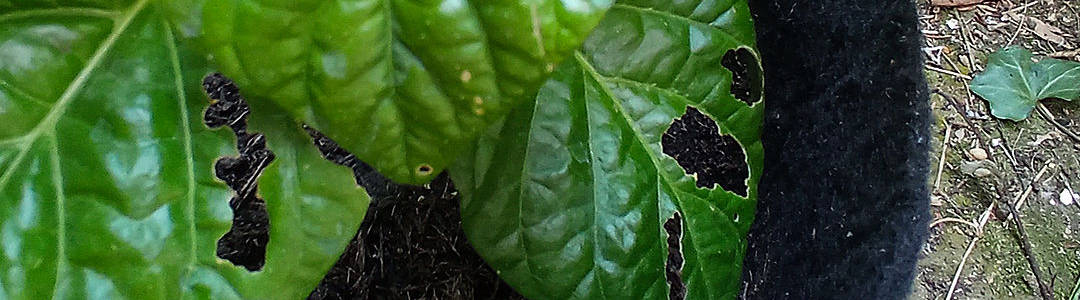
▶ What’s going on
This chilli leaf is peppered with small, irregular brown spots — almost like freckles or rust. The rest of the leaf looks tired, with a dull green cast and signs of yellowing in the background. The plant may still be growing, but the foliage is clearly unhappy
▶ Why does it look like this?
This looks like a classic case of edema or nutrient uptake stress, possibly caused by inconsistent watering, overwatering, or high humidity. It can also resemble a mild potassium deficiency, but the fine stippling and scab-like texture suggest it’s more of a physical stress response than a pure nutrient shortage. Sometimes these rusty speckles appear when roots are struggling to manage water flow — especially after being potted on or exposed to cold nights. The result is poor cellular pressure in the leaves and minor ruptures that scar into spots.
▶ Why it’s happening
You’re likely looking at a combination of cool nights, overwatering, and maybe root disturbance. If the compost has poor drainage, or the plant has been caught in damp, still air (especially indoors or in a tunnel), this kind of speckling can appear. Some varieties are also more prone than others — annuums are usually more tolerant than chinense types.
▶ What to do
Let the compost dry slightly between waterings — moist but never soggy. Improve airflow if the plant is under cover — open up vents or space plants apart. Feed gently with a balanced liquid fertiliser. Remove the worst-affected leaves to reduce disease risk. Keep warm at night — cold roots are often the hidden villain here
▶ What to expect
The spotting won’t go away, but new leaves should come through clean. If more appear, it may signal a deeper root or fungal issue — but often, this clears up once watering and warmth improve.

▶ What’s going on
The lower leaves of this young chilli plant have turned a bright, even yellow, while the upper leaves remain green and healthy. The yellowing starts from the base and works its way up, affecting the oldest leaves first.
▶ Why does it look like this?
This is a classic early nitrogen deficiency. Nitrogen is mobile in plants, which means when there’s not enough available, the plant redirects it from older leaves to support the newer ones. The result is an even, lemony yellowing of the lower foliage with no spots or distortion.
▶ Why it’s happening
The plant is still in its seedling plug, likely coir-based and depleted of nutrients. Without potting on or feeding, there’s not enough nitrogen to support ongoing growth. Cold nights or overwatering can also reduce uptake, but in this case, it’s mostly a matter of running out of fuel.
▶ What to do
Pot the plant on into fresh compost with a gentle nutrient profile. Begin a light feeding routine with a nitrogen-rich or balanced fertiliser. Keep warm and don’t let it dry out too much between watering. Avoid overfeeding – a mild liquid feed once a week is plenty at this stage
▶ What to expect
The yellow leaves won’t go green again, but new growth should be lush and strong. If it’s still yellowing after potting on and feeding, something else may be holding the roots back – like cold or waterlogging.
World of Chillies was set up by Sarah Hunt in 2011 to promote chilli growing and the enjoyment of everything hot and spicy.
UK Company No. 07860204.
VAT reg. 223126942
Hit the + sign |
|
|---|---|
Select the plus icon below the photo to uncover the full diagnosis.
|
Foliar Feeding |
|
|---|---|
Foliar feeding gets nutrients straight into the leaves — ideal when roots are cold, stressed, or struggling. It’s a quick fix for slow growth, yellowing, or transplant shock.
Mix a general liquid feed or seaweed extract at half strength (e.g. 5ml per litre instead of 10ml). Spray early morning or late afternoon with a fine mist, covering both sides of the leaves. Avoid spraying flowers. It won’t fix everything, but it often perks up a plant in just a few days. Handy when roots aren’t pulling their weight. |