Hot Horizons
A Year of Discovery Awaits
Hot Horizons
Welcome to 2025! There’s something about the start of a new year that feels full of promise—plans to make, seeds to plant, and a world of chillies to grow.
This season, I’m bringing together some of the most fascinating varieties I’ve ever grown, and I can’t wait to share them with you.
To kick things off, I’ve given an old favourite a bit of a refresh: Chilli of the Week. From now until mid-May, I’ll be featuring almost 20 different chillies—one each week—on top of all the regular varieties we already stock.

Each week’s chilli will be carefully chosen—some familiar favourites, others delightfully unusual—and all will be offered at a special discount. It’s a chance to discover something new, grow something extraordinary, and perhaps even fall in love with a chilli you’ve never tried before. Here’s a taste of what’s coming:
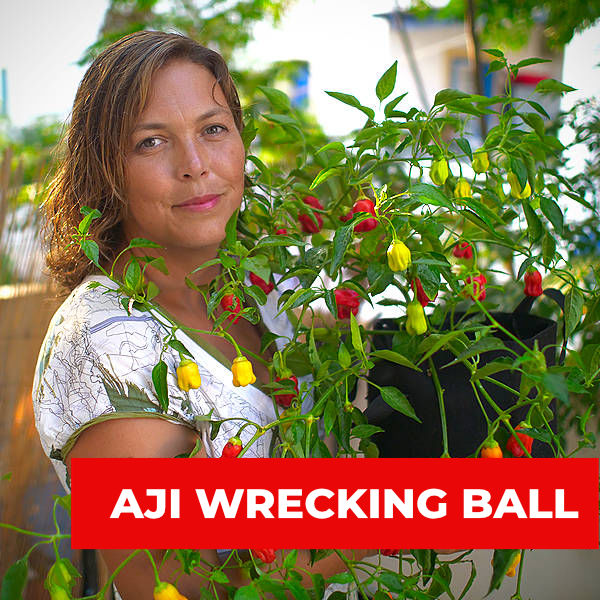
Aji Wrecking Ball: A plant so cheerful it might as well be throwing a party in your greenhouse. Vibrant pods with a sharp, sweet crunch—perfect for stuffing with cream cheese or snacking straight off the plant.
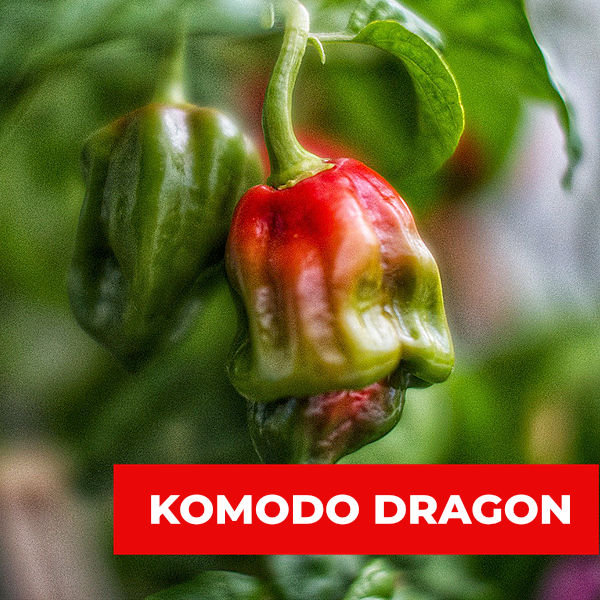
Komodo Dragon: A superhot that doesn’t just bring fire but flavour. Fruity and bold, it’s perfect for those who like their sauces with a bit of bite.
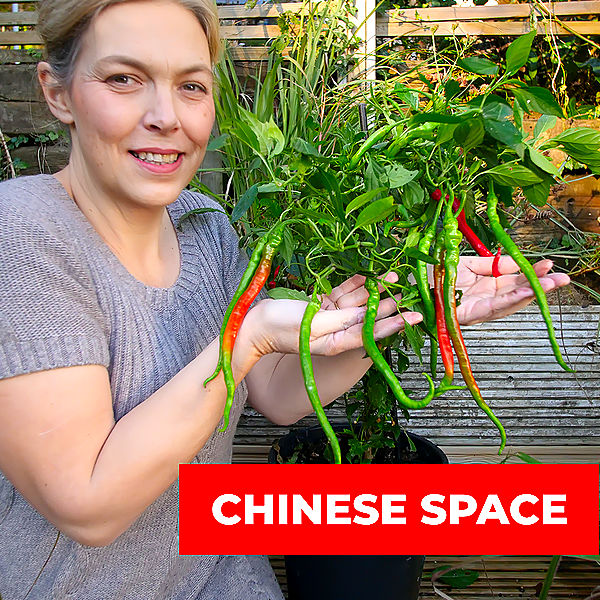
Chinese Space Chilli: Yes, it’s been to space, but that’s not its only claim to fame. Mild, crunchy, and endlessly versatile, this chilli earns its place in any grower’s collection.
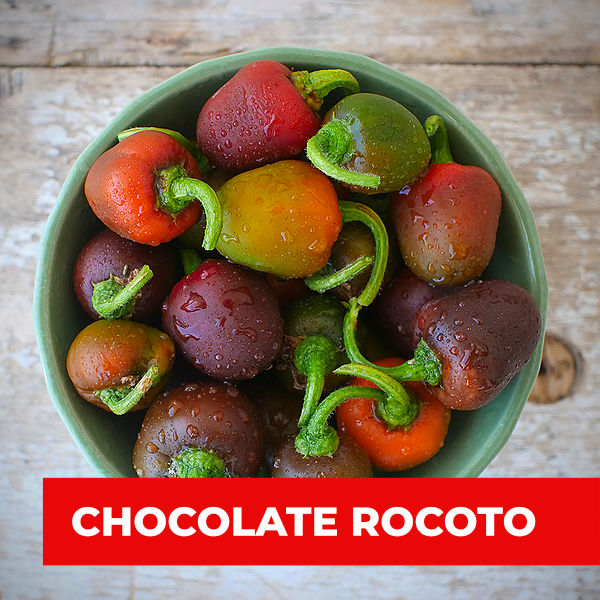
Chocolate Rocoto: A chilli that’s as beautiful as it is intriguing, with its firm, plum-like flesh and rich, fruity flavour. Just don’t let its sweet appearance fool you—there’s heat hiding in there too.
And to start the year, I’m kicking things off with the Raging Bull. A cross between the smoky heat of a habanero and the bright, fruity charm of a biquinho, it’s bold, beautiful, and ready to make your 2025 growing season unforgettable.
Aji Wrecking Ball
The Aji Wrecking Ball is the chilli equivalent of a good joke told at just the right moment. Its bright little pods, like miniature balloons, hang there as if daring you not to smile.
I grow it because, frankly, it makes me happy. A cheerful, jolly thing that seems to have wandered into the greenhouse just to lighten the mood.
It’s also wonderfully productive. Almost too productive, if I’m honest. Planted early, it doesn’t just fill a space; it takes over, bursting with its vibrant, glowing fruit. These are the sorts of chillies that keep appearing in bowls on your kitchen counter, your friends’ kitchens, even your neighbour’s. The plant simply refuses to stop giving.

Flavour Profile
Heat (Hotness): 3
Mild heat, enough to notice but not overpowering. It’s more approachable than many other chillies, making it great for general use.
Sweetness: 6
Aji varieties are often noted for their natural sweetness, and the Wrecking Ball is no exception. This gives it a pleasant balance.
Fruitiness: 7
Distinctively fruity with bright, sharp flavour notes. It’s a standout characteristic of this chilli.
Texture (Crunchiness or Firmness): 8
Known for its crisp, firm pods, it’s a joy to bite into fresh. The texture makes it perfect for stuffing or eating raw.
Juiciness: 5
While not overly juicy, it has enough moisture to complement its crunch and make it refreshing.
Aftertaste (Complexity): 4
The flavour is clean and straightforward, without much lingering complexity. It’s a chilli that leaves a fresh impression rather than a smoky or earthy one.
And those pods—sharp, sweet, juicy, and with just enough crunch to make them satisfying. Not ferocious, just enough heat to make you sit up. I hollow them out, fill them with cream cheese, and serve them as tiny amuse-bouches.
They’re everything you want in a bite: sweet, creamy, crunchy, and with that gentle kick to remind you it’s a chilli.
The Wrecking Ball comes from South America, but you wouldn’t know it from the way it settles into a British greenhouse.
Komodo Dragon
There are chillies you grow because they’re trendy, and there are chillies you grow because they deserve a second chance. The Komodo Dragon sits firmly in the latter camp for me.
Once a favourite of chilli growers everywhere, it seemed to slip quietly out of the spotlight a few years ago, overshadowed by flashier newcomers. I’d almost forgotten about it myself until I stumbled across some old photos while planning this year’s crop. There it was, a reminder of why I loved it so much in the first place.
For a superhot, the Komodo Dragon is remarkably prolific. The plant has a habit of putting on a show, with pods that start out in muted greens and slowly blush into deep reds as they ripen.

Flavour Profile Key
Heat (Hotness): 10
A true superhot, with an intense and lingering burn that earns its fiery reputation.
Sweetness: 4
There’s a touch of sweetness, but it’s secondary to the heat and fruitiness.
Fruitiness: 7
Bright and fruity, a standout characteristic beneath the fire.
Texture (Crunchiness or Firmness): 6
Firm pods with a satisfying bite, though not as crisp as some thinner-walled varieties.
Juiciness: 5
Moderately juicy, enough to enhance its use in sauces without overwhelming the texture.
Aftertaste (Complexity): 8
A rich and lingering aftertaste, combining its fruity notes with a smoky, intense finish.
There’s a moment, just before they turn fully red, when the colours overlap in a kind of gradient that’s almost painterly—subtle and striking all at once. It’s a chilli that knows how to make an entrance, even in the confines of a greenhouse.
Of course, beauty is only half the story. This is a superhot, after all, and it doesn’t let you forget it. The heat is intense—a fiery, lingering burn that announces itself unapologetically. But what sets the Komodo Dragon apart is its flavour. Beneath all that heat, there’s a surprising fruitiness, a brightness that makes it perfect for sauces. I’m already imagining the batch of Christmas sauce I’ll make this year, using these fiery little pods to create something both festive and formidable. A little dragon goes a long way, after all.
Chinese Space Chilli
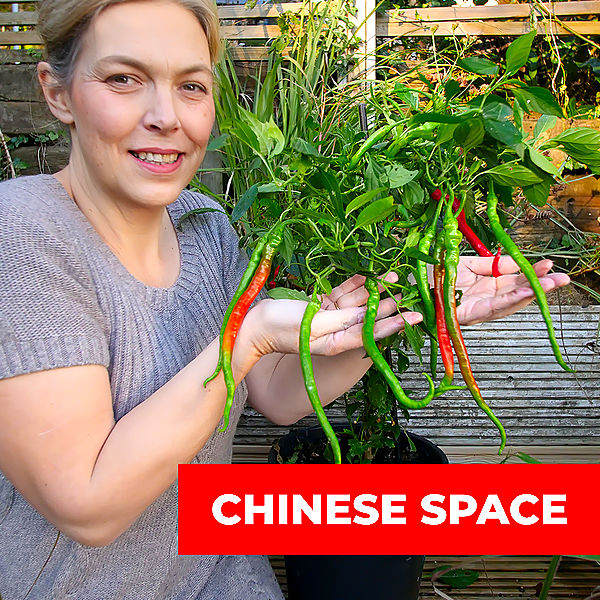
The Chinese Space Chilli isn’t just a plant; it’s a story. Somewhere between the fields and the stars, this peculiar chilli hitched a ride into orbit, part of an agricultural experiment to see how life behaves in zero gravity. The result? A chilli that seems to carry a touch of the extraordinary, even as it thrives in the very ordinary conditions of my greenhouse.
It’s an old favourite of mine, mostly because it never lets you down. From July onwards, the plant is always ready with a handful of pods, their bright little forms waiting to be picked, crunched, and sprinkled over… well, anything you fancy. They’re crisp and satisfying, with a medium heat that manages to be bold without overshadowing the rest of the meal. I chop them raw, scatter them over salads, soups, or even a plain bowl of rice. They’re the chilli equivalent of a reliable friend—always there, always welcome.
Flavour Profile Key
Heat (Hotness): 2
Mild and approachable, with just a touch of warmth—more a gentle nudge than a full-on burn.
Sweetness: 4
A subtle sweetness that complements its fresh, crisp character.
Fruitiness: 5
A balanced, lightly fruity profile that adds brightness without overpowering.
Texture (Crunchiness or Firmness): 8
Crisp and firm, making it perfect for raw use, as you mentioned.
Juiciness: 6
Moderately juicy, adding a refreshing quality when eaten raw or chopped into dishes.
Aftertaste (Complexity): 3
Clean and simple, with no overwhelming lingering notes—a chilli that does its job and doesn’t overstay its welcome.
And they grow fast. There’s something almost amusing about the sheer enthusiasm of the Chinese Space Chilli. Plant it, water it, and stand back. It takes off, producing pod after pod as if it’s in some sort of race. By late October, when other plants are looking bedraggled and spent, this one is still cheerfully producing, seemingly unaware of the seasons.
The story of its journey into space might seem a bit fanciful, but there’s something fitting about it. The chilli’s resilience, its adaptability, its refusal to slow down—these are qualities that make it feel like it belongs to a different world. And yet, it’s perfectly at home in a greenhouse or on a windowsill.
Chocolate Rocoto
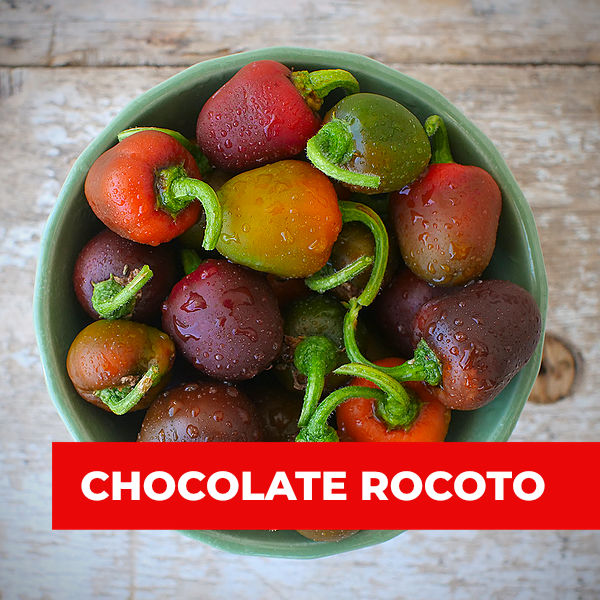
The Chocolate Rocoto is a chilli that doesn’t play by the usual rules. At first glance, it’s all contrasts—lime-green foliage against deep chocolate-brown fruit, little globes that seem almost too polished to be real. They’re much smaller than their cousin, the Rocoto Roja, but somehow more arresting, like jewels nestled among hairy leaves that shimmer slightly in the sunlight. And then there are the seeds: black, glossy, and utterly unexpected. It’s a chilli that seems to delight in being different.
I haven’t grown these for a few years, but the thought of them has stayed with me. They’re not the fastest growers—far from it. They sulk a little in the early days, protesting against too much water or not enough care. But once they settle in, they surprise you with their resilience. Long after other plants have thrown in the towel, the Chocolate Rocoto is still there, ripening its fruit as if to prove a point.
Flavour Profile Key
Heat (Hotness): 6
Medium heat, with Scoville ratings ranging from 50,000 to 250,000 SHU, offering a robust but manageable spiciness.
Sweetness: 6
Notably sweet, with a flavour reminiscent of plums and apples, providing a pleasant balance to its heat.
Fruitiness: 7
Distinctly fruity, with pronounced notes that complement its sweetness, enhancing its unique taste profile.
Texture (Crunchiness or Firmness): 7
Thick-walled and firm, offering a satisfying crunch, making it ideal for fresh consumption and culinary applications.
Juiciness: 7
Juicy and fleshy, contributing to its appeal in salsas and sauces, where moisture content enhances the dish.
Aftertaste (Complexity): 8
Rich and lingering, with layers of sweetness and heat that leave a memorable impression on the palate.
And what fruit. The texture is firm, almost like a plum, and the flavour is just as unusual. There’s a richness to it, a sweetness that feels familiar but is hard to place until you bite in. It’s there, that faint echo of plum, before the heat takes over—unexpected and commanding, but never out of balance. It’s the kind of chilli that doesn’t just enhance a dish; it defines it.
This year, I’m already dreaming of pico de gallo. There’s something about finely chopped Chocolate Rocoto, onions, tomatoes, and coriander that feels like a small act of alchemy. The chilli’s unique flavour shines through, turning a simple salsa into something extraordinary. It’s bold but not brash, the kind of thing you keep coming back to with a pile of tortilla chips and no regrets.
Raging Bull
Raging Bull is a chilli that feels as if it’s bursting with purpose. Its teardrop-shaped pods, a perfect marriage of Biquinho’s elegance and Habanero’s fiery intensity, are the kind of fruit you grow not out of necessity but out of sheer, uncontainable enthusiasm. For me, this plant embodies the thrill of discovery—a variety so perfectly balanced it’s almost theatrical.
Last year, I found myself utterly charmed by the Biquinho. Hundreds of little pods, like droplets of sunshine, festooned the plant. Their fruitiness was delicate and bright, a Chinense flavour without the sting—a chilli so mild it invited generosity in every dish. But, like a story without a twist, it left me yearning for just a touch more drama. Enter the Raging Bull.

Flavour Profile Key
Heat (Hotness): 7
With 100,000 SHU, it’s clearly hotter than the Chocolate Rocoto, offering a solid, upfront heat.
Sweetness: 5
Sweeter than many superhots but less pronounced than the Chocolate Rocoto’s plum-like sweetness.
Fruitiness: 8
Distinctive, concentrated Chinense fruitiness from its Biquinho parent makes it slightly more vibrant than the Rocoto.
Texture (Crunchiness or Firmness): 6
Less thick-walled than the Chocolate Rocoto, offering a slightly softer but still firm bite.
Juiciness: 5
Moderately juicy, but its smaller, Habanero-like pods don’t have the fleshy succulence of the Rocoto.
Aftertaste (Complexity): 7
The fruity heat lingers, but it’s less rich and layered than the Chocolate Rocoto’s finish.
This hybrid answers that call splendidly. With its Habanero heritage, it steps boldly into the spotlight, carrying a heat that commands respect—100,000 SHU, fiery enough to remind you it’s a chilli, yet balanced by the Biquinho’s sweetness.
The result is something extraordinary: a fruit as prolific as its parent, yet richer, bolder, and altogether more daring. It’s a chilli that ripens to a deep, glowing red, its pods swinging like miniature lanterns on the branches. And the more you harvest, the more it gives, as if eager to reward your attention.
World of Chillies was set up by Sarah Hunt in 2011 to promote chilli growing and the enjoyment of everything hot and spicy.
Chilli Plants
Tomatoes
Chilli Seeds
Delivery Info
About Us
Contact Us
Sign Up Chilli Club
Privacy
Terms & Conditions
1. Heat (Hotness): The defining characteristic for most people. Is it mild, medium, or hot? How does the heat develop—immediate or lingering?
2. Sweetness: The balance of natural sugars. Some chillies have a sweetness that complements their heat and makes them versatile in cooking.
3. Fruitiness: The aromatic, flavour-forward profile. Does it taste tropical, citrusy, or like berries? This quality often gives chillies their distinctive edge.
4. Crunchiness or Firmness (texture): Freshness matters. Is the chilli crisp and crunchy, soft and pliable, or somewhere in between?
5. Juiciness: How much moisture does the chilli release when bitten into? This can influence its suitability for fresh eating or cooking.
6. Aftertaste (Complexity): What lingers after the initial bite? Is there a smokiness, an earthiness, or a clean, simple finish? This often separates "nice" chillies from truly memorable ones.