Potting On Chillies EarlyWhy I Start So Soon
Potting On Chillies Early
Why I Start So Soon
I can’t really overstate the value of starting early when it comes to chillies — especially the Capsicum chinense types. You can start later, of course. People do, and sometimes you get away with it. But then you’re relying on a good, warm, settled summer to carry everything through. If the season turns — and in the UK it often does — you end up with plants that never quite fulfil their promise.
So I like to get going as early as I can. Indoors, under a bit of protection, often just on a bright windowsill to begin with. Nothing elaborate — just enough to get them moving while it’s still cold and grey outside.
It’s the plant shifting from simple growth into structure — beginning to branch, to occupy space. And if you move it on at that point, it responds immediately. Give it a one-litre pot and a few weeks — even in February and early March — and you end up with something altogether more substantial. A fuller plant, properly branched, often already trying to flower. It always feels slightly ahead of itself, but in a reassuring way.
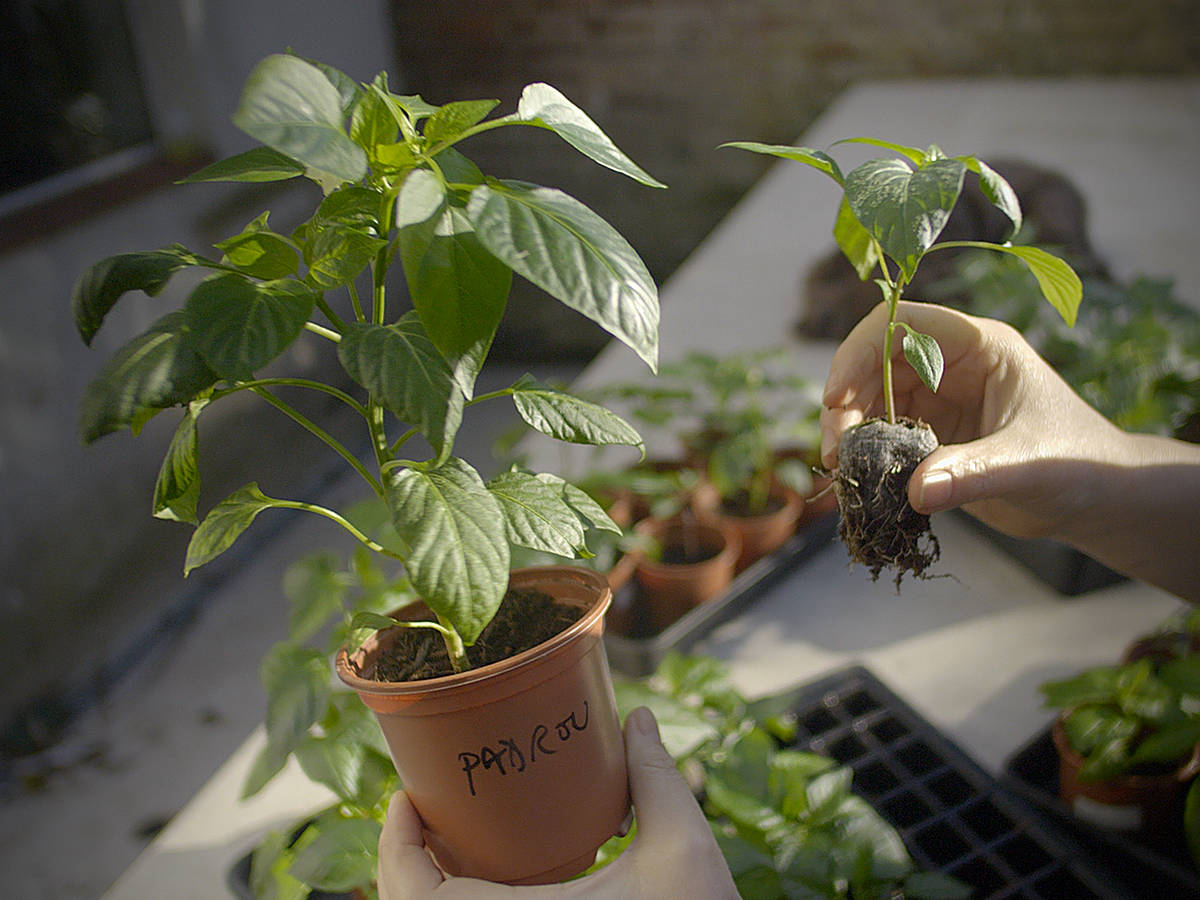
A month on; the annuum is pushing ahead.
As they reach the sides of a pot, they begin to encounter resistance and a build-up of their own chemical signals. Hormones produced in the roots — particularly cytokinins — travel upwards and help regulate shoot growth, while auxins from the shoot tips move downwards and influence root branching. When the roots run out of space, that conversation changes.
The plant effectively “knows” it has reached its limit. Root tips slow, branching becomes constrained, and the signals sent upwards begin to reduce the plant’s appetite for new growth. You often see it above ground as a kind of pause — smaller leaves, slower extension, a slight loss of momentum.
Give the roots more space, and everything opens up again. New root tips form, water and nutrient uptake increases, and the plant resumes its balance — pushing both roots and shoots forward together.
Oxygen levels around the roots can drop, microbial activity shifts, and instead of encouraging growth, you often end up slowing it down. The plant, in effect, finds itself in too much of a good thing. Because the roots haven’t yet colonised the compost, they can’t properly control water uptake or nutrient flow. Growth becomes uneven — sometimes soft, sometimes stalled — and in cooler conditions it can tip into root stress rather than expansion.
A pot that matches the stage of the plant behaves very differently. The roots quickly reach the edges, the plant establishes control over its environment, and that balance between root and shoot stays intact. Each time you move up a size, you’re giving it just enough new space to keep progressing without losing that control. It's a bit like buying shoes for children.
So rather than one big leap, it’s a series of small, well-timed steps. A one-litre pot after the plug, then two, then perhaps five. Each stage building on the last. Everything you see above the compost is really just following what the roots are doing underneath.

Chinense plugs take time to get going.
If you ease one out of its pot, you’ll see the roots are already doing their job. They’ll have reached the edges and the bottom, healthy and white, just not quite as dense or assertive as an annuum at the same point. That’s the important thing to understand: even if the plant looks modest above ground, the roots are already asking for space.
And if you hold them back, everything slows down. That’s why potting on early — even in the less generous light of February and March — makes such a difference. You’re not forcing the plant; you’re simply removing the constraint. Give the roots room, in the right increments, and the plant keeps moving forward.
Then April arrives, the light improves, and everything changes pace. What took a month earlier on suddenly takes three weeks, sometimes less. The plants are ready for it because they’ve already built that underlying structure.

A month on — larger leaves, still compact.
If you’re thinking of growing this year, now’s a good moment to get started — a few weeks early makes all the difference.
World of Chillies was set up by Sarah Hunt in 2011 to promote chilli growing and the enjoyment of everything hot and spicy.
UK Company No. 07860204.
VAT reg. 223126942
▶ Schedule of Dispatches . We’re pleased to let you know that we’re preparing to dispatch our first plug plants!. Please follow the link for a rough schedule, but please note that we’ll send your order once everything in it is ready. This ensures you receive the best possible plug plants—so if there’s a slight delay, rest assured you haven’t been forgotten. ▶ MORE INFORMATION