
The Curious Case of the Balloon-Like Chilli
The Curious Case of the Balloon-Like Chilli
Deceptively cheerful, the Aji Wrecking Ball looks like it belongs in a fruit bowl —but don’t be fooled. Beneath its sunny disposition lies a steady, insistent heat and a flavour that dances between honeyed sweetness and bright tropical fruit.
Some chillies announce their intentions loudly—dark, knotted things that look like they belong in a medieval torture chamber, or sleek, pointed devils that practically scream danger.
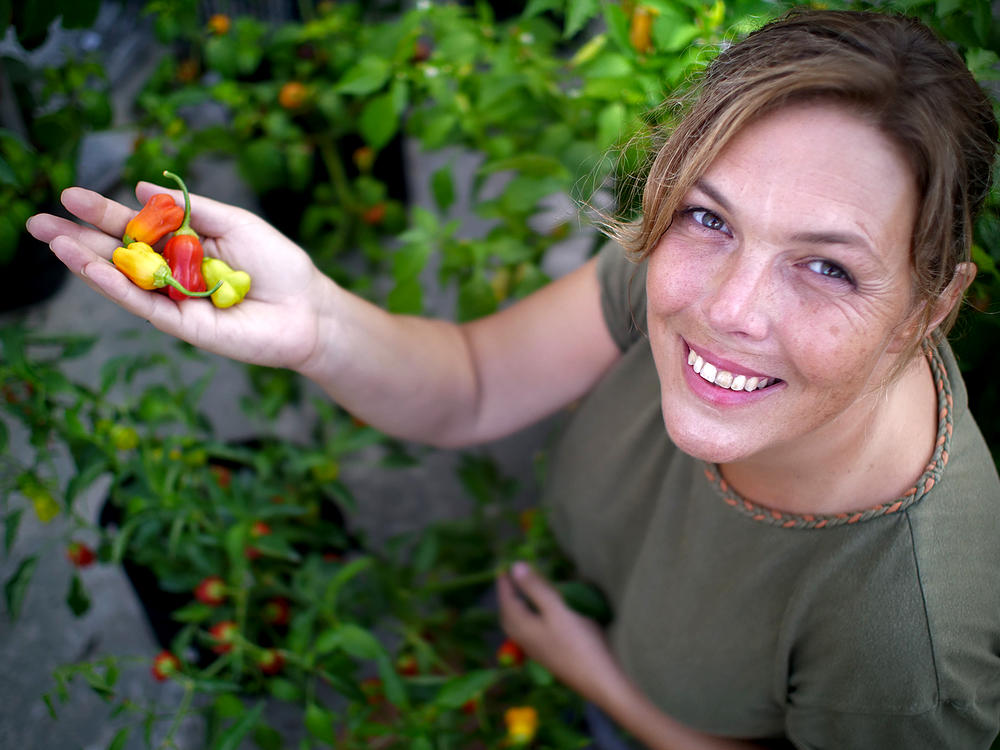
The Aji Wrecking Ball does no such thing. Instead, it presents itself as a delightful little balloon, all round and jolly, as if it has no idea it’s meant to contain heat at all. It’s the chilli equivalent of a bright red bouncy castle, and just like a bouncy castle, it invites you in with childlike enthusiasm before reminding you that, actually, physics still applies.
If you’ve ever grown Bishop’s Crown or Brazilian Starfish, you’ll know exactly what to expect. Aji Wrecking Ball doesn’t grow—it expands, sprawls, and generally refuses to behave. It’s not that it’s unruly on purpose, but it’s a baccatum, and baccatums don’t do neat, polite, compact plants. Instead, they send out long, weaving branches that grab onto whatever they can, filling every available space with vigorous, vine-like growth.
This is the way of the baccatum—a species that has clearly decided that if it can’t take over the world, it will at least take over your greenhouse. While other chillies might grow in an orderly, bush-like fashion, baccatums fling themselves exuberantly in all directions.
Flavour Profile
▶ Heat (Hotness): 4. Somewhere between 10,000 and 50,000 SHU, A measured but undeniable warmth, not the kind to flatten you, but enough to be taken seriously. Like a firm handshake from someone who wants you to know they once boxed at university.
▶ Sweetness: 7. One of the Aji family’s best tricks—just enough natural sugar to lull you into a false sense of security. It has a golden, almost nectar-like quality, the sort that would make a wasp deeply interested in your lunch.
▶ Fruitiness: 8. Very much at the tropical end of the spectrum. Notes of mango, papaya, and something faintly reminiscent of a well-behaved passionfruit. If chillies had terroir, this one would be growing on a sun-bleached Andean hillside, waving cheerfully in the breeze.
▶ Texture (Firmness): 6. Thin-walled but not fragile—there’s a pleasing, snappy bite, making it a joy to slice into. Holds its own in a salsa, with just enough firmness to stay structured rather than collapsing into a mushy mess.
▶ Juiciness: 7. Not exactly dripping, but definitely on the plump and fleshy side. A satisfying bite, the kind that would lend itself beautifully to a fresh salsa or a quick pickle. When sliced, it releases a fragrant, tropical aroma—like a fruit stall caught in a warm breeze.
▶ Aftertaste (Complexity): 7. Once the heat settles down, what lingers is oddly civilised: a warm, lingering glow, a whisper of honey and dried apricot, and the vague impression that you might, in fact, like another. There’s a soft floral edge in the finish, something delicate and fleeting, like the last note of a song you weren’t quite ready to end.
Bishop’s Crown, with its peculiar three-pronged pods, shares the same boundless enthusiasm. So does Brazilian Starfish, whose fruit looks more like a sea creature than a chilli. Then there’s Lemon Drop (Ají Limón)—another notorious baccatum that grows as if it’s got somewhere urgent to be, stretching skywards and outwards simultaneously. These varieties all require a bit of negotiation—a cane pyramid, a well-placed string system, or just sheer force of will—to stop them descending into chaos.
Despite what some Scoville charts might tell you, this isn’t a chilli that’s out to prove a point. The official range is 10,000 to 50,000 SHU, but in my experience, it’s much milder than the numbers suggest. Mild enough to eat whole—even better when stuffed with cream cheese—with just enough heat to wake you up a little, but not enough to make you regret it.
The crunch is incredible, and while it certainly warms the mouth, it does so with good humour rather than malice. Pick them bright red for peak sweetness, or slightly earlier for a crisper, tangier bite. Either way, expect a juicy, tropical quality, more reminiscent of a sharp fruit than a conventional chilli.
The perfect way to eat these? Fresh. Stuffed with cream cheese, they are ridiculous—crunchy, sweet, hot, and cool all at once. Sliced into salads, they add a splash of colour and a gentle heat that doesn’t overwhelm.
Pickling, however, is a mistake. I had high hopes—imagine jars of bright, glossy pods, glowing like little lanterns in vinegar—but the reality was a disappointment.
The colour dulled, the crunch vanished, and the heat leaked out into the brine, leaving behind mild, mushy ghosts of their former selves. Some chillies take to pickling beautifully—this is not one of them.
Instead, enjoy them as they are, fresh and full of life—because that’s what makes Aji Wrecking Ball special. They have that same infectious joy as the first daffodils in spring or a field full of summer daisies—a plant that doesn’t take itself too seriously, but still manages to be useful, abundant, and a little bit of a rascal.
I haven’t grown one in a good few years, but I’ll be remedying that this season—because there’s always room in the garden for something that makes you genuinely happy.
World of Chillies was set up by Sarah Hunt in 2011 to promote chilli growing and the enjoyment of everything hot and spicy.
UK Company No. 07860204.
VAT reg. 223126942
▶ 1. Heat (Hotness): The defining characteristic for most people. Is it mild, medium, or hot? How does the heat develop—immediate or lingering?
▶ 2. Sweetness: The balance of natural sugars. Some chillies have a sweetness that complements their heat and makes them versatile in cooking.
▶ 3. Fruitiness: The aromatic, flavour-forward profile. Does it taste tropical, citrusy, or like berries? This quality often gives chillies their distinctive edge.
▶ 4. Crunchiness or Firmness (texture): Freshness matters. Is the chilli crisp and crunchy, soft and pliable, or somewhere in between?
▶ 5. Juiciness: How much moisture does the chilli release when bitten into? This can influence its suitability for fresh eating or cooking.
▶ 6. Aftertaste (Complexity): What lingers after the initial bite? Is there a smokiness, an earthiness, or a clean, simple finish? This often separates "nice" chillies from truly memorable ones.
▶ Schedule of Dispatches . We’re pleased to let you know that we’re preparing to dispatch our first plug plants!. Please follow the link for a rough schedule, but please note that we’ll send your order once everything in it is ready. This ensures you receive the best possible plug plants—so if there’s a slight delay, rest assured you haven’t been forgotten. ▶ MORE INFORMATION