Trail-Blazing Chilli
Trail-Blazing Chilli
The Bhut Jolokia, or Ghost Pepper, wasn't merely a spice; it was a fiery revelation that ignited my passion for all things hot and spicy. Little did I know that this unassuming pepper, native to the northeastern regions of India, would evolve into a global sensation, reshaping the world's perception of super-hot chillies.
Approximately two decades ago, the Bhut Jolokia emerged as the torchbearer of the super-hot chilli movement. With its scorching heat in excess of one million Scoville Heat Units (SHU), it quickly gained fame, earning the title of the world's hottest chilli.
This fiery reputation didn't just make waves in the culinary world; it set the stage for an unprecedented global interest in super-hot chillies.
The Bhut Jolokia's influence reached far beyond its birthplace, marking a paradigm shift that ushered in the era of the super-hot chilli. Worldwide, people embraced the challenge of tasting its extreme heat, turning the Bhut Jolokia into a symbol of culinary audacity.
Throughout my own culinary journey, I've witnessed the Bhut Jolokia's impact on diverse cuisines and culinary trends. Hot sauces featuring this potent pepper became a staple, and eating competitions centred around super-hot peppers gained immense popularity. The Bhut Jolokia's intense heat became a badge of honour for spice enthusiasts, a testament to their daring taste buds.

The global obsession with super-hot chillies soared to new heights, captivating both seasoned chilli aficionados and newcomers alike. From hot sauce enthusiasts to daring food bloggers, everyone wanted a taste of the Bhut Jolokia's fiery allure.
One cannot overlook the Bhut Jolokia's role in inspiring breeders to push the boundaries of spice. Many chillies have since been bred with the Bhut Jolokia, creating new hybrids that continue to redefine the upper limits of heat. Its genetic influence is interwoven into the fabric of the super-hot chilli world, contributing to the creation of peppers that boast even higher SHU.
In the spicy family tree, Bhut Jolokia and Naga Morich emerge as close cousins. Bhut Jolokia proudly represents Bangladesh, while Naga Morich finds its roots in Nagaland and Assam. There are perhaps no other chillies in recent times that have been as influential as the Bhut Jolokia and its cousin, the Naga Morich. Between they changed the chilli landscape forever.
It's always great to grow an all time classic, knowing how many people are growing it around the world. This is one of the varieties that first fired my passion for growing chillies nearly twenty years ago. My first ever Bhut plant was a bit of a disappointing affair, but was what first fired me up to improve my knowledge and skills.
Red Bhut Jolokia: The Trailblazing Chilli
The Red Bhut Jolokia, an illustrious member of the Capsicum chinense family, stands as a fiery testament to the world of super-hot chillies. Originating in the northeastern regions of India, particularly Assam, Nagaland, and Bangladesh, this variant of the Bhut Jolokia, also known as the Ghost Pepper, has carved its place in the hearts of spice enthusiasts globally.
Bhut Jolokia proudly held the title of the world's hottest from 2007 to 2011, as recognised by the Guinness Book of Records.
With a Scoville Heat Unit rating that can reach over a million, the Red Bhut Jolokia is not for the faint-hearted. It's a culinary dare, a challenge for those seeking the pinnacle of heat in their dishes.
In the cultural tapestry of Assam, the Red Bhut Jolokia is more than just a spice; it's a symbol of bold flavours.
During festivals like Bihu, Assamese households embrace this fiery pepper, creating special dishes like "Jolokia Bihu" to infuse the festival with its intense spirit.
But the Red Bhut Jolokia doesn't just stop at being a culinary delight; it has cultural significance too.
Some communities believe that hanging these peppers at home acts as a protective charm, warding off evil spirits. It's a testament to the pepper's dual role – not just a spice but a guardian of homes.

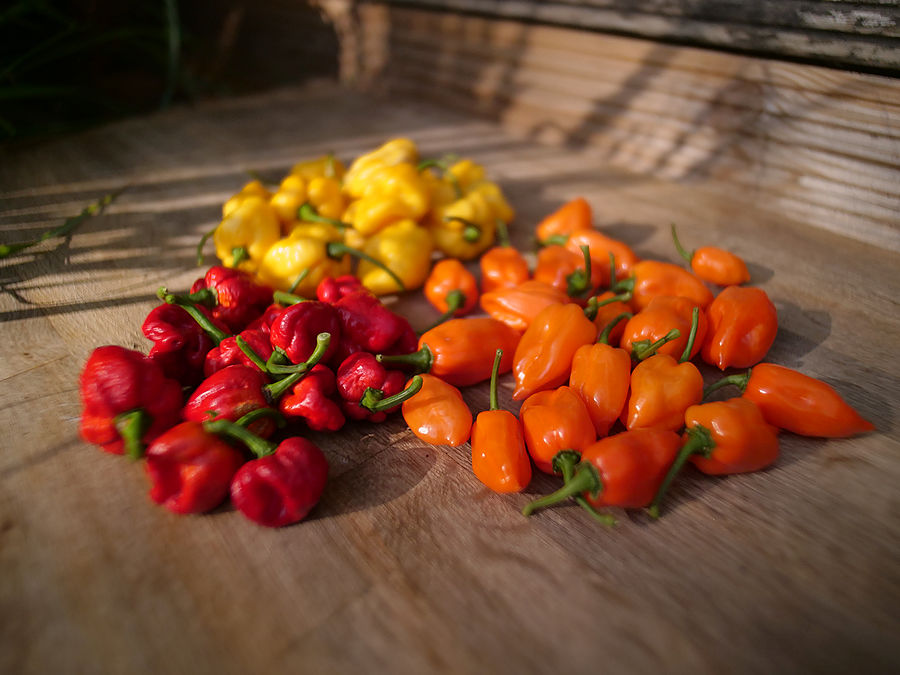
a giant of the chilli world

ripening red bhut pods

the classic red bhut

what wonderful textured pods

Green or red?
Pre-order for 2024 for assured delivery
When it comes to growing Bhuts, I have always found them to be on the needier side of the superhots and require a bit more care than others if you want a bumper crop. I always find a superhot or two to be exciting additions to the greenhouse and the Bhut feels almost canonical.
Chocolate Bhut Jolokia; Large & Smokey
Choc Bhuts are such a lovely plant to grow. They are larger and a little milder than their red cousins, though I couldn’t really tell the difference. Chocolate pods ripen to such a gorgeous, rich colour and are so shiny they almost look like plastic.
I know looks aren’t everything, but in my experience, beautiful looking plants get more care because you want to spend more time on them. I have found them easier to cultivate than the red variety, once they get past the seedling stage and I’ve had better crops from them.
Native to India, the Chocolate Bhut Jolokia is a variety originating from the Northeast regions. Its unique chocolate colour sets it apart from the typical red Bhut Jolokia or Ghost Pepper. As a member of the Chinense family, it brings heat but also a distinctive cocoa twist to the spicy scene.
In the world of chilli peppers, the Chocolate Bhut Jolokia stands out like a spicy Willy Wonka creation. It's not just about the heat; it's a treat for your taste buds. Picture a pepper with alluring chocolate hues – a visual delight for gardeners and spice seekers alike. From vibrant green plants to deep chocolate tones of ripened pods, it's a feast for the eyes in your garden.
Tasting the Chocolate Bhut Jolokia is like taking a journey through a chilli chocolate factory. It's not just heat; it's a flavour adventure. Fruity undertones with a hint of smokiness create a rollercoaster for your taste buds. It's the perfect pepper for culinary maestros looking to add a dash of sweet and spicy to their creations.
It’s such a shame that as more and more superhots have been developed over the last few years, they’ve really declined in popularity and seeds have become quite difficult to get hold of.
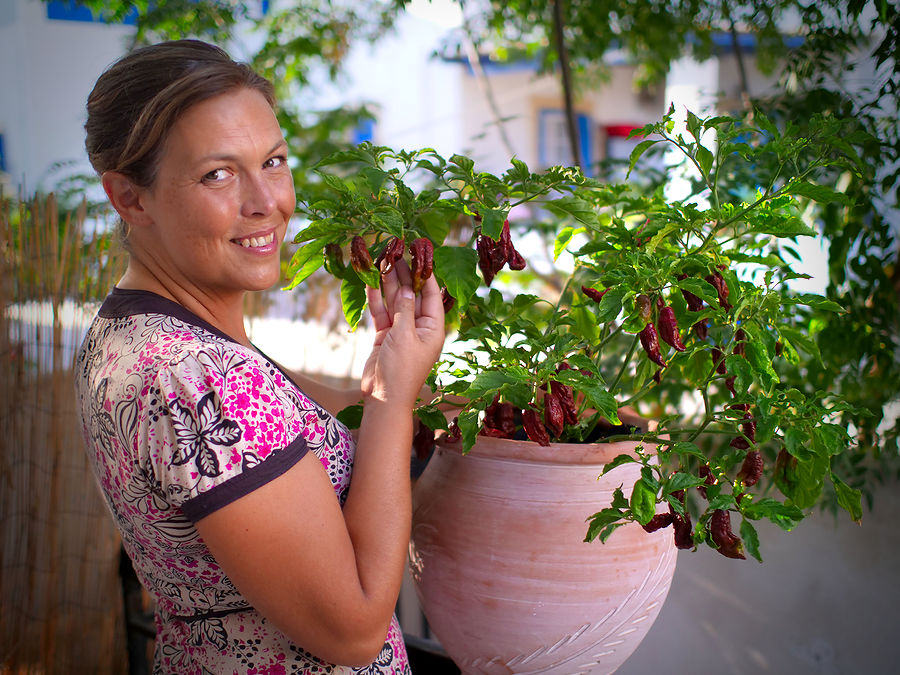
spectacular chocolate bhut jolokia

green chocolate bhut jolokia

ripening chocolate bhut jolokia

large crumpled pods

incredibly beautiful pods

Pre-order for 2024 for assured delivery
Bhut Jolokia.. A Medley of Cross-breeds
Bhut Jolokia has left an indelible mark in the spicy realm, captivating chili enthusiasts globally with its intense heat. But the journey doesn't end there.
Enter the fascinating world of Bhut Jolokia cross varieties, where innovative breeding has given rise to a myriad of exciting peppers, each with its unique characteristics.
The Bhutlah series, a creation of Chad Soleski from Wisconsin, emerged by crossing a 7 Pot Douglah with a Bhut Jolokia. These peppers boast a bumpy red appearance and pack a serious punch, offering a harmonious blend of intense heat and complex flavours.
There are literally hundreds of bhut crosses, very popular to add heat and flavour into hybrids. Some of its unholy offspring include…. Jays Ghost Peach Scorpion, (Bhut x Ghost Scorpion) Pink Tiger (Bhut x Pimenta da Neyde) and Bhutlah (Bhut x Douglah).
These crosses are just the tip of the iceberg, as chilli enthusiasts globally experiment with diverse pepper pairings. The flavour profiles of these Bhut Jolokia crosses vary widely, offering a spectrum of tastes ranging from fruity and floral to smoky and earthy.
The visual delight of this chilli world is amplified by unique offspring, like the smooth-skinned wonder born from seeds gifted to me by a customer. A delightful Bhut Jolokia cross, perhaps with a dash of Habanero, it produced a bounty of fiery red pods with a hint of Superhot heat, sans the signature pimpled texture.

a fine bhut jolokia cross

maybe crossed with a habanero

this cross produced loads of pods
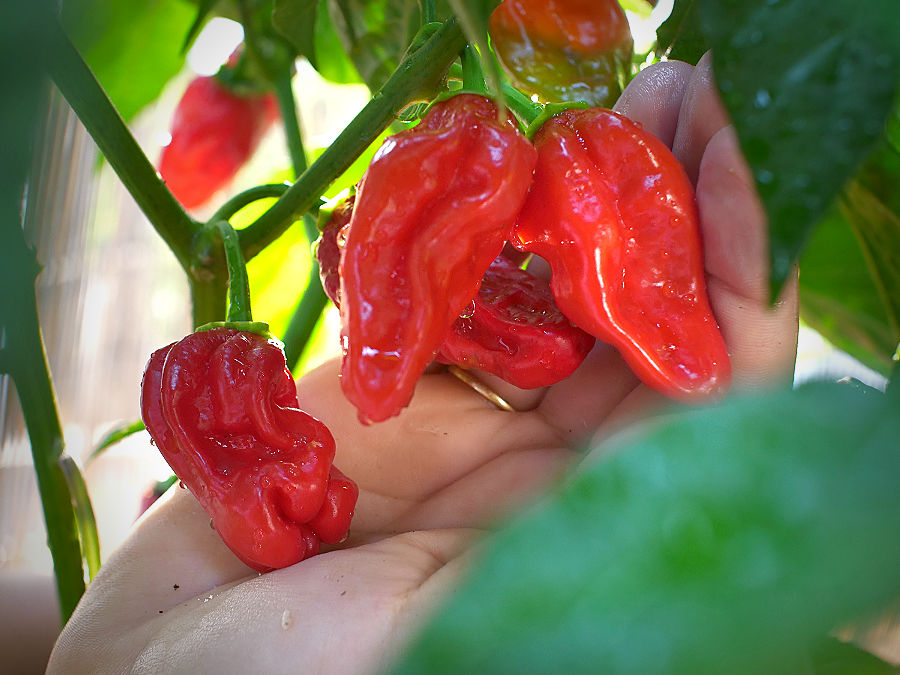
the smooth skins suggests a hab-cross

I was given the seeds by a customer
As the chilli community continues its flavourful experiments, the Bhut Jolokia's legacy grows, expanding the spicy universe one cross at a time. So, are you ready to spice up your taste buds with the unexpected and the extraordinary? The world of Bhut Jolokia crosses awaits!
World of Chillies was set up by Sarah Hunt in 2011 to promote chilli growing and the enjoyment of everything hot and spicy.
Chilli Plants
Tomatoes
Chilli Seeds
Delivery Info
About Us
Contact Us
Sign Up Chilli Club
Privacy
Terms & Conditions
Next Time Around: Test-Batch Plug Sale
Every year I batch test the quality of seeds to make sure there is a high enough gemination rate before planting on a grand scale. As a result of successful gemination, there will be a few plugs available for sale from the end of the first week of February.
These are super early plugs, so please bear in mind that you will need supplementary light and heat. If all goes well, you will have the biggest possible plants imaginable to start the season with. And that means…. a great harvest.
