
Wood, Smoke, & Fire: Chile de Árbol
Wood, Smoke, and Fire: Chile de Árbol
¡Chiquita pero picosa!….Tiny but hot!
In Mexico, Chile de Árbol is everywhere, though you might not notice it at first. It’s not the chilli that shouts—it’s the one that lingers.
Dried and toasted, it releases a deep, smouldering heat, sharp and clean, with a faint nuttiness from the roasting.
It doesn’t overwhelm like a habanero or creep up like a pasilla. It lands immediately, stays a while, then leaves behind a dry, peppery hum. This is the chilli of salsa brava, of rustic table sauces ladled onto tacos and tamales across Jalisco and Aguascalientes.
In Michoacán, it’s crushed into the legendary Salsa Macha, fried in oil with garlic and seeds until it becomes something fierce and elemental. It does not have the mellow smokiness of a chipotle or the sun-dried fruit depth of a guajillo. Chile de Árbol has no interest in being charming. It is lean, direct, unapologetic fire.
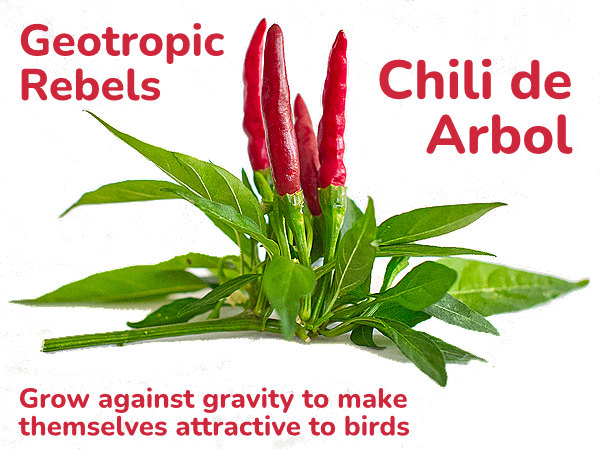
Chile de Árbol doesn't lie sprawling across the ground or hang limply from branches; it stands producing slender, vibrant red pods and potent heat, ranging between 15,000 to 30,000 Scoville Heat Units (SHU). It is no accident, then, that this chilli bears the name Árbol. Its name, translating to "tree chili," reflects its characteristic upright growth habit. Its stems seem over-engineered for survival, turning woody as the plant matures, hinting at its potential for longevity—a rare trait among annual chillies.
It is, at the very least, semi-ornamental, if not fully ornamental—not in a delicate, decorative way, but in its sheer presence. Even left unpicked, the pods dry perfectly on the bush, keeping their colour and shape.
Some growers, with patience and a mild winter, have coaxed it into a small, gnarled tree, its branches hung with red pods like an offering to some ancient, spice-loving god. Biologically, it belongs to Capsicum annuum, but everything about it suggests endurance rather than ephemera, a plant that does not merely grow, but persists.
When I grew it a few years back, I almost missed it. Before it fruited as it looked like any other Capsicum annuum—neat, compact, not drawing attention to itself. It grew without complaint, sturdy but unremarkable among the fistfuls of bigger chillies. Then, quite suddenly, it produced fruit, and I had to look again.
Flavour Profile
▶ Heat (Hotness): 6. A small chilli with big ideas. At first, you think, “Oh, this isn’t so bad.” Then, like an argument you thought you'd won, it circles back. The heat is clean, direct, and climbs fast—no slow build-up, no hesitation. Just a thin, upright chilli delivering 15,000–30,000 SHU of crisp, peppery fire—strong enough to wake you up, but nowhere near a life-altering event. It's like a headmaster’s cane tapping against a desk. It burns clean, like good dry wood.
▶ Sweetness: 2. It doesn’t do sweet. There’s a flicker of something—maybe a whisper of roasted almonds, dried tomato skin, or a trace of caramelised onion—but it vanishes before you can pin it down. This one’s here for the fire, not the charm. A hint of toasted nuttiness if you roast it, but that’s as generous as it gets. If it were a person, it’d be the grizzled old rancher who’s seen too much to smile easily.
▶ Fruitiness: 3. Some chillies are lush and juicy, spilling over with tropical indulgence. Not this one. This is a serious chilli, sharp and direct. Maybe a fleeting touch of dried cherry or old-fashioned cranberry sauce if you’re really concentrating, but mostly it’s about the crisp bite of winter air and a hint of old leather-bound books. This is a chilli with no patience for tropical nonsense—it’s got better things to do.
▶ Texture (Firmness): 8. Thin-walled but tough as old boots. The Chile de Árbol doesn’t flop or droop—it stands upright, rigid, with the posture of someone who’s never slouched in their life. Even dried, it keeps its shape, breaking with a sharp snap, like kindling. This is where the “wood chilli” nickname earns its keep: it’s built for durability. You can stir a simmering pot of salsa roja with a whole dried pod, infusing heat without crumbling it apart. And if you forget to take it out before serving? No one will mistake it for a soft, edible garnish.
▶ Juiciness: 2. This is not a chilli that gushes. It’s dry, structured, and built for roasting, toasting, or crumbling into sauces. Less “sun-drenched juiciness,” more "the last sip of a strong black coffee left too long". The kind of chilli you crush between your fingers, sending up a dusty plume of heat and history. It doesn’t flood your mouth with juice—it grabs the back of your throat and makes its presence felt in a dry, peppery whisper.
▶ Aftertaste (Complexity): 6. The heat fades slowly, like the last embers of a fire, reluctant to go out. It leaves behind a sharp, dry finish—not the lingering, oily burn of a habanero, nor the numbing sting of a Sichuan peppercorn, but a clean, peppery insistence. The kind of burn that doesn’t overwhelm, just insists. Like a letter slipped under the door—unsigned, but definitely meant for you.

Clusters of thin, straight-backed pods shot up like tiny red exclamation marks, shifting cleanly from bright green to defiant, unwavering red without a single moment of hesitation. No yellow stage, no dithering. Just decision, commitment, execution. And it doesn’t hide—everything on show, all at once.
It is, at the very least, semi-ornamental, if not fully ornamental—not in a delicate, decorative way, but in its sheer presence.
Even left unpicked, the pods dry perfectly on the bush, keeping their colour and shape without shrivelling or turning soggy. I would only recommend letting them do this at the end of the season, as it might slow down further fruiting.
The heat caught me off guard. It looks like a cayenne type, so I expected something similar. Instead, there was hardly any sweetness—just sharpness, clarity, and depth. It was hotter than I expected, a clean, peppery burn that holds its own in slow-cooked dishes.
It can live for years, tough and resilient, forming miniature trees with gnarled, woody stems. I haven’t tried overwintering one yet, but this year, I’m upping the pot size—20L, maybe more—to see just how big it can get.
Some of the pods I froze, but most I dried whole and kept in a jar. They’ve become my go-to for adding warmth and depth to stews and chilli con carne, where they slip into the background but change the dish completely. A lovely chilli—with impressive pods, incredible heat, and an effortless, self-sufficient nature.
I can see why Mexico never let this one go. Some chillies are flashy, loud, full of drama. This isn’t one of them. Chile de Árbol is the quiet one that outlasts them all.
World of Chillies was set up by Sarah Hunt in 2011 to promote chilli growing and the enjoyment of everything hot and spicy.
Chilli Plants
Tomatoes
Chilli Seeds
Delivery Info
About Us
Contact Us
Sign Up Chilli Club
Privacy
Terms & Conditions
▶ 1. Heat (Hotness): The defining characteristic for most people. Is it mild, medium, or hot? How does the heat develop—immediate or lingering?
▶ 2. Sweetness: The balance of natural sugars. Some chillies have a sweetness that complements their heat and makes them versatile in cooking.
▶ 3. Fruitiness: The aromatic, flavour-forward profile. Does it taste tropical, citrusy, or like berries? This quality often gives chillies their distinctive edge.
▶ 4. Crunchiness or Firmness (texture): Freshness matters. Is the chilli crisp and crunchy, soft and pliable, or somewhere in between?
▶ 5. Juiciness: How much moisture does the chilli release when bitten into? This can influence its suitability for fresh eating or cooking.
▶ 6. Aftertaste (Complexity): What lingers after the initial bite? Is there a smokiness, an earthiness, or a clean, simple finish? This separates "nice" chillies from truly memorable ones.
▶ Schedule of Dispatches . We’re pleased to let you know that we’re preparing to dispatch our first plug plants!. Please follow the link for a rough schedule, but please note that we’ll send your order once everything in it is ready. This ensures you receive the best possible plug plants—so if there’s a slight delay, rest assured you haven’t been forgotten. ▶ MORE INFORMATION