One plant to rule the greenhouseDark foliage, a generous crop and a heat that takes its time leaving.
One plant to rule the greenhouse
Dark foliage, a generous crop and a heat that takes its time leaving.
I grew Nazgûl’s Breakfast because I liked the name and thought the photographs looked extraordinary. By the end of the summer, I was completely obsessed with it. The stems are purple, the leaves are green and purple, and the pods change colour so dramatically that the plant never looks quite the same from one week to the next.
I have grown superhots with impressive fruit before, but this one is beautiful even when you aren’t looking at the chillies. It has become the plant I take people over to see when they visit the greenhouse.
Nazgûl’s Breakfast was developed by Canadian chilli breeder Francis Gagnon. That was another reason I wanted to try it: I don’t think I had ever grown a Canadian-bred chilli before. It is a modern Capsicum chinense hybrid, though I haven’t found a confirmed account of which varieties went into it.
I have spent quite a lot of time examining the pods and wondering, but their shape and colour cannot settle the question. One seed supplier warns that the strain may not be fully stable, so plants grown from seed could differ. I can only tell you what mine has done—and it has given me plenty to talk about.
The leaves are especially lovely when you hold them up to the sun. The green becomes almost luminous, and you can trace the purple veins right across them.
Turn one over and you get another view of the pattern. The youngest growth is darker still, so even before the pods begin to colour, there is plenty to look at. The purple pigment belongs to a group called anthocyanins.
Researchers have found that in some purple peppers, the pigment in the fruit decreases as it ripens. I wouldn’t claim their studies explain every colour change on this particular plant, but it is interesting to know what gives a pepper that extraordinary purple in the first place.
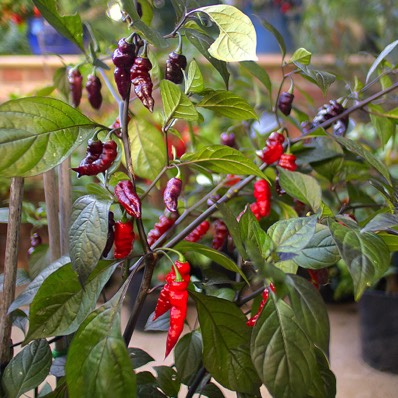
My youngest pods are so dark they can look almost brown-black. They are pointed and crumpled, with ridges and folds that give each one a slightly different shape. As they ripen, warmer colours come through the purple before the oldest fruit turns a vivid red. On one branch I can see dark new pods at the top, fruit partway through that change below them, and ripe chillies further down.
My youngest pods are so dark they can look almost brown-black. They are pointed and crumpled, with ridges and folds that give each one a slightly different shape. As they ripen, warmer colours come through the purple before the oldest fruit turns a vivid red.
Not everyone’s harvest finishes like mine: some growers describe their ripe pods as dark brown or mocha. Between that and the warning about variation in this hybrid, I would go by the fruit on my own plant rather than wait for it to match somebody else’s photograph.
This has not been a small, tidy plant in my greenhouse. I potted it on from a plug in mid-February, and it took a while to grow into itself. Then the branches got long, the pods kept coming, and I had to support several stems as the crop began to weigh them down. I’m apparently not alone: one Canadian grower reports that Nazgûl’s Breakfast was the tallest pepper plant they grew that season.
Mine still has ripe fruit, purple fruit and new pods developing at the same time. It has been a slow one to reach its full glory, but I haven’t minded. Next year I’ll give it room from the start and have the supports ready.
Flavour Profile: Nazgûl’s Breakfast
Heat (Hotness): 9. The first bite gives you a few seconds to notice the fruit. Then the heat slips in like a Morgul blade against the tongue: a sharp warning followed by a deeper burn that keeps spreading. By the time you think to put the pod down, you’re halfway to becoming a wraith yourself.
Sweetness: 5. There’s a rounded sweetness in the first taste, especially while the pod is fresh. It softens the opening but cannot hold back the heat for long. Think ripe fruit rather than sugar or jam: a pleasant invitation from a host whose other guests have yet to arrive.
Fruitiness: 6. The flavour has a bright, tropical character with a little citrus edge. It comes through clearly at first, then has to compete with the rising burn. That makes it worth using in small amounts, particularly in a sauce where the fruit has room to speak. Surprisingly sunny, for something that looks as though it grew in Mordor.
Texture (Firmness): 5. The fresh pods are slender and slightly wrinkled, with thin walls and a mostly hollow centre. They look rather travel-worn, as though they’ve spent too long at the bottom of a saddlebag. Don’t let the empty space fool you.
There was something inside once, and what remains has become decidedly unpleasant.
Juiciness: 4. There’s just enough moisture in the flesh to release a brief flash of sweetness and fruit. It isn’t a plump, juicy pepper; the flavour arrives quickly, and the heat stays considerably longer.
Aftertaste (Complexity): 8. The initial fruitiness fades to faint sweetness and citrus beneath a long, persistent burn. The softer flavours linger at the edges as the heat slowly recedes. By then, something in you has changed. Quaker Oats may no longer meet your breakfast requirements.
It is also properly hot, although putting an exact number on it is surprisingly difficult. I have found seed listings estimating 350,000–550,000 Scoville Heat Units, about 800,000, and over a million. None of those listings gave me a laboratory result to check. I wouldn’t repeat any one figure as though it had been established for the variety, let alone for the pods growing in my greenhouse.
I’ve tasted a tiny piece of one, and that was enough to confirm it belongs firmly among the superhots. If you’re cooking with it, start with a little. You can always add more; you may find you don’t want to.
What surprised me was the flavour. It started with the fruitiness I expect from a chinense chilli, but that passed quite quickly. Underneath was something much sharper and fresher, almost like a green chilli. Then the heat settled in and stayed. Another grower describes earthy notes and a hint of sweetness in their pods, which makes me even more interested to taste mine in a finished sauce.
I’m thinking of something to have with burgers or barbecue, where that sharp edge might work well with rich food. I also found a grower fermenting a harvest of Nazgûl’s Breakfast for sauce. That could be another experiment if my plant gives me enough pods—though I’ll taste the first batch before committing the whole crop.
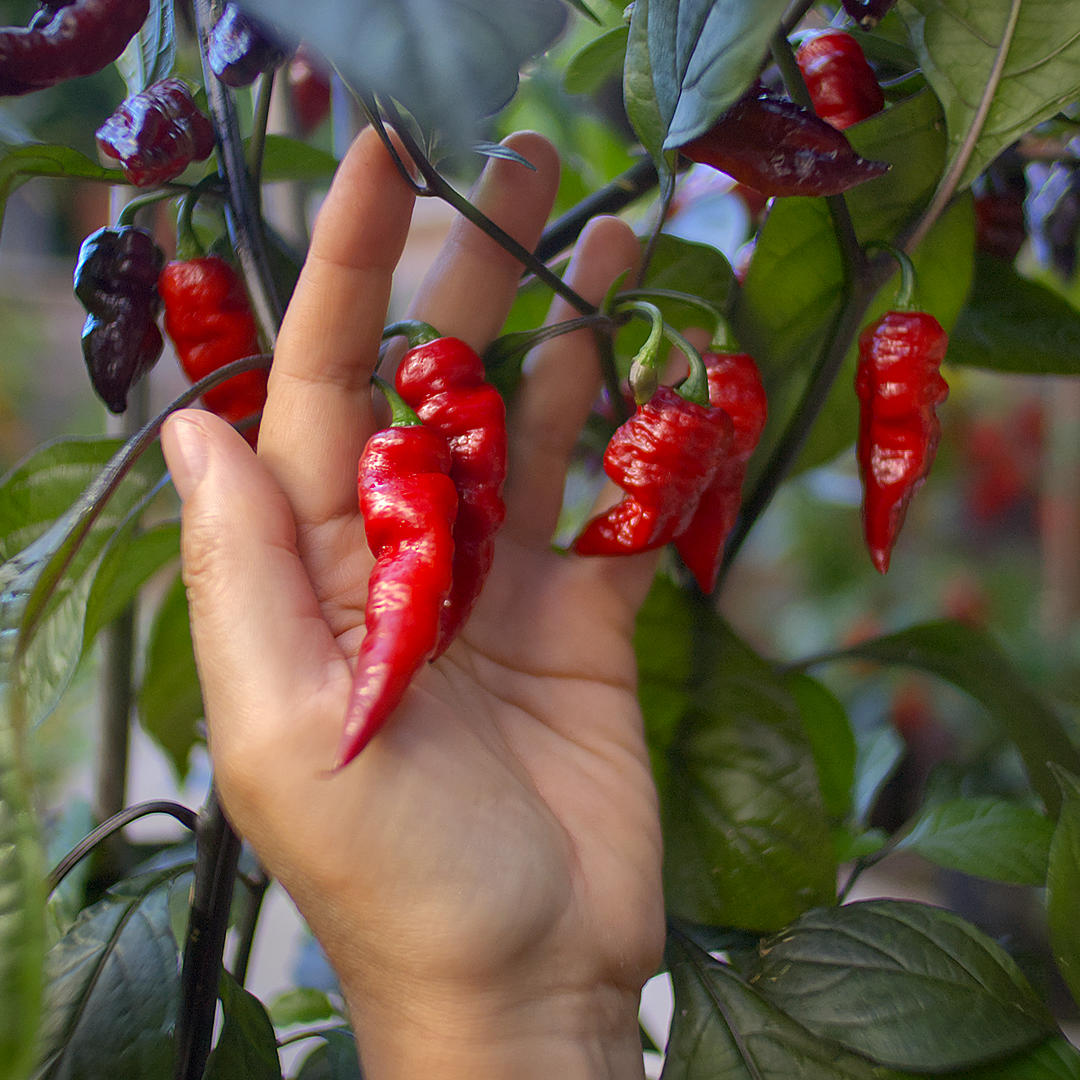
Red, wrinkled pods among darker fruit on the same plant.
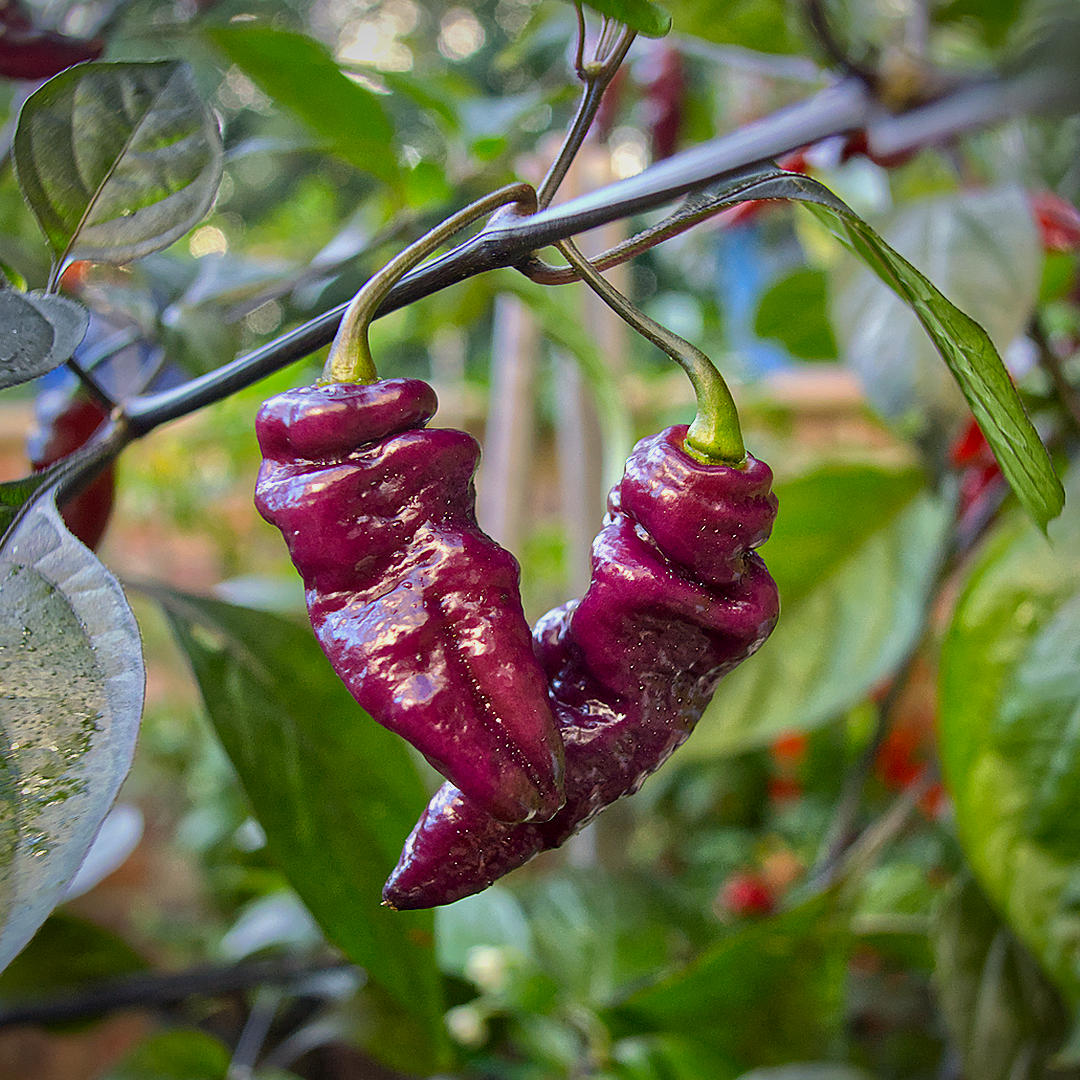
Deep purple pods show the variety’s striking darker stage.
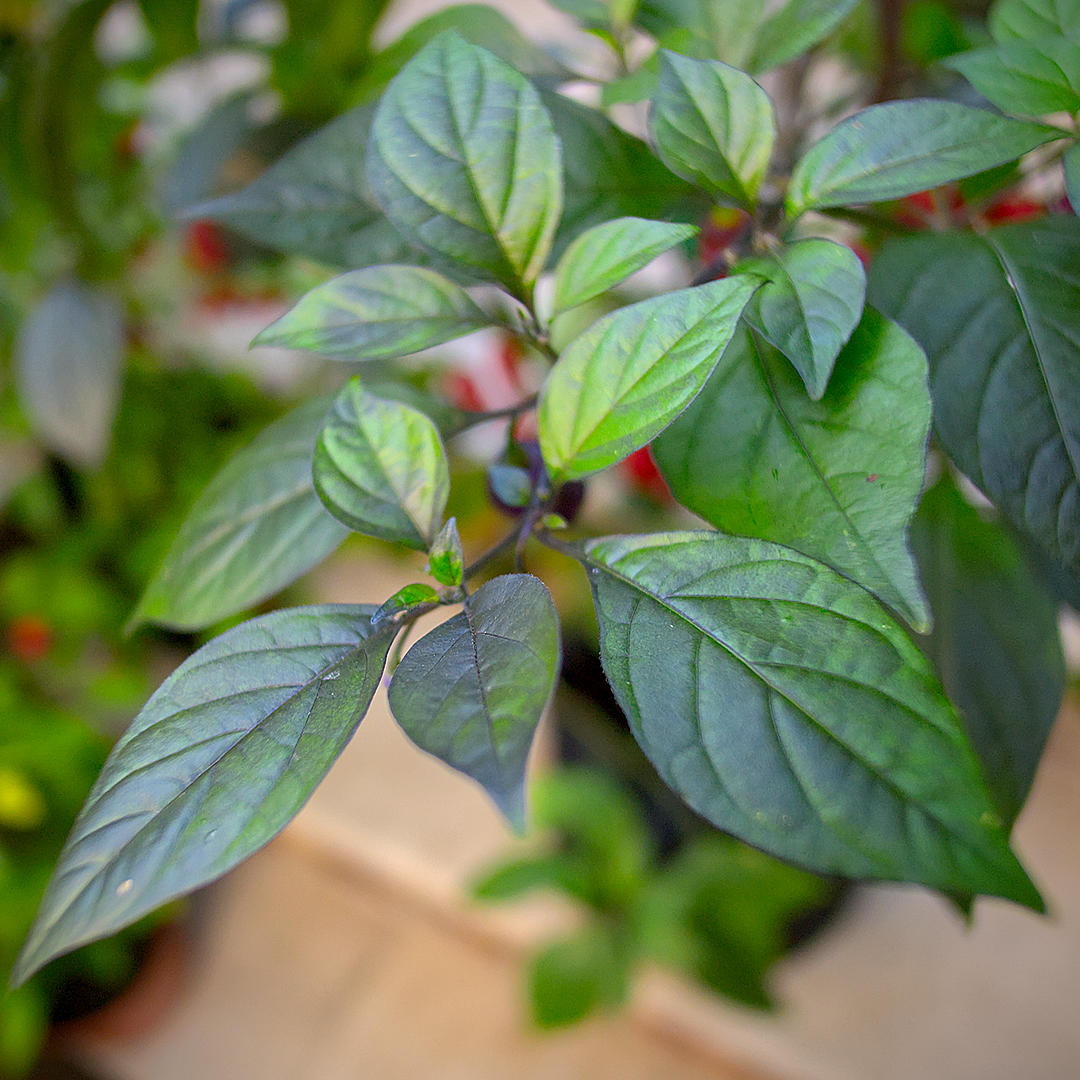
Dark stems and purple tinted leaves add to the plant’s appeal.

One plant carries dark and red pods at different stages.
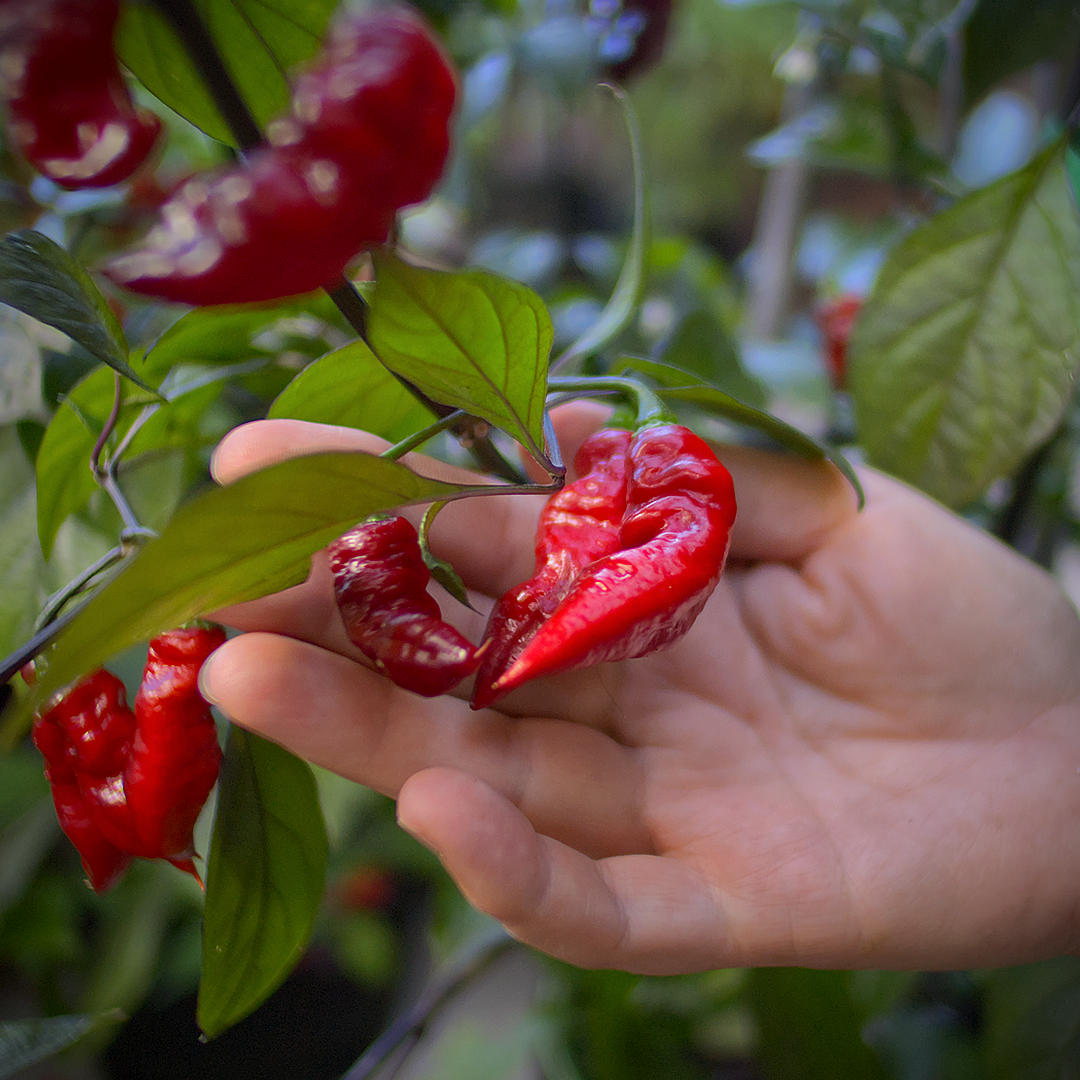
A close look at the red pod’s folds and pointed shape.
2027's chilli plant pre-orders are open, with 15% off 2026 prices. There are already more than 50 varieties to choose from, and we’ll be adding more over the coming weeks. Some will only be available on pre-order because we grow them to order.
If you’re feeling brave, you can reserve a Nazgûl’s Breakfast. You can also add more plants in separate orders until the end of the year and pay postage just once. When you check out again, leave us a note saying it’s an addition to your existing pre-order, and we’ll refund the extra postage.
World of Chillies was set up by Sarah Hunt in 2011 to promote chilli growing and the enjoyment of everything hot and spicy.
UK Company No. 07860204.
VAT reg. 223126942
▶ 1. Heat (Hotness): The defining characteristic for most people. Is it mild, medium, or hot? How does the heat develop?
▶ 2. Sweetness: The balance of natural sugars. Some chillies have a sweetness that complements their heat.
▶ 3. Fruitiness: The aromatic, flavour profile. Does it taste tropical, citrusy, or like berries? This quality lends chillies their distinctive edge.
▶ 4. Crunchiness or Firmness (texture): Freshness matters. Is the chilli crunchy or soft, or somewhere in between?
▶ 5. Juiciness: How much moisture does the chilli release? This can influence its suitability for fresh eating or cooking.
▶ 6. Aftertaste (Complexity): What lingers after the initial bite? Is there a smokiness, an earthiness, or a clean finish?
▶ Schedule of Dispatches . We’re pleased to let you know that we’re preparing to dispatch our first plug plants!. Please follow the link for a rough schedule, but please note that we’ll send your order once everything in it is ready.
▶ MORE INFORMATION
▶ Schedule of Dispatches . We’re pleased to let you know that we’re dispatching our first plug plants!.
Please follow the link for a rough schedule, but please note that we’ll send your order once everything in it is ready.
▶ MORE INFORMATION