
Pequin Chilli: From Wildfire to Hot Sauce
Pequin Chilli: From Wildfire to Hot Sauce
Once a wild survivor in Mexico’s thorny scrublands, now a prized ingredient in fiery salsas and legendary hot sauces. The Pequin carries centuries of flavour, heat, and history in every tiny pod.
If I could go back in time, I’d have used my Pequin harvest properly. The handful I crumbled into chilli con carne and the few that made it into stews were fine, but honestly? These little firebombs deserved better.
Next time, I’ll do them justice—a proper sharp sauce, something like Cholula, the Mexican legend that turns eggs, cheese on toast, and just about anything else into magic.
But before we get to that, let’s talk about the plant itself—because this is a chilli that practically grows itself.
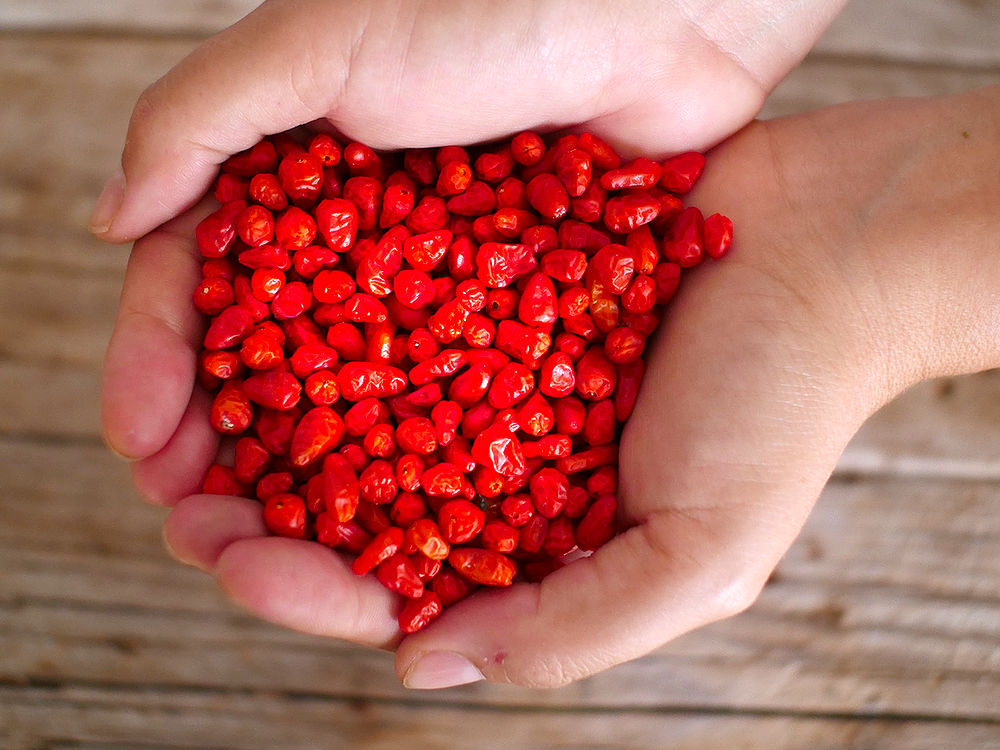
Pequin—part of what makes Cholula so addictive.
Pequin is a chilli that makes you question everything you thought you knew about plants. You start with something small, unassuming, entirely manageable, and then, before you know it, it’s a sprawling, fruit-laden beast, covered first in delicate white flowers and then in tiny, searingly hot teardrops that seem to ripen overnight.
I’ve grown my fair share of chillies over the years, but this one surprised me—vigorous, relentless, determined to produce whether given luxury or neglect. One plant went into a generous 20-litre pot and became a towering green presence, a semi-ornamental force of nature. Another, stuck in a 1-litre old yoghurt pot, refused to be humbled, staying compact but still producing a ridiculous number of pods. Some plants sulk when confined. Pequin simply adjusts its ambitions.
It is, by nature, a chilli of adaptation and endurance, a plant that has thrived for centuries in the dry thorn forests of Mexico and the southern United States, surviving on whatever moisture the seasons decide to spare it. It grows at the edges of farmland, in the understorey of mesquite and oak woodlands, and in the kind of rocky, sun-beaten places where more delicate crops would simply perish.
It’s also the foundation of countless family-made sauces, some of which, if you trace their lineage far enough, probably influenced the development of Cholula—the Mexican table sauce that turns anything from eggs to cheese on toast into something worth paying attention to.
Birds are its greatest allies—they feast on the bright red pods, immune to the heat, and scatter the seeds far and wide, ensuring that Pequin continues its quiet conquest. Some believe this is why it evolved such a sharp, clean burn—a perfect balance of attraction and deterrence, a fruit designed to be eaten only by creatures who will help it thrive.
That heat is deceptive. At 30,000 to 60,000 Scoville Heat Units (SHU), it lands with a fast, clear bite, hotter than a Cayenne but stopping short of Habanero-level destruction. It hits, it burns, and then it’s gone, leaving behind a distinct citrusy sharpness, a hint of smokiness, and an almost nutty, toasted depth that makes it as much about flavour as fire.

It is, unsurprisingly, one of the most prized chillies in Mexican cuisine. In the kitchens of Oaxaca, Veracruz, and Puebla, Pequin is often crushed into salsas or used whole in slow-simmered broths, where it infuses the dish without disintegrating, its tiny form belying its potent presence. It’s a staple in escabeches—pickled with carrots, onions, and garlic, where its sharp heat is mellowed just enough by vinegar.
It’s also the foundation of countless family-made sauces, some of which, if you trace their lineage far enough, probably influenced the development of Cholula—the Mexican table sauce that turns anything from eggs to cheese on toast into something worth paying attention to.
Pequin Flavour Profile
🎯Heat (Hotness): 6. The Pequin does not ask permission. Its heat lands fast and bright, a sharp flare rather than a slow smoulder. It burns with the clarity of a struck match in a dark room—brief, searing, then settling into a steady, peppery glow. There is no hesitation, no false warmth. A clean, bracing fire, with no room for sentimentality.
🎯Sweetness: 2. If there is sweetness here, it is the kind that lingers in scorched wood or the last caramelised edge of something left too long in the pan. It carries a faint, toasted nuttiness, but it is distant, reserved—like an old spice jar that once held cinnamon but has long since forgotten the scent.
🎯Fruitiness: 5. The Pequin’s fruit is lean and sharp, all muscle and sinew. There’s a note of sun-dried tomato, a flash of citrus zest stripped down to its bitter oils, and a thread of smoky apricot that has seen more fire than rain. This is not the soft embrace of summer fruit; this is fruit that has weathered storms and grown defiant.
🎯Texture (Firmness): 6. Fresh, it bites back—firm, snappy, never yielding. Dried, it fractures into brittle, angular shards, breaking apart like something built for survival, not comfort. There is no softness here, no indulgence—just a pod honed by heat and hardship.
🎯Juiciness: 2. The Pequin does not waste itself on excess. There is a whisper of moisture in its fresh form, but blink and you’ll miss it—like a drop of rain lost before it reaches the ground. Once dried, it is nothing but concentrated fire, waiting to be revived in broth, sauce, or the reckless hands of the curious.
🎯Aftertaste (Complexity): 7. The Pequin does not simply fade away; it rearranges the air it leaves behind. A slow ember of smoky depth, a flicker of roasted spice, a faint but persistent echo of citrus and charred wood. It does not demand attention, but it remains, like the last notes of a song you didn’t realise you’d memorised.
And then there’s the drying. Some chillies demand careful handling to preserve them, but Pequin does exactly what it has done for centuries—it dries itself, clinging to the plant, slowly shrinking into crisp, jewel-like pods that seem almost designed to be stored for the long haul. They are strangely satisfying to handle, like tiny marbles of spice, and at first, I was so pleased with my harvest that I filled up bottles and jars, turning them into decoration rather than food.
And what a salsa it makes. The Seri prepare salsa tamulada, a mix of fire-roasted Chiltepin crushed with a mortar and pestle, blended with lime and salt. Simple, devastating, addictive. Green Chiltepin pods are pickled in vinegar with garlic and oregano, a perfect antidote to blandness. There is something deeply satisfying about the way it can be added whole to a dish, like a seasoning grenade—one pod, a whisper of smoke, a sudden bite. It is a chilli for those who enjoy the element of chance in their meals.
It took me far too long to realise that I’d wasted them, leaving them to gather dust when they should have been crumbled into spice blends or ground into a deep, smoky chilli powder.
A handful went into chilli con carne. A few made it into a stew. But it wasn’t enough. Next time, I will do it properly. Next time, these chillies will become the sauce they were meant to be. Something sharp, something bright, something to rival the salsas of the markets of Puebla—fermented maybe, or steeped in vinegar, alive with garlic and citrus, a sauce to drizzle over eggs, to shake over tacos, to lift anything that needs a bolt of Mexican fire.
Because that is what Pequin is—a chilli that demands to be noticed, refuses to be contained, and adapts to whatever you throw at it. It has grown in the wild for generations, fed monarchs and field workers alike, infused great sauces and humble stews.
It is as much a part of Mexican culinary history as mole and masa, a fire-kissed relic that never quite lets you forget it. And if you grow it, don’t just fill jars with dried pods and let them sit. Make the sauce. Use the heat. Give Pequin its moment.
Your Own Hot Sauce, Your Rules – Start with Pequin!
Why just buy hot sauce when you can craft your own? Pequin is one of the key chillies behind Mexico’s most legendary sauces. Ferment it, blend it, or steep it in vinegar—whichever way you go, you’ll end up with a sauce that’s sharper, fresher, and far more exciting than anything off the shelf. Make it bold, make it fiery—make it yours.
World of Chillies was set up by Sarah Hunt in 2011 to promote chilli growing and the enjoyment of everything hot and spicy.
UK Company No. 07860204.
VAT reg. 223126942
▶ 1. Heat (Hotness): The defining characteristic for most people. Is it mild, medium, or hot? How does the heat develop—immediate or lingering?
▶ 2. Sweetness: The balance of natural sugars. Some chillies have a sweetness that complements their heat and makes them versatile in cooking.
▶ 3. Fruitiness: The aromatic, flavour-forward profile. Does it taste tropical, citrusy, or like berries? This quality often gives chillies their distinctive edge.
▶ 4. Crunchiness or Firmness (texture): Freshness matters. Is the chilli crisp and crunchy, soft and pliable, or somewhere in between?
▶ 5. Juiciness: How much moisture does the chilli release when bitten into? This can influence its suitability for fresh eating or cooking.
▶ 6. Aftertaste (Complexity): What lingers after the initial bite? Is there a smokiness, an earthiness, or a clean, simple finish? This separates "nice" chillies from truly memorable ones.
▶ Schedule of Dispatches . We’re pleased to let you know that we’re preparing to dispatch our first plug plants!. Please follow the link for a rough schedule, but please note that we’ll send your order once everything in it is ready. This ensures you receive the best possible plug plants—so if there’s a slight delay, rest assured you haven’t been forgotten. ▶ MORE INFORMATION