
Roast it, Stuff it, Revere it
Roast it, Stuff it, Revere it
From Mesoamerican fields to modern Mexican feasts, the Poblano carries its heritage in every roasted fold.
I don’t know what possessed me to plant a Poblano so late last year. It was one of those optimistic end-of-season moments—sun still warm, greenhouse still full of bravado—when I found an empty pot and thought, “Why not?” As it turns out, the Poblano is not a chilli that rewards spontaneity.
It is not in a hurry. It doesn’t leap to fruit like a jalapeño, or spit out pods like a Hungarian Wax. It broods. It plans. It takes its sweet time. And yet, despite my poor timing and general lack of attentiveness, the thing grew.

Glossy, plump, and still cool from the garden—Poblanos this fresh barely need cooking.
A lanky, unassuming plant at first, it gave every impression of being far too delicate to carry fruit. I kept glancing at it guiltily, thinking I really ought to rig up some elaborate system of stakes and twine before it collapsed in a tragic heap. But it didn’t. It stood its ground. And then, slowly and rather majestically, it began to produce.
Great thick-walled pods, glossy and green, like the sort of vegetable you might find painted on the wall of a colonial kitchen. Not many of them, mind you—but enough to make me realise I’d underestimated it entirely.
The Nahua people, among others, grew them in the rich volcanic soils, using the pods fresh or drying them into something altogether darker and deeper. The Poblano is mild—pleasantly so—with a warmth that hums rather than flares, and a flavour that stays with you.
The one I’m growing is a modern hybrid—called ‘Ancho’ on the seed packet, which is confusing, because in Mexico, Ancho is the name given to a dried Poblano, not the fresh one. In fact, the name Poblano simply means “from Puebla,” a region of central Mexico where these chillies have been cultivated since long before anyone thought to put a barcode on a pepper.
Poblano Flavour Profile
🫑Heat (Hotness): 1. Calling the Ancho hot is like accusing a velvet curtain of starting a fire. There’s a warmth, but it’s theatrical—an illusion created by candlelight and suggestion. At most, it tickles. A polite cough from the back of the throat, as if to say, “Pardon me, but I was once a chilli.” It doesn’t attack. It wafts. The heat, such as it is, comes draped in robes and murmurs, like a minor aristocrat with gout recalling his duelling days.
🫑Sweetness: 4. There’s a sweetness here, but it’s hidden beneath layers of green—like finding a toffee wrapper inside a cabbage. At full ripeness, when the Poblano shifts towards red, it begins to hum a little louder, all soft caramel and sun-dried warmth. But even at its greenest, there’s a kind of understated generosity. Think roasted green capsicum left too close to a honey jar, or courgette flowers stuffed with rumours of brown sugar.
🫑Fruitiness: 3. The Poblano does not strut in with a fruit bowl. Its fruitiness is coy—an afterthought, a murmur behind the foliage. You might catch a whiff of apple skin, or the green twang of an underripe pear, or perhaps the ghost of something berry-like that got lost on the way to market. If you roast it, this deepens—there’s a kind of mulled-wine echo, a low note of plum and soft herbs. But you have to listen.
🫑Texture (Firmness): 5. This is where the Poblano excels. Its skin is tender but assertive, like an old-school headmistress who wears floral dresses but terrifies everyone. Bite into a fresh one and it gives way with a confident crunch—not brash, not brittle, just right. Cooked, it softens into silken folds, wrapping around fillings like a mother tucking in her children during a thunderstorm.
🫑Juiciness: 3. The Poblano does not dribble. It holds itself with restraint. There’s moisture, of course—it’s no husk—but it’s the kind that sits politely at the edges, only revealing itself when pressed. It’s the cool kiss of dew on a garden wall. Roasted, it steams rather than bleeds. Juiciness is not its aim. It prefers contemplation to splash.
🫑Aftertaste (Complexity): 6. And here’s where the Poblano takes its final bow. Roast it, and you’re left with an astonishing echo—like the final chord of a cathedral organ. It’s warm, vegetal, slightly nutty, with the faintest thread of cocoa and smoke trailing behind. Not dramatic, but enduring. Like the scent of your grandfather’s jumper, or a song you thought you'd forgotten that suddenly returns while chopping parsley.
The Nahua people, among others, grew them in the rich volcanic soils, using the pods fresh or drying them into something altogether darker and deeper. The Poblano is mild—pleasantly so—with a warmth that hums rather than flares, and a flavour that stays with you. There’s something faintly peppery about it, but also green, earthy, and full-bodied. It's the sort of thing you want to eat whole. Not just for the taste, but for the experience of it.
And that’s what I wanted to do—stuff them. I had visions of blistered skins and melted cheese, black beans, a touch of cumin. But the few pods I managed to get were too precious to roast. I used them sliced instead—thrown into fajitas, scattered raw over salads—and even that felt slightly extravagant. I’d grown something far better than the limp, shiny peppers at the supermarket, those hollow bells of watery nothingness, and I didn’t want to waste a single slice.
So this year, I’ve started early. The Poblano is already in its pot, stretching skyward in that lanky, adolescent way. I’ve promised it more space, more attention, and perhaps a little less improvisation. Because when it does finally decide to produce, it gives you fruit worth waiting for—great green pendulums of flavour and history. Not hot, not flashy, but quietly magnificent.
And this time, if all goes well, I’ll roast them, stuff them, and eat them whole, as they were meant to be eaten. With a little reverence. And probably a lot of cheese.
The Long Goodbye: Transforming the Poblano to Ancho
In the highland fields of Puebla, central Mexico, Poblanos are often left to ripen on the plant until their deep green turns to a rich, dusky red. Grown in volcanic soil under warm days and cool nights, these chillies develop slowly, absorbing the character of the land.
Once picked, they’re laid out to dry—either under the sun or with gentle heat—until they wrinkle, darken, and transform into something new: the Ancho. The moisture fades, the sweetness intensifies, and the flavour shifts from fresh and vegetal to deep, warm, and faintly smoky.
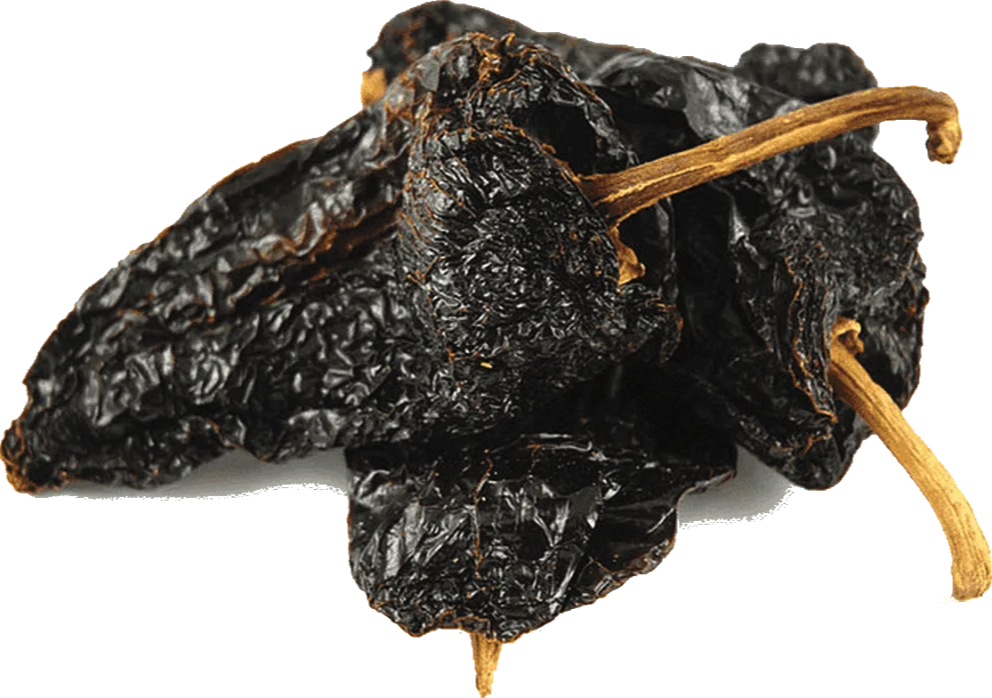
In this dried form, the Ancho becomes a cornerstone of traditional Mexican cooking. It’s one of the key chillies used in mole poblano, the complex, ceremonial sauce that shares its name with the region. Soaked and blended, Anchos bring a mellow depth with notes of dried fruit, cocoa, and old wood. Nothing fiery—just slow-building warmth and layers of flavour. From Puebla’s fertile soil to the heart of the Mexican kitchen, the Poblano’s second life as an Ancho is where it truly finds its voice.
Flavour Without the Fire
Why not take a break from the blowtorches and try something more… operatic? The Poblano brings deep, roasted flavour without the heat, perfect for stuffing, roasting, or just making everything taste a bit more like Mexico. It’s mild, rich, and about to become your new kitchen favourite.
World of Chillies was set up by Sarah Hunt in 2011 to promote chilli growing and the enjoyment of everything hot and spicy.
Chilli Plants
Tomatoes
Chilli Seeds
Delivery Info
About Us
Contact Us
Sign Up Chilli Club
Privacy
Terms & Conditions
▶ 1. Heat (Hotness): The defining characteristic for most people. Is it mild, medium, or hot? How does the heat develop—immediate or lingering?
▶ 2. Sweetness: The balance of natural sugars. Some chillies have a sweetness that complements their heat and makes them versatile in cooking.
▶ 3. Fruitiness: The aromatic, flavour-forward profile. Does it taste tropical, citrusy, or like berries? This quality often gives chillies their distinctive edge.
▶ 4. Crunchiness or Firmness (texture): Freshness matters. Is the chilli crisp and crunchy, soft and pliable, or somewhere in between?
▶ 5. Juiciness: How much moisture does the chilli release when bitten into? This can influence its suitability for fresh eating or cooking.
▶ 6. Aftertaste (Complexity): What lingers after the initial bite? Is there a smokiness, an earthiness, or a clean, simple finish? This separates "nice" chillies from truly memorable ones.
▶ Schedule of Dispatches . We’re pleased to let you know that we’re preparing to dispatch our first plug plants!. Please follow the link for a rough schedule, but please note that we’ll send your order once everything in it is ready. This ensures you receive the best possible plug plants—so if there’s a slight delay, rest assured you haven’t been forgotten. ▶ MORE INFORMATION