-
capsicum pubescens What sort of chilli is this?
The quick picture
- Temperament: slow, steady, highland adapted
- Typical heat: medium → hot
- UK success: surprisingly good in mild summers
- Time to fruit: late but prolonged
- Best role: cooked dishes and sauces

A fruit or a veg? The unusual pubescens chilli.. a Rojo Rocoto.
-
capsicum pubescens How to recognise it
What to look for
- hairy leaves and stems
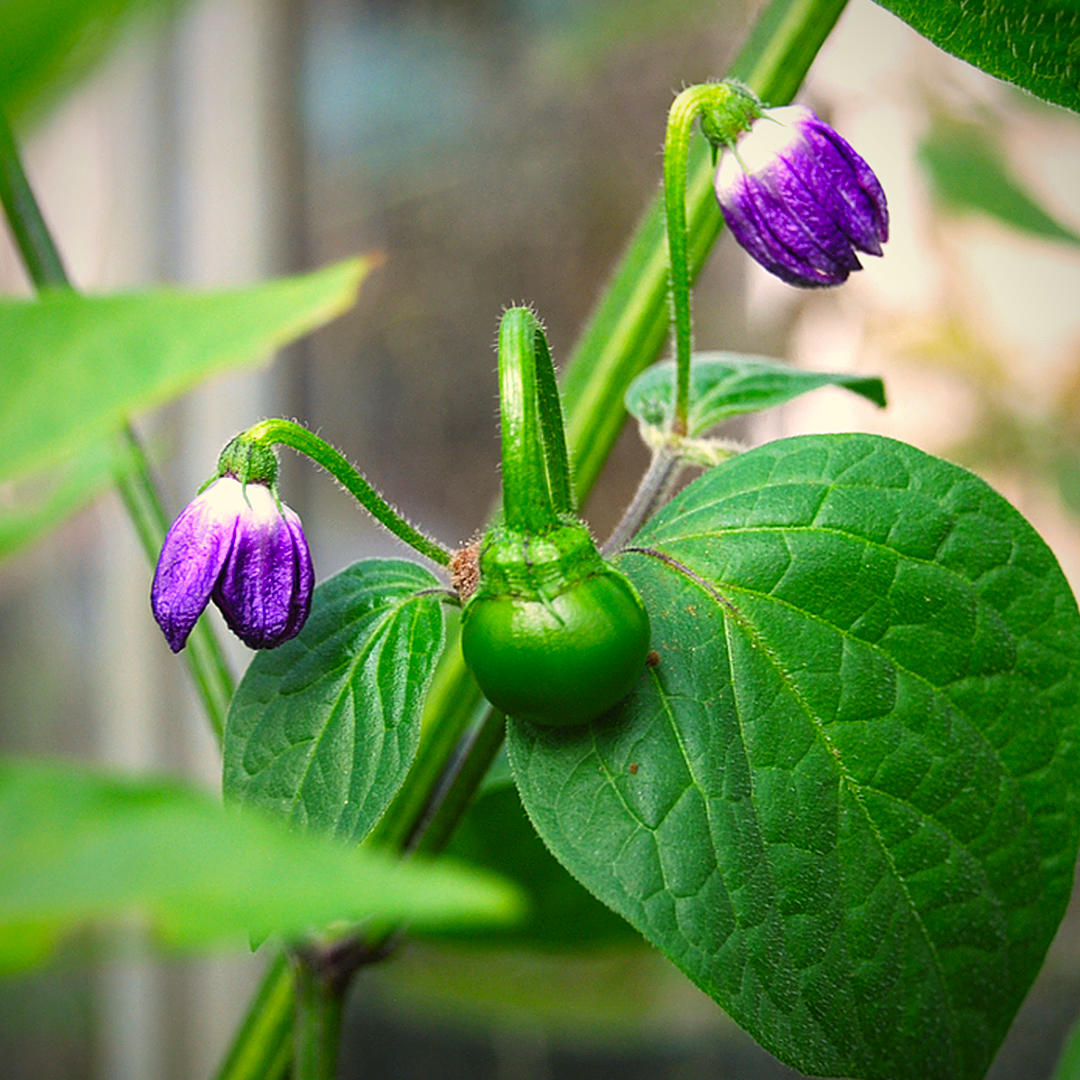
- purple flowers
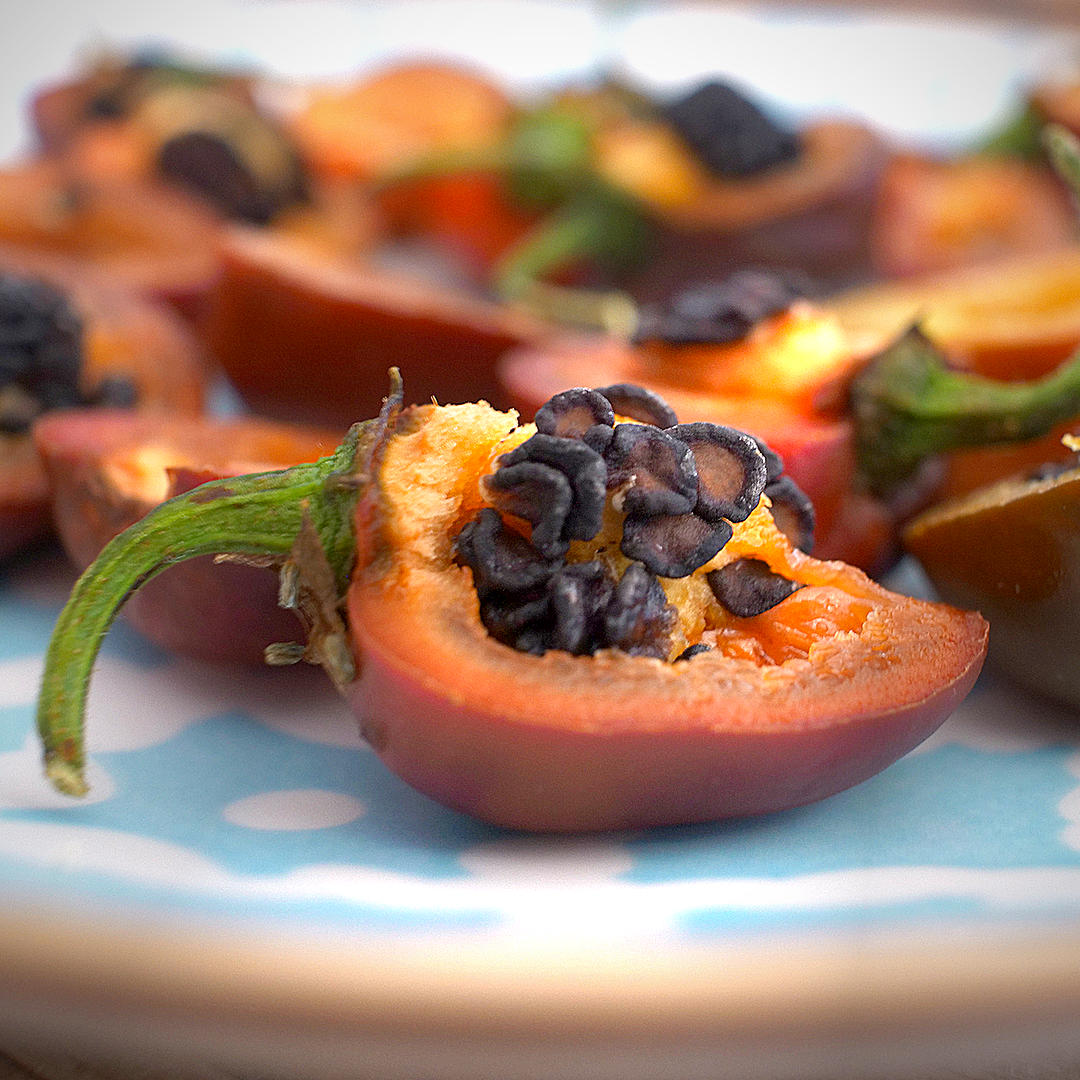
- black seeds
- apple-shaped or lantern pods
- thick walls and heavy fruits
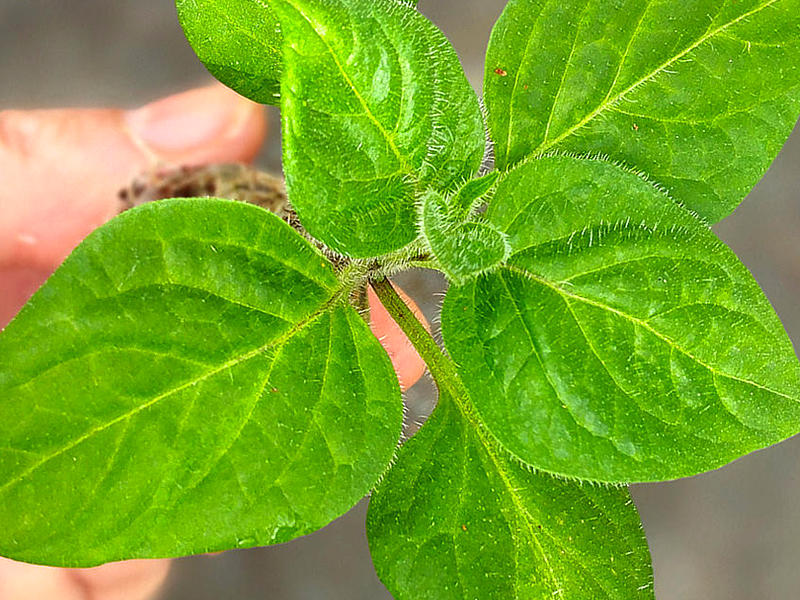
The signature hairy leaves are even visible on this seedling.
-
capsicum pubescens Why does it grow like that?
Where it comes from
This species comes from the Andean highlands, where days are bright but nights are cool.
Instead of evolving speed, it evolved tolerance — able to set fruit where other chillies stop growing. The hairy leaves reduce moisture loss and shield the plant from intense mountain light, while the purple flowers carry protective pigments against cold and ultraviolet exposure.
That is why it often succeeds outdoors in climates that frustrate tropical species.
-
capsicum pubescens Have I eaten this before?
Familiar varieties
- Peruvian rocoto
- Bolivian locoto
- Mexican manzano
- Canario types
- Perón types
-

Purple flowers of the Rocoto
-

large ripening Rocoto
-

The black seeds of the Chocolate Rocoto
-

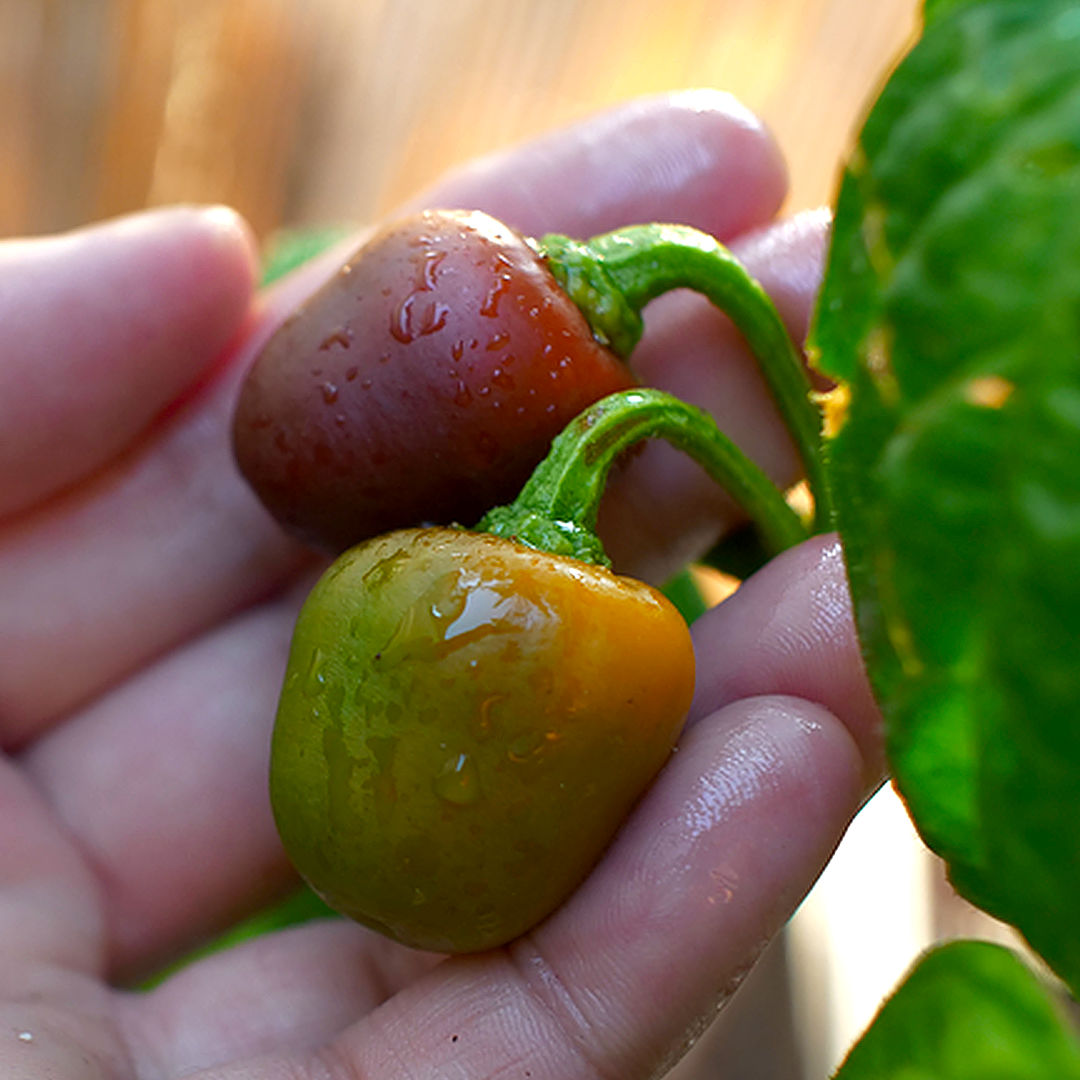
Chocolate Rocoto pods ripening
-
capsicum pubescens How hot is it really?
The heat character
The heat is firm but not sharp, carried by thick flesh and lasting longer than annuum warmth.
Typical range: 30,000 – 100,000 SHU

-
capsicum pubescens What do people use it for?
In cooking
Here the chilli behaves more like a vegetable than a spice.
- stuffed and baked dishes
- cooked sauces
- stews
- fresh salsas where body matters
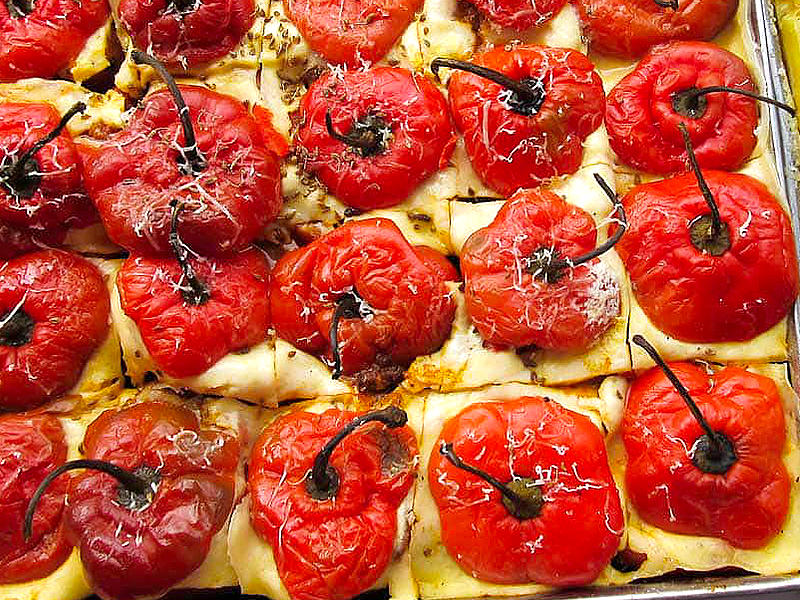
Peruvian Stuffed Rocotos or Rocoto Relleno.
-
capsicum pubescens Will it grow for me?
In UK climate
Often easier than tropical species outdoors.
What helps: cool nights, stable conditions
What confuses growers: difficult germination, slow ripening,
Reality: it dislikes heat more than cold
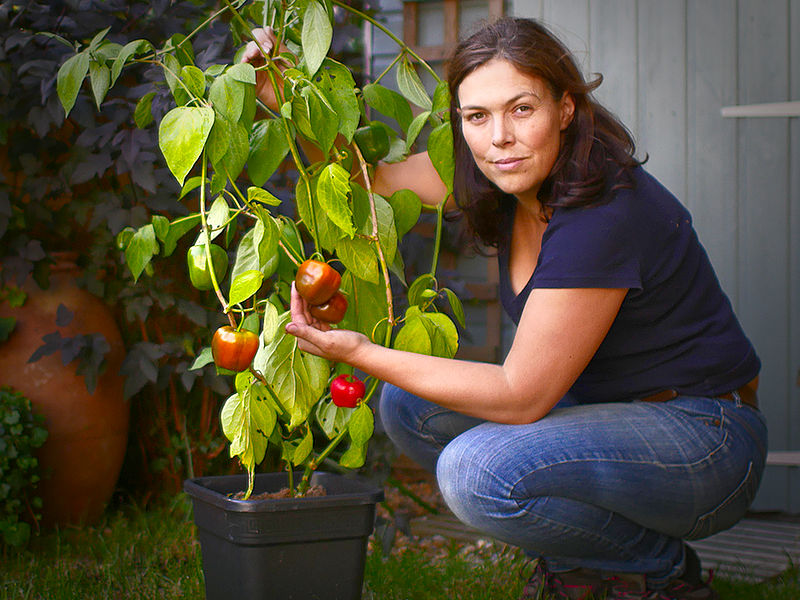
Giant sized Rocoto fruit on a sprawling vine of a plant.
-
capsicum pubescens Where it falls short
Its limitations
- slow to start
- struggles in very hot greenhouses
- fewer fruits than small-fruited species
-
capsicum pubescens So what’s the point of it?
The takeaway
This is the chilli for cooler places. Not fast, but remarkably reliable once established.
In the garden it rewards patience rather than heat — fruit arriving late, then continuing well after most plants have slowed down. The flavour is almost sweet and vegetable-like, thick-fleshed and oddly substantial; it doesn’t quite behave like a chilli at all.
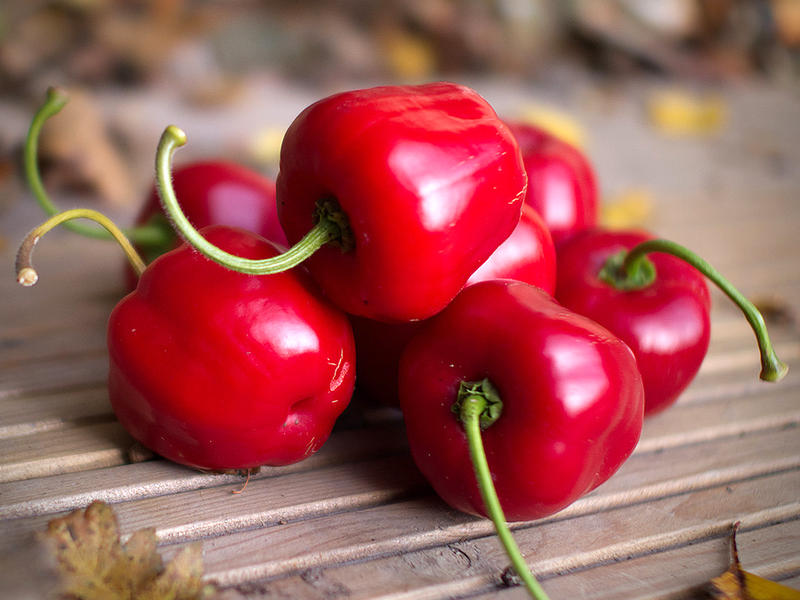
Ripe Rocoto, freshly pickling and ready for a good stuffing.
-
More Chillies
Other Chilli Species
Find out more about the other major species of chillies.
Annuum — the world’s cooking chillies
Chinense — the super-hot group
Baccatum — citrus-like from South America
Frutescens — small upright sauce peppers
Chilli Species — main menus
The hairy high-altitude chilli adapted to cool climates
The high-altitude chilli adapted to cool climates
Most chillies expect heat. Capsicum pubescens expects altitude. Thick-walled fruits develop slowly on hairy-leaved plants that tolerate cool nights far better than any other cultivated species. The seeds are dark, almost black, and the flavour is fuller and deeper than its size suggests.
Instead of chasing summer, the plant waits for steady conditions. Where other chillies rush to finish before autumn, this one continues calmly, as though temperature matters more than season.



World of Chillies was set up by Sarah Hunt in 2011 to promote chilli growing and the enjoyment of everything hot and spicy.
UK Company No. 07860204.
VAT reg. 223126942
Originating in the mountain regions of Peru and Bolivia, where days are bright but nights are cool.
Scoville Heat Units (SHU) measure how hot a chilli feels — essentially how much capsaicin it contains. A Moruga Scorpion at about 2,000,000 SHU is roughly four hundred times hotter than a jalapeño at around 5,000 SHU.