-
capsicum chinense What sort of chilli is this?
The quick picture
- Temperament: slow, deliberate, tropical
- Typical heat: hot → extremely hot
- UK success: needs warmth and patience
- Time to fruit: late
- Best role: flavour-defining chilli

Seven Pot Barrackpore chilli
-
capsicum chinense How to recognise it
What to look for
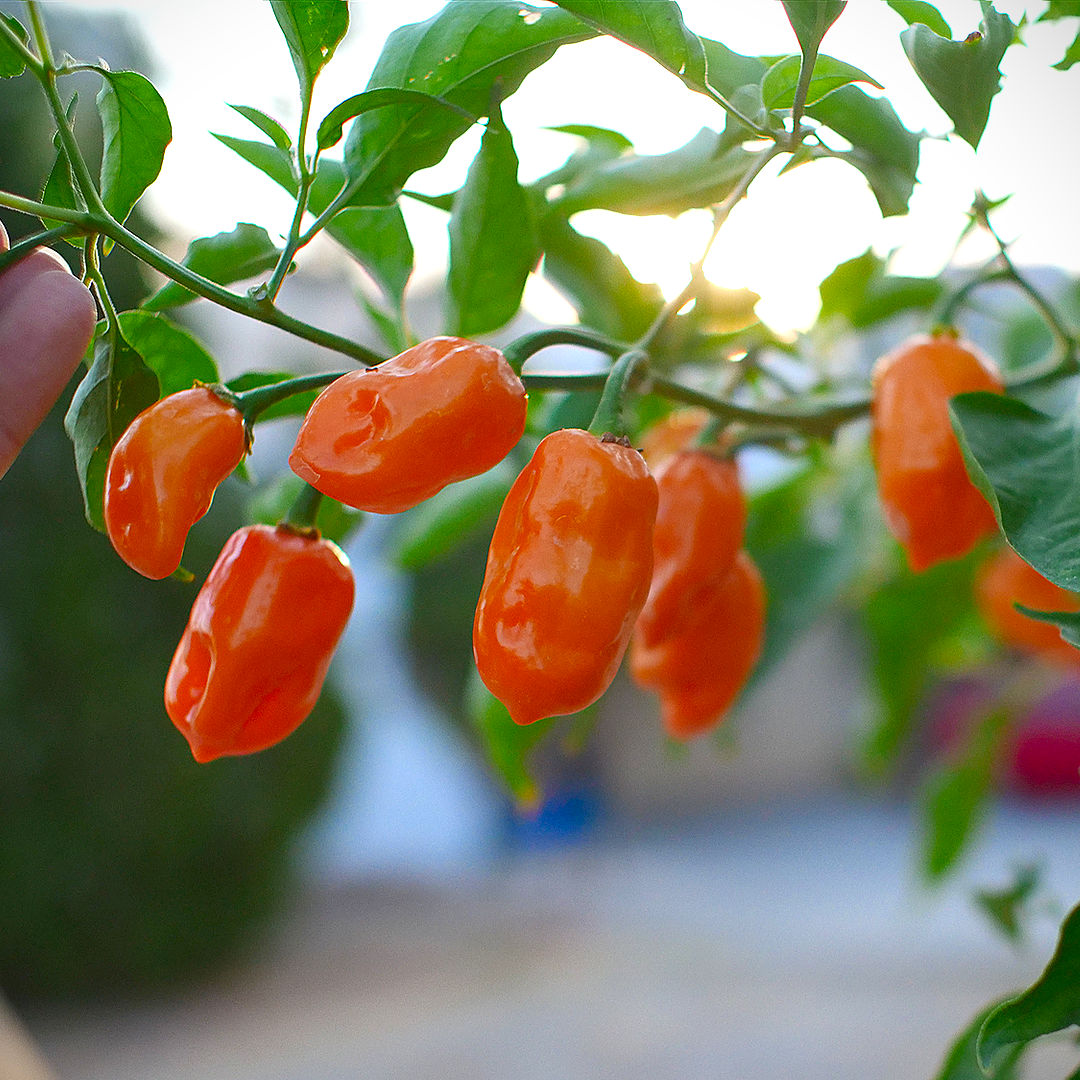
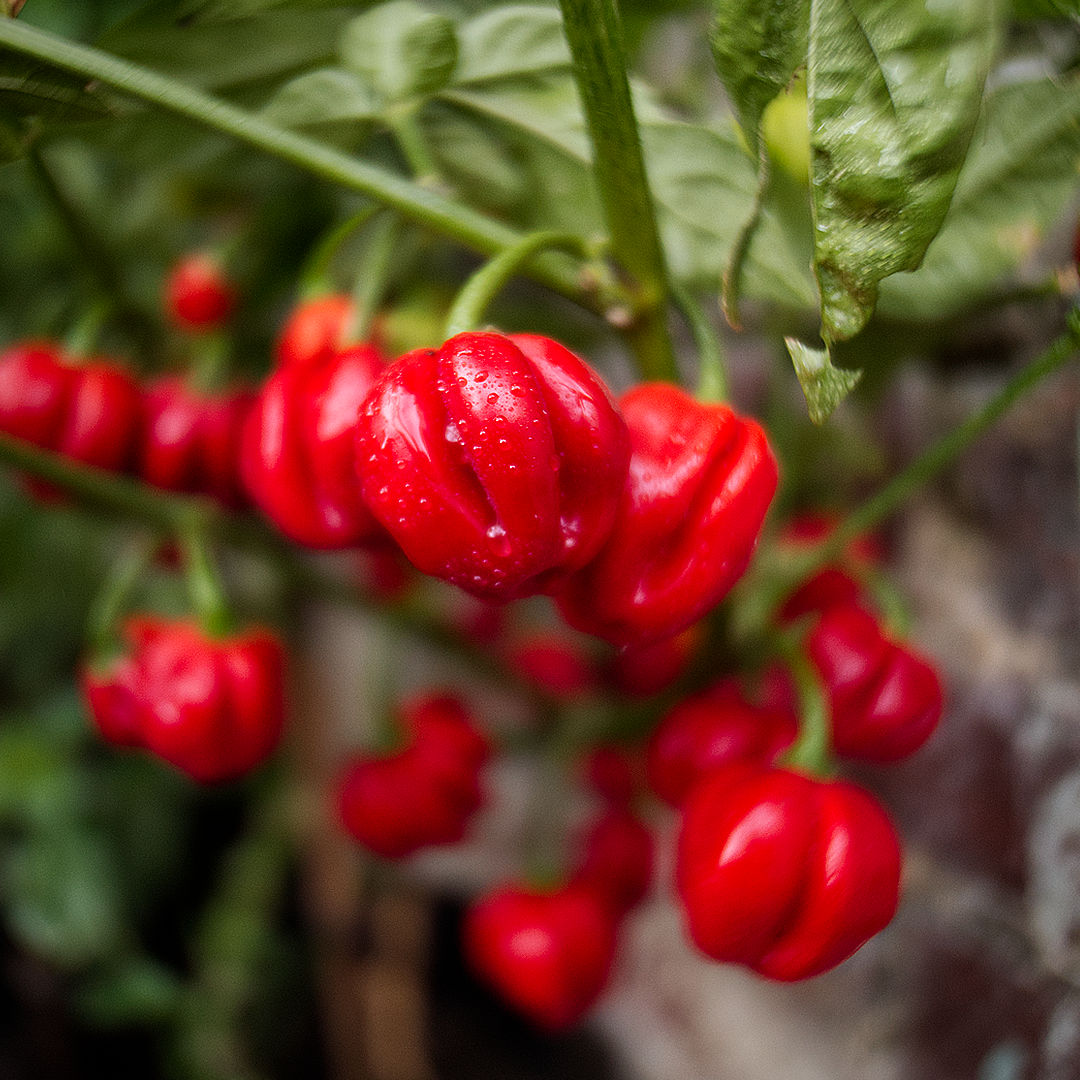
• wrinkled or lantern-shaped pods
• strong scent even when unripe
• broad leaves
• later flowering than most chillies
• fruits that hang rather than point outward

Yellow Moruga chilli ripening
-
capsicum chinense Why does it grow like that?
Where it comes from
This is a lowland tropical chilli — Caribbean and Amazonian climates where warmth doesn’t run out. So instead of rushing to make seed, the plant invests in chemistry: scent to attract animals, capsaicin to deter others.
It’s adapted to constant heat, so in Britain it spends a long time doing very little before fruiting.
-
capsicum chinense Have I eaten this before?
Familiar varieties
-

Orange Habanero
-

Scotch Bonnet
-

Bhut jolokia
-

Moruga Scorpion
-
-
capsicum chinense How hot is it really?
The heat character
Sweet and aromatic at first, then the heat keeps rising.
This is the species that contains the world’s hottest chillies.
Typical range: 100,000 – 1,500,000+ SHU

-
capsicum chinense What do people use it for?
In cooking
Used carefully, rarely casually.
• Caribbean sauces and marinades where the whole dish smells of the chilli.
• West African stews built around its warmth rather than spiked with it.
• fiery curries where a small amount carries the entire pot.
• used sparingly in salsas, more perfume than quantity..
• infused into oils and condiments so a drop is enough.
The chilli isn’t background heat — the food is arranged around it.
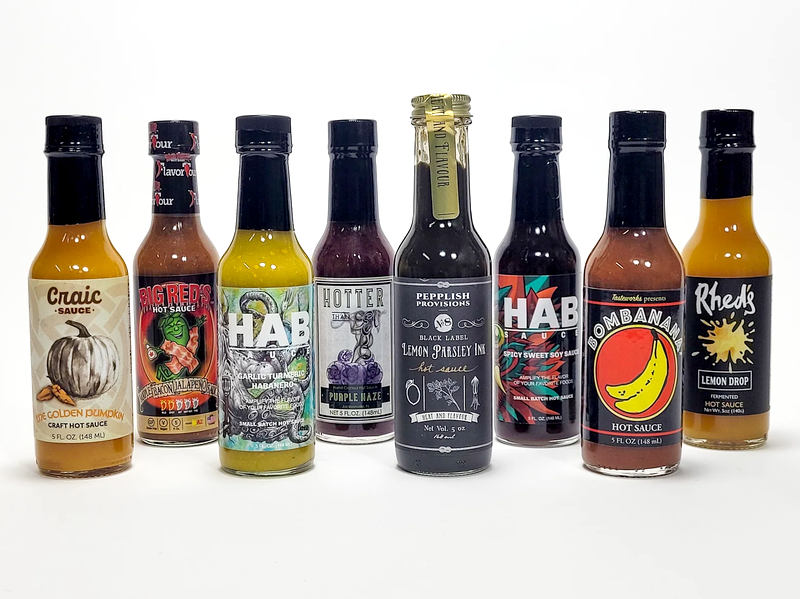
Chinense chillies are favourites for producing super hot sauces.
-
capsicum chinense Will it grow for me?
In UK climate
It will, but it asks patience.
- What helps: warm nights, early sowing, steady heat
- What confuses growers: long pauses before flowering
plants that look healthy but inactive - Reality: it’s usually waiting for more summer than Britain owns

Yellow Seven Pot, UK grown
-
capsicum chinense Where it falls short
Its limitations
• slow outdoors in cool climates
• easy to overuse in cooking
• not suited to everyday quantities
-
capsicum chinense So what’s the point of it?
The takeaway
This is the chilli that turned heat into flavour. Not a seasoning you scatter, but one you plan around. Used well, a small piece changes the entire dish — and nothing else tastes quite like it.
In the garden it asks the same restraint. The plants take their time, the fruits arrive late, and when they do you discover one or two is usually plenty. With this species the harvest isn’t measured in kilos, but in how carefully you use it.

Modern hybrid cross: Wraith
-
More Chillies
Other Chilli Species
Find out more about the other major species of chillies.
Annuum — the world’s cooking chillies
Baccatum — citrus-like from South America
Frutescens — small upright sauce peppers
Pubescens — thick-fleshed mountain chillies
Chilli Species — main menu
A tropical lineage where flavour always comes with heat
A tropical lineage where flavour always comes with heat
You usually meet Capsicum chinense through its aroma rather than its heat. Cut one open and the room fills with something unexpectedly sweet — fruit, flowers, sometimes almost apricot — followed only afterwards by the realisation that you’ve made a tactical error.
The plants behave differently too. They hesitate. While other chillies hurry to flower, these build leaves, branches and a kind of intention. Then suddenly they fruit all at once, lantern-shaped pods hanging like small ornaments. It feels less like a crop and more like a season arriving.




World of Chillies was set up by Sarah Hunt in 2011 to promote chilli growing and the enjoyment of everything hot and spicy.
UK Company No. 07860204.
VAT reg. 223126942
Domesticated in the Amazon–Caribbean region before spreading worldwide.
Here the famous naga and ghost chillies were bred for extreme pungency.
Here, West African chillies like Fatalii developed for bright, sharp heat.
Here, chillies evolved in the Amazon before moving north and being domesticated.
Scoville Heat Units (SHU) measure how hot a chilli feels — essentially how much capsaicin it contains. A Moruga Scorpion at about 2,000,000 SHU is roughly four hundred times hotter than a jalapeño at around 5,000 SHU.