
My All-Time Favourite Chilli
My All-Time Favourite Chilli
Some chillies are like lurchers in a rainstorm—all limbs and uncertainty, prone to collapsing into a tangle the moment things don’t go their way. But the Orange Habanero?
It’s the whippet of the chilli world—sleek, well-mannered, perfectly put together. A chilli that knows exactly what it’s doing, which is more than can be said for most of us.
I’ve grown Orange Habaneros for years, and they have always been reliable germinators—arriving on time, immaculately turned out, like a Dowager descending for afternoon tea, oblivious to whatever chaos has unfolded in her absence.
So when an entire tray failed to come up, I panicked.
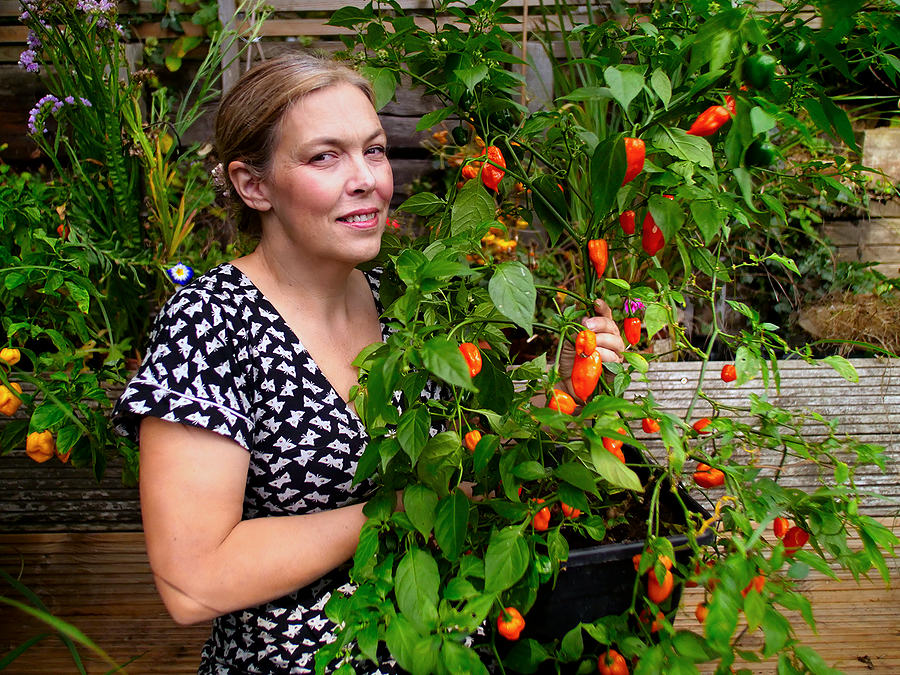
The world's greatest chilli?
Naturally, I did the only sensible thing—planted a second batch immediately, thus ensuring, by the immutable laws of gardening, that the first lot would now choose to appear. And so this year, instead of my usual orderly crop, I have an absolute overabundance of Orange Habaneros.
But really, if you’re going to be overrun by any chilli, this is the one you’d want. It behaves itself. It stays compact and tidy, never sprawling into an undignified mess. It flowers freely, sets fruit without tantrums, and does what a chilli plant is supposed to do—produce an indecent amount of pods with the quiet efficiency of something that takes its job seriously.
And more than any other chilli I’ve grown, this one fills the air with its volatile oils—brush against it, water it, even just stand too close, and you’re enveloped in the most astonishing habanero fragrance. It’s like the plant is audibly clearing its throat and reminding you exactly what it is.
Flavour Profile
▶ Heat (Hotness): 7. The very definition of well-bred fire. No reckless bravado, no desperate need for attention—just a swift, dignified burn that lets you know you’re in the presence of proper heat. Like an old countess who hasn’t raised her voice in decades because a withering look will do. Enough heat to make your lorgnette quiver; it arrives with poise, lingers just long enough to remind you of its pedigree, then exits with a measured swish of silk.
▶ Sweetness: 7. Ripe, golden, and poised. There’s the warmth of late-summer apricots and a touch of honey, but nothing too showy. It’s the kind of sweetness that reassures you everything is under control—right before the heat slips a stiletto between your ribs. A touch of old-world charm, just before the revolution.
▶ Fruitiness: 8. Bright, tropical, and unmistakable—mango, papaya, a flicker of citrus. The kind of flavour that suggests an adventurous past: cocktails at noon, a scandal in Havana, perhaps a discreet exile. There’s a whisper of something floral too—an orange blossom tucked behind an ear, a remnant of younger, wilder days.
▶ Texture (Firmness): 6. Thin-walled but composed, with a crisp snap when raw and a graceful collapse when cooked. It holds together just long enough to maintain its dignity, then succumbs to the inevitable like a hat left out in a monsoon.
▶ Juiciness: 4. A brief glimmer of moisture—like the last drop of sherry clinging to the glass—before it vanishes, leaving nothing but intensity behind. Just enough to tease, never enough to quench.
▶ Aftertaste (Complexity): 8. The burn lingers, but with elegance. No harsh edges, no crude aggression—just a slow, citrusy fade-out, like the last guest finally leaving a very, very good party.
And the pods—oh, the pods. They start out a sharp, almost luminous green, before ripening into a rich, iridescent orange—so glossy and perfect they look like expensive boiled sweets, the kind your grandmother kept in a cut-glass dish and never actually let you eat. They gleam in the light, as if they know exactly how good they look.
The Orange Habanero is deeply rooted in the Yucatán Peninsula, where it has been cultivated for centuries. In this region, the habanero is more than just an ingredient; it’s an integral part of the local culinary identity. While the practice of stringing chillies into ristras is common in places like New Mexico, in Yucatán markets, habaneros are typically sold fresh, piled high in vivid, jewel-like heaps.
Locals incorporate these fiery peppers into a variety of traditional dishes, treating their searing heat with both reverence and precision. One such dish is xnipec, a fresh salsa of habanero, tomato, onion, and sour orange juice—named after the sweaty nose of a dog, which is precisely the effect it tends to have. Another staple is cochinita pibil, where the habanero’s clean, citrusy fire cuts through the richness of slow-roasted, achiote-marinated pork.
Unlike in some cuisines where chillies are used with reckless abandon, in Yucatán the habanero is often placed whole beside a dish, allowing diners to rub a tortilla on it to impart just the right amount of heat—a small, careful gesture that speaks volumes about its potency.
The flavour is utterly faultless. The Orange Habanero is finer, more precise than a Scotch Bonnet—all the tropical fruit, all the floral perfume, but with an elegance that sets it apart. It has heat, of course—200,000 to 350,000 SHU—but it never feels like it’s trying to prove anything.
Instead, the fire arrives with quiet confidence, rather than unseemly aggression—like an elderly aunt who fixes you with a stare so piercing you momentarily forget how to speak.
In cooking, it’s indispensable. I always throw a couple of whole pods into chilli con carne, right at the end—any earlier and the aromatics get lost.
It’s outstanding in jelly—my go-to Christmas gift for years now, saving me an absolute fortune and ensuring that people come knocking well before December, casually enquiring whether I’m “doing the jelly again this year”.
And when it comes to choosing favourites, this is the one. I have grown countless chillies—some I adore, some I marvel at, some I grow just to see what sort of monstrous thing I’ve ended up with this time. But this? This is the one I reach for, year after year, without hesitation. The one I would rescue first if the greenhouse caught fire. The one that reminds me, every single time, why I grow chillies in the first place.
And really, what higher accolade is there than that?
Grow one of the finest chillies in the world—flawless, fiery, and my all-time favourite. Perfect for incredible cooking and making unforgettable gifts.
Already pre-ordered? No problem—add a note at checkout, and we’ll refund any extra postage. All orders will be sent as a single dispatch.
World of Chillies was set up by Sarah Hunt in 2011 to promote chilli growing and the enjoyment of everything hot and spicy.
Chilli Plants
Tomatoes
Chilli Seeds
Delivery Info
About Us
Contact Us
Sign Up Chilli Club
Privacy
Terms & Conditions
▶ 1. Heat (Hotness): The defining characteristic for most people. Is it mild, medium, or hot? How does the heat develop—immediate or lingering?
▶ 2. Sweetness: The balance of natural sugars. Some chillies have a sweetness that complements their heat and makes them versatile in cooking.
▶ 3. Fruitiness: The aromatic, flavour-forward profile. Does it taste tropical, citrusy, or like berries? This quality often gives chillies their distinctive edge.
▶ 4. Crunchiness or Firmness (texture): Freshness matters. Is the chilli crisp and crunchy, soft and pliable, or somewhere in between?
▶ 5. Juiciness: How much moisture does the chilli release when bitten into? This can influence its suitability for fresh eating or cooking.
▶ 6. Aftertaste (Complexity): What lingers after the initial bite? Is there a smokiness, an earthiness, or a clean, simple finish? This often separates "nice" chillies from truly memorable ones.
▶ Schedule of Dispatches . We’re pleased to let you know that we’re preparing to dispatch our first plug plants!. Please follow the link for a rough schedule, but please note that we’ll send your order once everything in it is ready. This ensures you receive the best possible plug plants—so if there’s a slight delay, rest assured you haven’t been forgotten. ▶ MORE INFORMATION