
The Vindaloo Chilli: Hot, Hardy, and High-Yield
The Vindaloo Chilli: Hot, Hardy, and High-Yield
Some chillies arrive in the greenhouse with the self-restraint of a goat in a vegetable patch. They stretch, tangle, and throw out pods with the chaos of something that has no interest in tidiness or moderation.
The Vindaloo chilli is exactly this kind of plant. It arrived in my collection last year and instantly made itself known—an upgrade, so I was told, from the classic Pusa Jwala, though “upgrade” suggests something polite and refined. This was not polite. It was an excitable, sprawling, pod-spewing creature that didn’t so much grow as explode.
To understand the Vindaloo, we need to go back to the Pusa Jwala—one of India’s great workhorse chillies. Named after the Indian Agricultural Research Institute at Pusa, its very name means Flame of Pusa—a fitting title for a chilli that has ignited countless masalas, curries, and pickles across the subcontinent. Crumpled and wobbly-skinned, it may not look like a firebrand, but its heat and sheer ubiquity have made it a staple in Indian kitchens for generations.
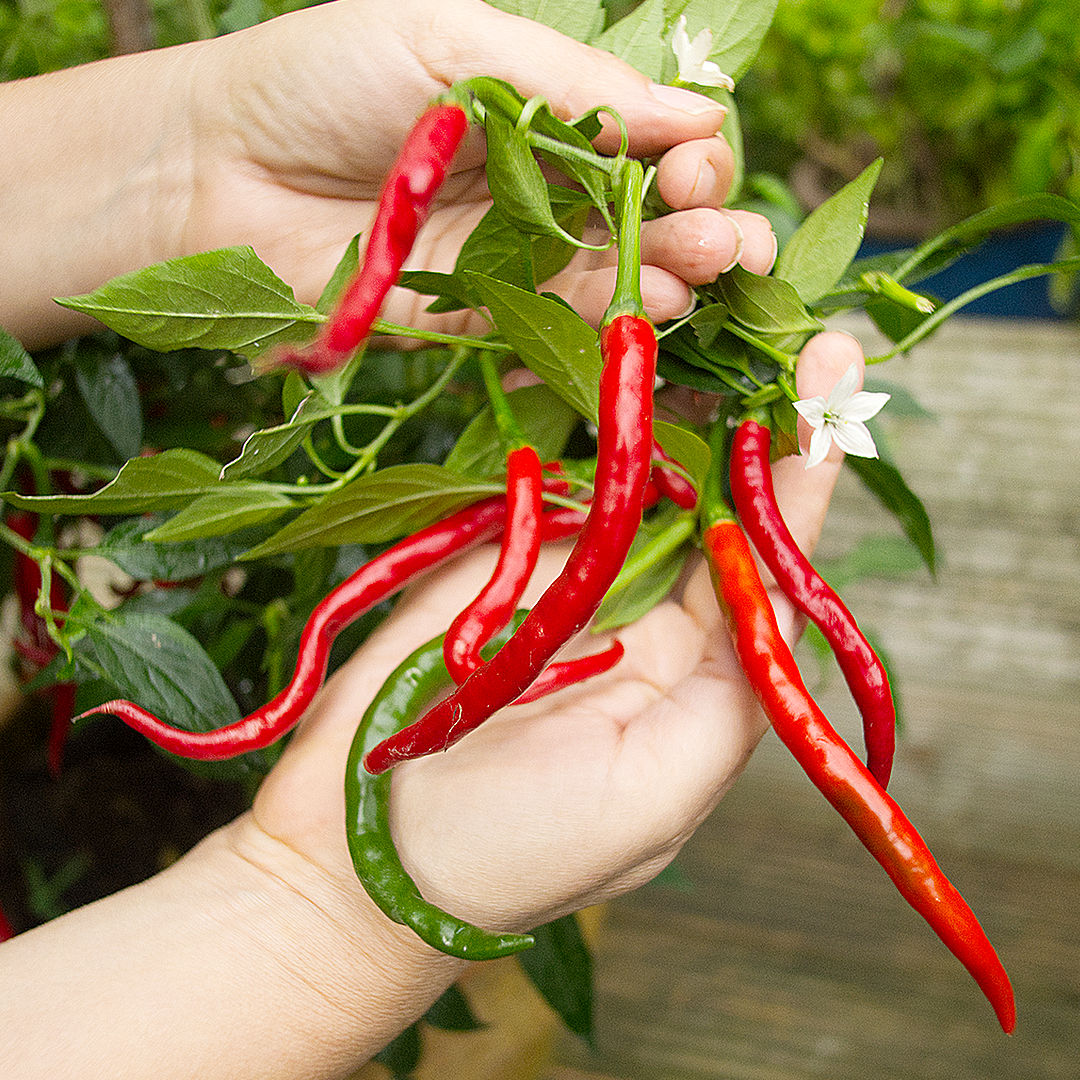
But where exactly did Vindaloo spring from? That remains a mystery. What we do know is that it’s a modern hybrid from Tozer Seeds, a British company breeding vegetables since 1944. Pusa Jwala is in its lineage, but the rest is locked away like a state secret. Whether designed for sheer productivity or just unstoppable enthusiasm, the Vindaloo was bred to perform—and does so with tireless abandon.
And as for its name—yes, it comes from the iconic dish. But vindaloo itself is a long-lost cousin of Portuguese Carne de Vinha d’Alhos, a garlic-heavy, vinegar-marinated pork dish brought to Goa in the 16th century. The locals, unimpressed with the lack of firepower, took one look at it and thought: “This needs more chillies.” The rest, as they say, is history.
Flavour Profile
▶ Heat (Hotness): 4. You brace yourself for something explosive—this is a chilli named after a dish with a reputation for scorching bravado—but at first bite, it seems almost polite. The green ones are mild, bright, and barely nudging 10,000 SHU, more interested in freshness than fire. But let them ripen, and the heat creeps up with a slow, peppery insistence, building to a respectable 30,000 SHU. Not the kind of thing that flattens you, but enough to make you sit up. Like realising too late that the mustard on your sandwich was, in fact, English.
▶ Sweetness: 5. Green, there’s no sweetness to speak of—just fresh, clean sharpness. But by the time it turns red, it surprises you. Not a sugary, obvious kind of sweet, but something richer, darker. A chilli that ages well, like a bottle of something strong lurking at the back of a forgotten cupboard.
▶ Fruitiness: 4. Two distinct personalities. When green, it’s all crisp, grassy sharpness—like biting into an unripe apple or tearing a basil leaf in half. When red, it deepens, edging into dried fruit territory, with just the faintest whisper of tamarind and smoked paprika. Less "sun-drenched mango orchard," more "old wooden spice chest in a Goan kitchen."
▶ Texture (Firmness): 7. Thin-walled, but not fragile. The green pods have a lovely snap to them, satisfying to slice into—crisp, structured, and refreshingly resistant. By the time they ripen, they soften a little but never turn flabby. The kind of texture that makes it ideal for stir-fries, where you want something that cooks quickly but doesn’t immediately disintegrate like a Victorian poet on hearing bad news.
▶ Juiciness: 3. Green, it bites back—a snappy, near-juiceless crunch, like a sugar snap pea with ambition. By the time they’re red, they’ve mellowed a little, but don’t expect a flood of moisture. If you’re after something to quench your thirst, you’ll need to take your business elsewhere.
▶ Aftertaste (Complexity): 5. The green ones vanish quickly—sharp, clean, and refreshingly abrupt, like a quick remark that leaves no trace. The red ones, though, settle in for a longer stay. The heat builds gradually, a slow, steady warmth rather than an ambush, finishing with a dry, peppery hum. Like a dog nudging your leg for attention—persistent, but never overwhelming.
From the moment the Vindaloo got going, it showed no inclination to stop. It surged up, out, sideways, tying itself into a self-supporting lattice of thin branches that wove together like an untidy bird’s nest, each limb weighed down by a ridiculous number of pods.
The chillies themselves start off long and skinny, so delicate-looking that you’d be forgiven for thinking they weren’t going to do much. But then they bulk up, fatten, and ripen to red, developing a deceptive heat.
Early on, when they’re green, they’re fresh, citrusy, almost timid. But leave them to mature, and the heat creeps up—a creeping, generous warmth that is somehow both friendly and insistent, like an old dog who still remembers how to chase a postman. It was also, quite possibly, the hardiest chilli I grew last year. I left one outside for most of the season, convinced it would give up by September. It did not.
By October, while every other chilli plant had taken one look at the worsening weather and flung itself into graceful decay, the Vindaloo was still standing.
Now it sits in the greenhouse against a south-facing wall, in a ceramic pot so large it could double as a Roman relic, and it refuses to acknowledge that winter exists. It even has pods on it!
The Vindaloo is one of those plants that never stops giving. It was already covered in fruit by July, and I picked it constantly until October. Even now, my freezer is loaded with bags of green and red pods, ready for any moment that calls for a sharp, fresh hit of heat. The sheer abundance reminded me of my beloved Thai Dragon—always ready, always useful.
And the best way to use it? One of the simplest and most satisfying things you can do with the green Vindaloo is this: heat a generous puddle of olive oil in a wok, as hot as it will go without setting off the smoke alarm.
Crack in a couple of eggs and fry them until their edges crisp into golden lace.
Just before they leave the pan, hit them with sea salt and a handful of finely sliced green Vindaloo chillies. Onto toast they go, and that’s breakfast, lunch, or, if you’re me, a 3pm moment of pure joy.
Beyond that, these chillies have a way of sneaking into everything. Chopped fresh into a curry? Obviously. Stir-fried with garlic? Perfection.
Thrown raw into a burrito? A very good idea. They are hot enough to be interesting but never so searing that you regret your decisions.
Not all chillies earn a permanent place in my greenhouse, but this one does. It’s dependable, prolific, easy to grow, and surprisingly hardy. If you’ve never grown chillies before, the Vindaloo is an excellent place to start—it will make you look far more skilled than you are. And if you’re already deep in the world of chilli growing, this is one of those plants that justifies its space by sheer enthusiasm alone.
A Vindaloo Worth Its Weight in Spice
This is the chilli that just won’t quit—sprawling, pod-laden, and as resilient as an old market trader who’s seen it all. It’s the perfect addition to your garden, a tireless producer, and quite possibly the ideal gift for anyone who appreciates a bit of fire without the suffering.
World of Chillies was set up by Sarah Hunt in 2011 to promote chilli growing and the enjoyment of everything hot and spicy.
Chilli Plants
Tomatoes
Chilli Seeds
Delivery Info
About Us
Contact Us
Sign Up Chilli Club
Privacy
Terms & Conditions
▶ 1. Heat (Hotness): The defining characteristic for most people. Is it mild, medium, or hot? How does the heat develop—immediate or lingering?
▶ 2. Sweetness: The balance of natural sugars. Some chillies have a sweetness that complements their heat and makes them versatile in cooking.
▶ 3. Fruitiness: The aromatic, flavour-forward profile. Does it taste tropical, citrusy, or like berries? This quality often gives chillies their distinctive edge.
▶ 4. Crunchiness or Firmness (texture): Freshness matters. Is the chilli crisp and crunchy, soft and pliable, or somewhere in between?
▶ 5. Juiciness: How much moisture does the chilli release when bitten into? This can influence its suitability for fresh eating or cooking.
▶ 6. Aftertaste (Complexity): What lingers after the initial bite? Is there a smokiness, an earthiness, or a clean, simple finish? This often separates "nice" chillies from truly memorable ones.
▶ Schedule of Dispatches . We’re pleased to let you know that we’re preparing to dispatch our first plug plants!. Please follow the link for a rough schedule, but please note that we’ll send your order once everything in it is ready. This ensures you receive the best possible plug plants—so if there’s a slight delay, rest assured you haven’t been forgotten. ▶ MORE INFORMATION